Barbados is facing a rapidly growing public health crisis that has pushed public health advocates and top government officials to issue an urgent call for sweeping restrictions on unhealthy food and beverage products across all of the nation’s schools. New data shows the country’s childhood obesity rate has jumped from 33 percent to 42 percent in just a decade, a surge that has prompted the Heart and Stroke Foundation of Barbados to roll out a new national mass media campaign named *Enough. If it harms our children’s health, it must be regulated.*
At the campaign’s official launch, Maisha Hutton, executive director of the Healthy Caribbean Coalition, framed the campaign’s name as a turning point for national action. “Enough is a powerful word,” Hutton explained. “It is a word we say when we have watched a problem grow for far too long. When we have gathered enough data, heard enough stories, visited enough doctors, and buried enough of our people. It is a word we say when we are ready to act. And today that word becomes a rallying cry for our children.” She warned that the current trajectory puts nearly half of Barbados’s children on a direct path to developing chronic preventable conditions including type 2 diabetes, hypertension, heart disease, and multiple forms of cancer later in life.
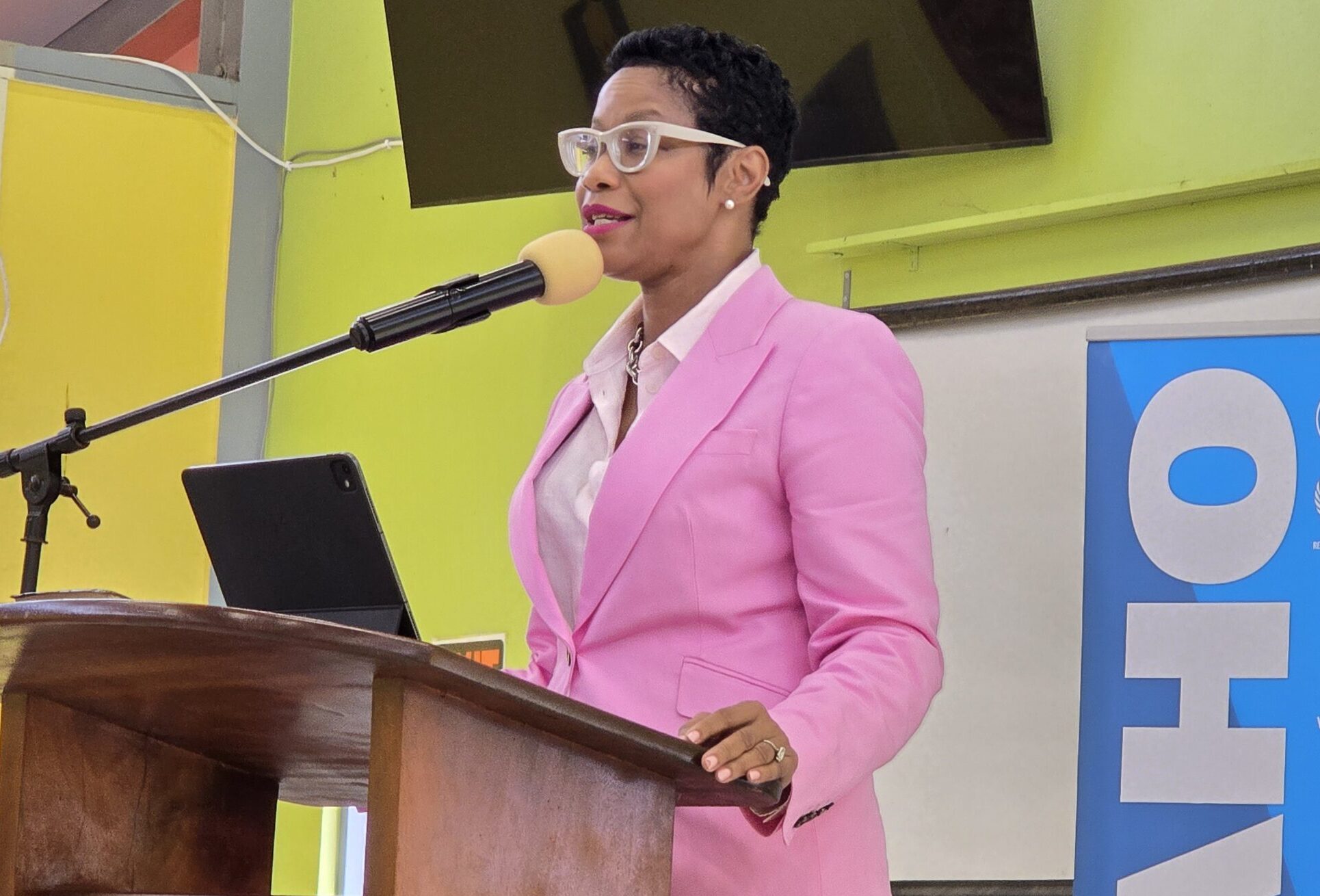
Barbados Minister of Health Senator Lisa Cummins echoed this urgent concern, confirming the alarming data is publicly available through the country’s official national health report. “Just about 10 years that number was not at 42 per cent, it was at 33 per cent, so it means that the number is rising,” Cummins noted. She emphasized that childhood obesity has grown far beyond a narrow public health issue, expanding into a multi-sectoral crisis that touches every layer of Barbadian society. “Behind those numbers, children’s well-being are being compromised, unlike those in previous generations, we’re now seeing hypertension, type 2 diabetes, and those non-communicable diseases that I spoke about emerging at a younger age, placing youth, our children, at risk and imposing an ever-growing burden on families, communities, and on our healthcare system,” the minister said. “So this is not a health issue alone. It is not an education issue alone. It is in fact a social issue, it is an economic issue that is strong, but ultimately it is a national development issue.”
Cummins pointed out that children are regularly targeted by highly sophisticated, manipulative marketing campaigns for unhealthy products, and lack the critical thinking skills that adults use to evaluate these messages, making them uniquely vulnerable to exploitation. That is why governments around the world have recognized children deserve targeted legal protection from these predatory practices, she added. While she stressed that strong regulatory action is a non-negotiable part of solving the crisis, Cummins also noted that shared responsibility extends to parents and caregivers, who shape children’s taste preferences and eating habits from early childhood, long before children can make independent food choices. She called out common unhealthy cultural norms around adult eating, including overconsumption at large social gatherings and a widespread over-reliance on processed carbohydrates paired with very limited access to fresh vegetables and salads. For real change to take root, she argued, adult behaviors must shift first.
“Campaigns and policies alone would not solve the problem,” Cummins said. “We need awareness, we need education, we need community engagement, and we need national resolve and campaigns such as this one to stand right alongside individual responsibility and personal commitments.”
Greta Yearwood, chief executive officer of the Heart and Stroke Foundation of Barbados, clarified that the campaign’s core mission is to prioritize children’s health above commercial profit. “If marketing practices contribute to unhealthy behaviours and place children’s health at risk, then appropriate measures must be taken to regulate them,” Yearwood said. She issued a call for cross-sector collaboration, urging parents, educators, healthcare providers, policymakers, community leaders, and young people themselves to work together to build healthier learning environments and advance policies that shield children from predatory marketing of unhealthy foods and drinks.
Hutton expanded on how food companies target children directly in and around school spaces, using channels like branded school equipment, sponsored school events, free vouchers, and promotional giveaways to build early brand loyalty among young consumers who are not developmentally equipped to critically analyze persuasive marketing. “This is not accidental. This is a strategy, and it must be stopped through regulation,” Hutton stressed. She also framed the issue as a matter of fundamental children’s rights, noting that under the UN Convention on the Rights of the Child — ratified by every UN member state except the United States — every child has an inherent right to a healthy childhood free from exploitation.
Dr. Lisa McLean-Trotman, a social and behaviour change specialist with UNICEF’s Office for the Eastern Caribbean Area, added that predatory marketing shapes children’s food preferences starting in early childhood, creating lasting unhealthy social norms around eating. Adolescence, a critical period for physical and cognitive development, is a particularly key target for these campaigns, she explained. While public discourse often focuses only on the link between ultra-processed foods and obesity, McLean-Trotman noted that these products also lack key micronutrients that support healthy brain development and overall well-being, creating a range of underrecognized additional health risks.
She also highlighted the far-reaching non-physical impacts of childhood obesity, which extend to educational outcomes, mental health, and social development. “Research has shown correlations between obesity in children, depression, anxiety, low self-esteem, body dissatisfaction, and other mental health issues that we should be concerned about,” McLean-Trotman said. “This is not just a health issue, it’s a whole of country issue and that’s what we need to be looking at the whole issue of health and well-being as a whole of country approach.”