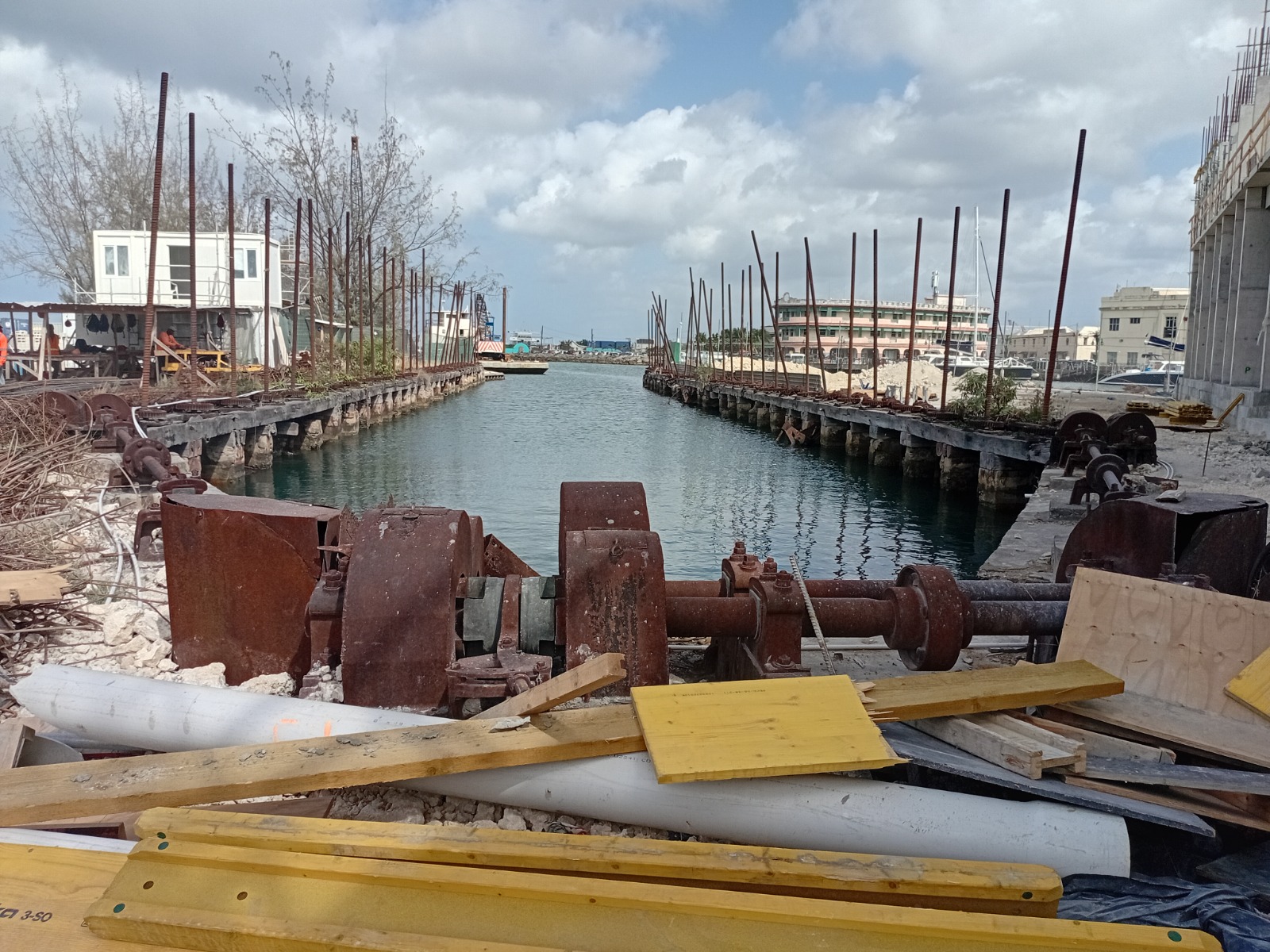
On Wednesday, development leaders behind Bridgetown’s transformative $200 million five-acre Pierhead waterfront revitalization project announced that first-phase construction remains on track, with robust pre-leasing and investment traction, and ongoing commitments to keep the entire public-facing site accessible once completed. The 10-year multi-phase initiative, which blends modern residential, commercial and recreational development with intentional heritage conservation, is on pace to deliver its first stage between the final quarter of 2027 and the first quarter of 2028, according to senior project officials.
The flagship first phase, centered on the new Steel Building structure, is currently 30 percent complete on its core superstructure, with all timelines holding to original projections, confirmed project manager Luke Thompson. “We are bang on time,” Thompson stated in an update on the construction, noting that the entire phase will open to public access immediately upon completion. In addition to the 39-residential unit Steel Building, the first phase includes ground-floor retail and food-and-beverage outlets, a public beach club, and the full restoration of the globally significant historic Blackwood Screwdock. Thompson added that all core public infrastructure along Bay Street will be completed as part of phase one, opening the full stretch of waterfront to the public from day one.
Project director Michael Pickles emphasized that the entire Pierhead development will remain a non-gated, open-access site, with ongoing design work for additional public amenities including landscaped green space and open recreational areas at the waterfront point. That additional public works package is currently in final design, with contract negotiations underway to add the work to the existing first-phase construction scope, he confirmed.
On the investment and sales front, Pickles reported unexpectedly strong early demand for both residential and commercial space, with reservations already placed for roughly two-thirds of the 39 phase-one apartments. Interest has come from a balanced mix of local, regional and international buyers, he said, aligning with the development’s core goal of keeping housing accessible to Barbadian residents. As the project moves through subsequent phases, the development team will work with main contractor One to drive down construction costs for future residential units, ensuring they remain attainable for local people looking to live and work in the waterfront district.
A core centerpiece of the project’s heritage mission is the conservation of the Blackwood Screwdock, the only surviving working screw-driven hoist dry dock of its kind in the world, which holds UNESCO protected status. While the team has no plans to return the site to an operational boatyard, they will fully restore and preserve the dock’s historic machinery as a cultural attraction. Pickles confirmed that specialized marine heritage experts have been contracted to guide the restoration work, and the team plans to acquire a historic schooner to display in the dock’s waterway as part of a free public heritage museum.
Currently, the first-phase construction site employs 75 workers, the vast majority of whom are Barbadian nationals, with only a small handful of foreign specialist staff on site. Thompson said employment numbers will rise steadily as construction ramps up through subsequent phases.
Spread across three planned phases running through 2031, the full Pierhead Project will eventually deliver more than 170 residential units, expanded commercial and dining space, enhanced marina and berthing facilities, and dedicated public cultural spaces. The second phase, focused on the House of Pillars development, is scheduled to run from 2027 to 2028, adding 39 additional apartments, more retail space and upgraded marina infrastructure. The final Bridge House phase, set for completion between 2029 and 2031, will bring roughly 100 more apartments, extra dining outlets, and new public cultural venues to the waterfront site.