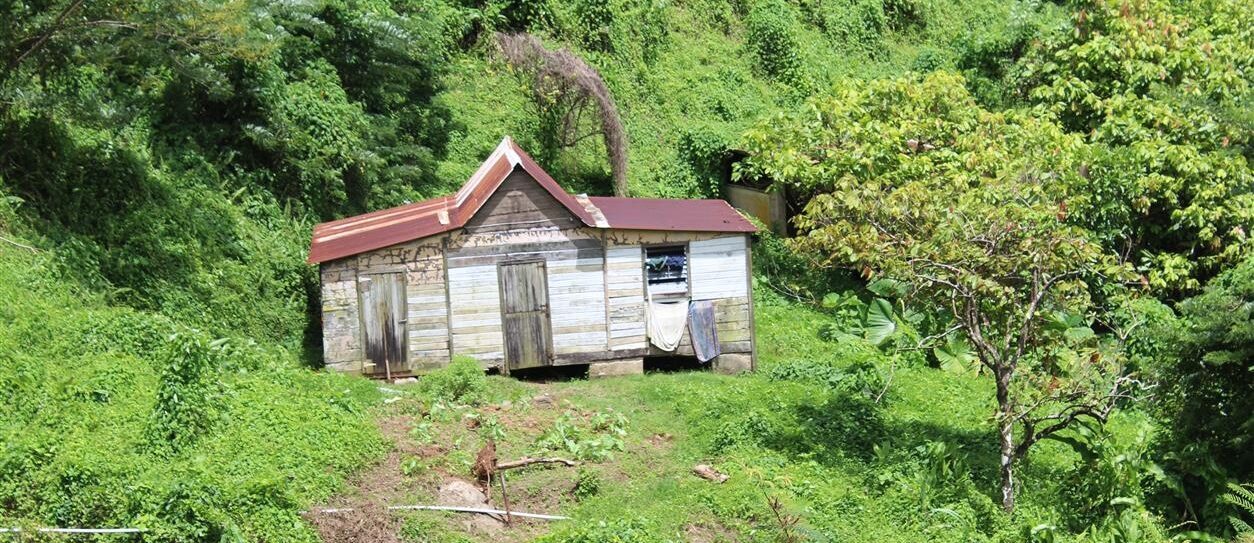
Nearly 11 years after Tropical Storm Erika leveled the coastal village of Petite Savanne, Dominica’s main opposition United Progressive Party (UPP) is bringing a long-simmering community demand back to the forefront of national political conversation: giving displaced residents the choice to return home, if rigorous safety assessments confirm the area is habitable.
When Erika tore through Dominica in 2015, the storm triggered catastrophic landslides and widespread destruction that forced the entire population of Petite Savanne to relocate permanently, most settling in the newly built community of Bellevue Chopin. For many of these displaced families, however, the connection to their ancestral land and lifelong community has never faded. The dream of rebuilding their lives in Petite Savanne has remained unshaken through more than a decade of policy conversations that have overwhelmingly centered on permanent resettlement elsewhere.
In an official public statement released on June 9, 2026, UPP leader Joshua Francis made clear that a future UPP administration would prioritize making that dream a safe reality, with non-negotiable guardrails rooted in technical expertise. “Any discussion regarding the reopening and resettlement of Petite Savanne must first be guided by science, safety, and sound planning,” the statement read. Before any return initiative moves forward, the party has committed to commissioning full geotechnical surveys and land suitability assessments to map which portions of the village are stable enough for housing, farming, commercial activity, and critical infrastructure. The UPP stressed that citizen safety will remain the top priority in all decision-making.
If assessments greenlight partial or full resettlement, the party has proposed establishing a dedicated Special Petite Savanne Resettlement Fund to support returning residents. The fund would cover a wide range of needs, from home construction and rehabilitation to the restoration of damaged farmland. It would also provide grants for small business development, support for reviving Petite Savanne’s historic bay oil distillation industry—once a cornerstone of the local economy—and investment in core community infrastructure and public services, alongside youth empowerment and economic development programs.
Long a vital contributor to Dominica’s agricultural sector, Petite Savanne was once renowned across the country for its robust community bonds and profitable bay oil trade. The UPP argues that this rich cultural and economic heritage does not need to be permanently lost to storm damage, and that residents should have the autonomy to restore their community where conditions allow.
Beyond resettlement, the party has also pledged to prioritize the rehabilitation and reopening of the Delices–Petite Savanne road, pending formal engineering and environmental approval. Reconnecting this key transportation route, the UPP notes, would open up access to underused agricultural land across the southeast, stimulate local economic activity, and strengthen regional connectivity.
Critiquing the current national approach to Petite Savanne’s future, UPP leadership argues that policy discussions have for too long focused solely on forced permanent relocation, rather than expanding choices for displaced citizens. The party’s stance frames the potential resettlement of Petite Savanne as a core component of its broader national vision: one centered on inclusive rural development, agricultural renewal, climate-resilient sustainable communities, and greater economic self-reliance for all Dominicans.
“No community should be forgotten. No citizen should be denied the opportunity to return to his or her roots where it is safe and feasible to do so,” the statement concluded. For hundreds of displaced Petite Savanne residents, the UPP’s pledge marks the most significant push for expanded choice over their future in more than a decade.