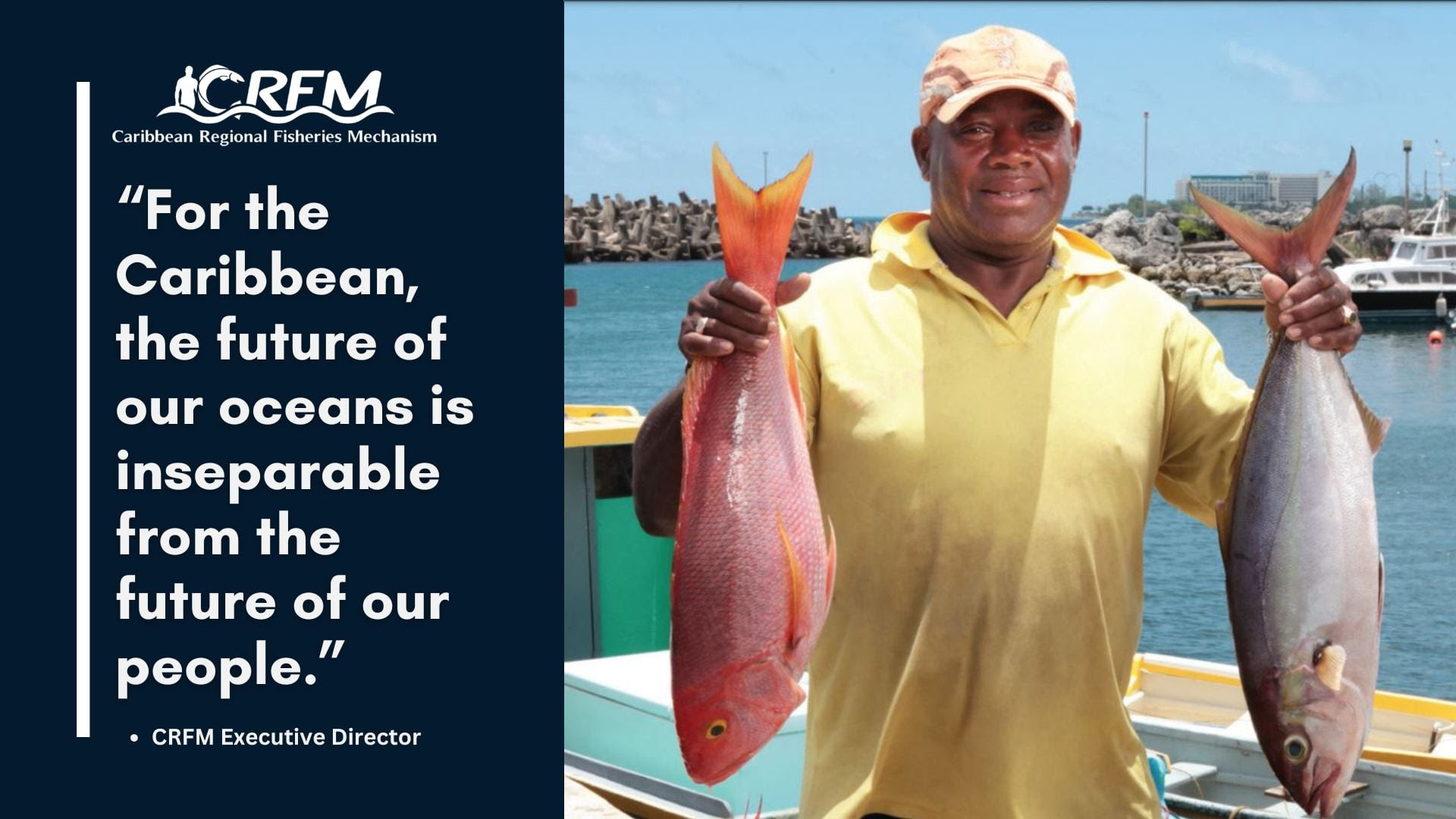
As the global community marks World Ocean Day 2026, Dr. Marc Williams, Executive Director of the Caribbean Regional Fisheries Mechanism (CRFM) Secretariat, has issued a urgent call to action for regional stakeholders to prioritize ocean stewardship, highlighting the irreplaceable role healthy marine environments play in underpinning Caribbean livelihoods, food security, culture and economic growth.
For nations across the Caribbean, the well-being of local populations is inextricably tied to the health of the Caribbean Sea and surrounding ocean waters. Thriving marine ecosystems do more than offer stunning natural landscapes: they underpin core regional industries including commercial and artisanal fisheries, tourism, and maritime transportation, while also providing natural coastal protection against storm surges and erosion that safeguards coastal communities. This interconnectedness makes shared responsibility for marine conservation more critical than ever, Williams emphasized, as stakeholders gather to reaffirm their commitment to protecting ocean resources for current and future generations.
At the heart of the region’s fisheries sector is small-scale fishing, which remains the backbone of food and economic security for most Caribbean countries. Hundreds of thousands of people across the region—from fishers and vendors to processing workers and their families—depend directly on healthy ocean ecosystems for their income and well-being. Beyond economic benefits, small-scale fisheries are a core pillar of local food supplies, a major driver of employment and poverty reduction, and a foundational element of Caribbean cultural heritage that has shaped regional identity for centuries.
Against a backdrop of growing global stress on food systems, driven by accelerating climate change, persistent economic uncertainty, and ongoing supply chain disruptions, strategic investment in sustainable small-scale fisheries has emerged as an essential step to strengthening regional food and nutrition security, Williams noted. To deliver long-term benefits, he argued, regional and national bodies must prioritize empowering frontline fishing communities through targeted interventions: more inclusive and responsive resource management, expanded access to affordable financing, adoption of appropriate modern technology, targeted capacity building, and policy frameworks that formally recognize the outsized contributions small-scale fisheries make to national and regional development.
Despite the vast potential oceans offer to Caribbean prosperity, that promise remains under threat from widespread marine pollution that continues to degrade fragile ecosystems. A range of pollutants—from single-use plastic waste and abandoned, lost or discarded fishing gear to agricultural runoff from land-based activities and untreated wastewater discharge—are destroying critical coastal habitats, damaging irreplaceable coral reef systems, pushing vulnerable marine species toward extinction, and cutting long-term fisheries productivity. Tackling this multifaceted crisis cannot be left to a single group, Williams stressed: meaningful progress requires coordinated action from national governments, private sector businesses, local communities, and individual consumers alike.
“On this World Ocean Day, let us renew our shared commitment to cutting pollution at its source, strengthening regional and national waste management infrastructure, shifting toward more sustainable consumption patterns, and protecting the marine environment that our entire prosperity depends on,” Williams said. “Working together, we can build a cleaner, healthier, and more resilient Caribbean Sea that continues to nourish our people, power our economies, and inspire generations to come.”