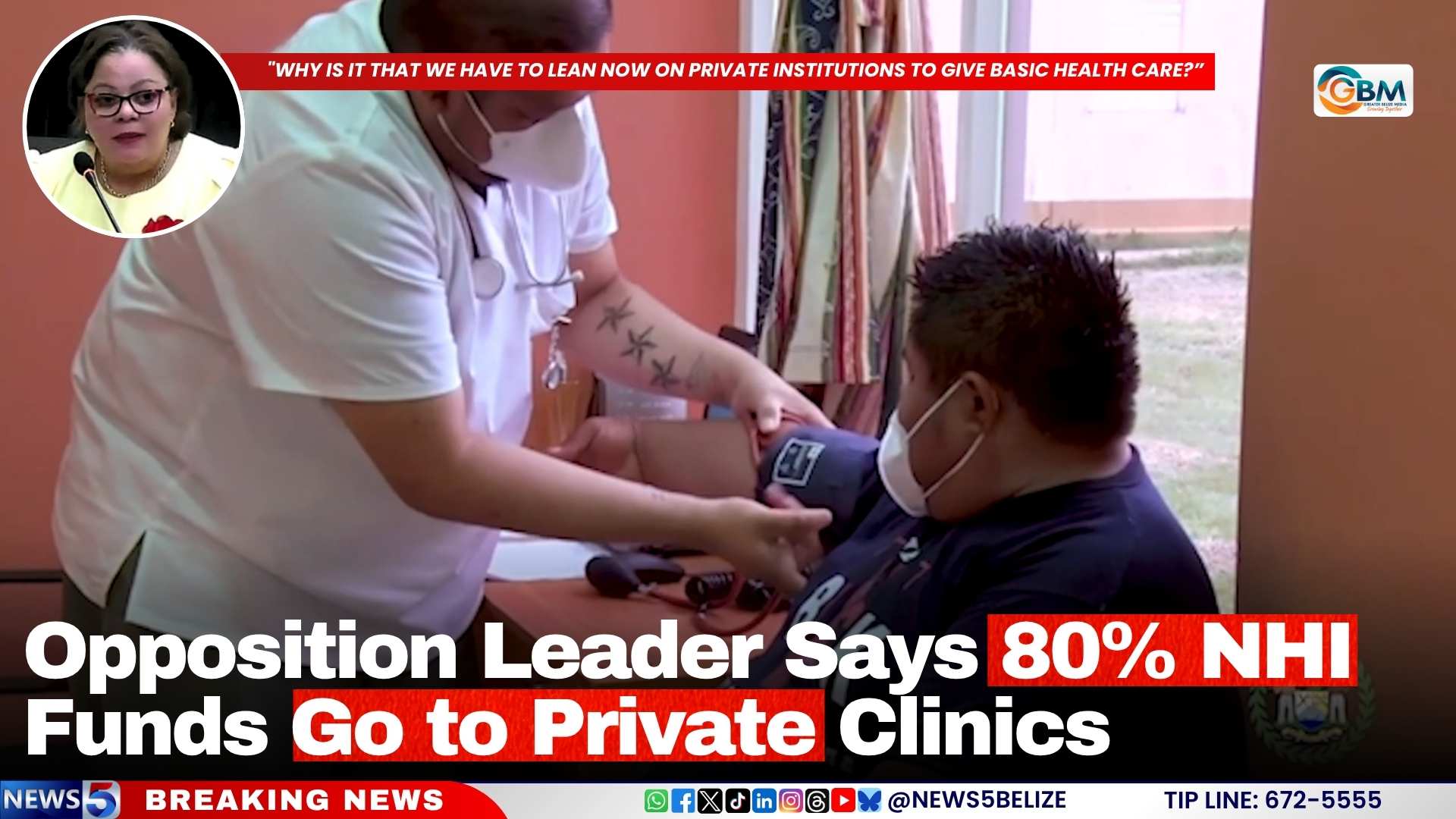
On Thursday, June 8, 2026, Belize’s House of Representatives approved the second reading of the National Health Insurance Authority Bill 2026, capping off a heated debate that exposed deep partisan divides over the future direction of the Central American nation’s public healthcare system. The core point of contention revolves around the government’s growing reliance on private clinics to deliver services under the existing National Health Insurance (NHI) program, with the opposition accusing the ruling administration of sidelining public healthcare institutions to funnel the vast majority of program funds and contracts to private operators.
Opposition Leader Tracy Panton levelled the sharpest critique of the government’s model during floor remarks, revealing that 80 percent of all NHI service contracts are currently awarded to private healthcare facilities, leaving just 20 percent for public sector providers. She questioned the logic of outsourcing core basic healthcare services to private entities, arguing that public institutions are better positioned to deliver equitable, universal primary care to all Belizeans. Panton called for a redirection of existing NHI procurement funds to upgrade underfunded public healthcare facilities, rather than continuing to channel resources to the private sector.
Panton further warned that the new legislation, which formalizes the structure of the NHI authority, concentrates excessive regulatory power in the executive branch without adequate accountability safeguards. She argued that the current trajectory risks creating a parallel funding system that socializes financial risk for taxpayers while concentrating private profit for healthcare operators, warning that without urgent oversight reforms the program could become another corrupt, mismanaged public body similar to the troubled former LIU.
Prime Minister John Briceño, who frames the NHI bill as a foundational long-term nation-building initiative, defended the mixed public-private delivery model on efficiency and cost-saving grounds. Briceño argued that contracting both public and private providers allows the NHI program to leverage bulk purchasing power to drive down service and medication costs for the system. He illustrated the savings with a concrete example: while an average patient pays $50 out of pocket for a private clinic appointment, the NHI negotiates a rate of just $12 per visit, thanks to the guarantee of more than 4,000 patients annually for participating providers. Briceño noted that this same bulk negotiation principle applies to pharmaceutical procurement, delivering broader savings across the entire program.
Health and Wellness Minister Kevin Bernard did not directly refute Panton’s 80-20 funding split claim, but pushed back against her critique by highlighting the addition of seven new public sector NHI providers across the country, including new polyclinics in high-demand population centers Orange Walk, Belmopan, and San Ignacio. The bill now moves forward in the legislative process, as debates over the balance between public and private healthcare delivery in Belize continue to dominate political discourse.