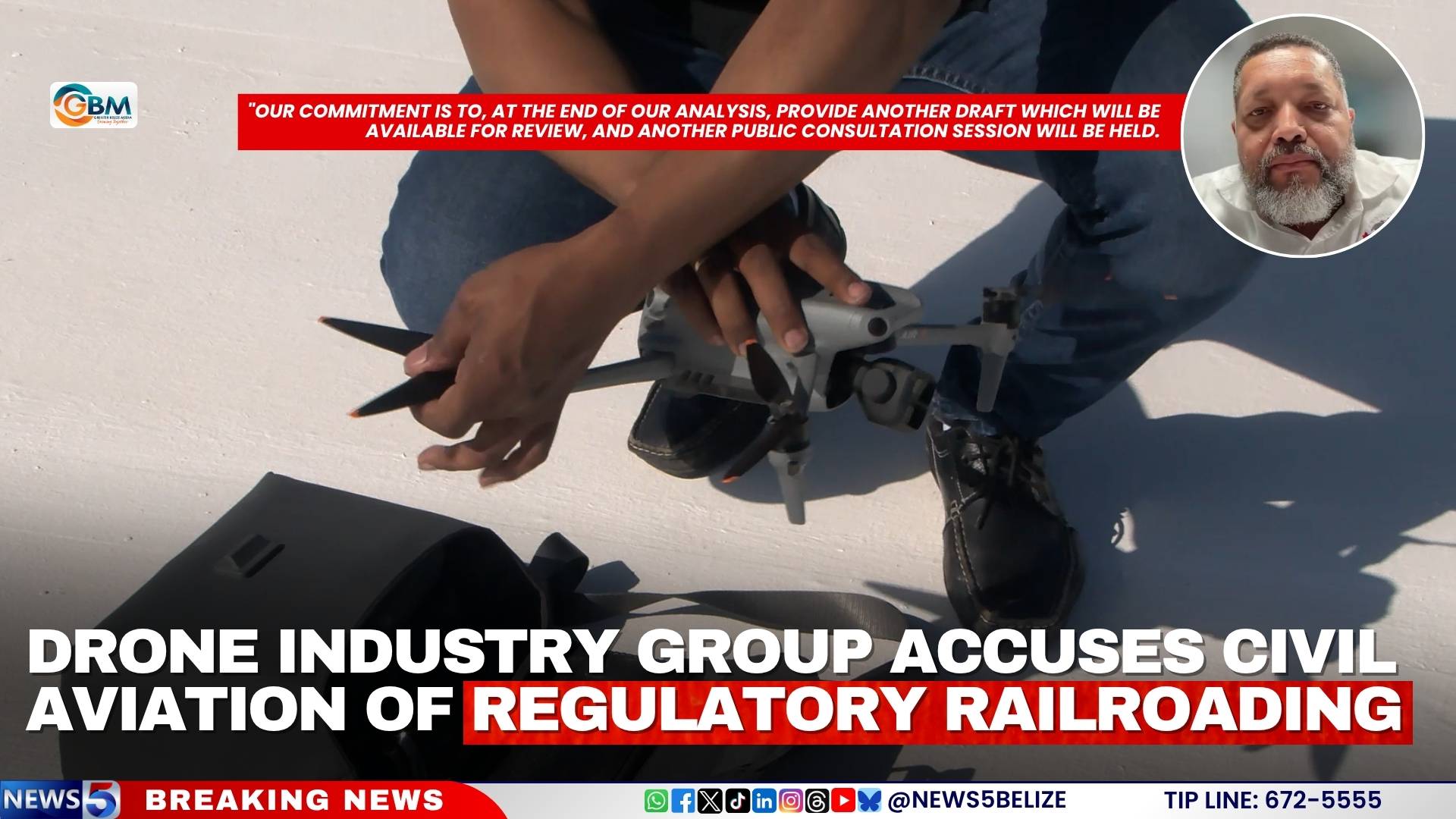
A high-stakes dispute over new drone regulations has broken out in Belize, with the nation’s leading drone industry trade group leveling serious accusations of rushed, unfair rule-making against the country’s civil aviation regulator that could threaten the future of Belize’s burgeoning unmanned aerial systems (UAS) sector.
The Belize National UAS Industry Association (BNUIA) claims the Belize Department of Civil Aviation (BDCA) has cut corners on stakeholder input and pushed forward with a flawed regulatory framework that fails to address industry concerns, putting the fast-growing local drone market at unnecessary risk.
The conflict centers on a planned two-day collaborative line-by-line review of the draft regulations, scheduled for May 21 and 22 of this year. According to the BNUIA, the BDCA unexpectedly slashed the workshop agenda just 24 hours before it kicked off, truncating the session to just a day and a half. When the workshop concluded, regulators and industry stakeholders had only reviewed 24 of the 55 pages included in the proposed regulatory text.
The remaining 31 unreviewed pages contain provisions that deviate sharply from globally accepted UAS regulatory standards, the association says. BNUIA leaders add that their formal request to reconvene the workshop to finish the full review was rejected outright by BDCA leadership.
Further controversy emerged over the meeting minutes distributed to participants after the workshop. The BNUIA says the original draft described the review as fully completed, a characterization that participants refused to sign off on. The wording was only altered to reflect that only a partial review of concerns had been completed after industry pushback. BDCA director Nigel Carter frames the disagreement over the minutes as a simple miscommunication, explaining that the document was intended to outline workshop goals and note that stakeholders would submit additional feedback post-meeting.
Carter pushed back against the industry’s claims of a rushed process, noting that public consultation on the draft regulations first launched back in July 2025 – nearly 11 months before the May workshop. He added that the BDCA granted multiple extensions to the comment period at the industry’s request, with the final extension ending on January 5, 2026, and that the department continued to accept public input even after that date.
Following the workshop, Carter sent a formal letter to all stakeholders setting a May 29 deadline for submission of any remaining outstanding concerns. The BNUIA points out that this same letter laid out BDCA’s plan to publish a final version of the regulations by June 30, with a possible future forum only to explain how public comments were addressed, not to revisit unresolved disagreements. For the industry association, this timeline confirms that the BDCA intends to finalize the rules before all stakeholder concerns are fully resolved.
Carter refuted this claim in comments to local outlet News 5, stressing that the consultation process remains open. After the department analyzes all submitted feedback, a revised draft will be released for additional public review, and a second full public consultation session will be held, he said. “It is just that we had to say, listen, we are at a point now where we must move on,” Carter explained, noting that the department has a range of other mandatory regulatory responsibilities to advance. He committed that all feasible changes to the draft will be made based on feedback, and that the BDCA will publish a clear public rationale for any adjustments that are not adopted.
Transparency has emerged as a second core flashpoint in the dispute. The BNUIA filed a Freedom of Information Act (FOIA) request on April 24, 2026, seeking records from the BDCA, the civil aviation ministry’s CEO, and other relevant government agencies. By law, agencies are required to respond to FOIA requests within 30 days, but the association says that 30-day window has now expired with no acknowledgement or response from any of the named agencies. Carter responded that the requested records are currently being compiled and will be released to the association within the next week to 10 days.
The industry association also argues that the proposed regulations are largely a copy-paste of international rules that are poorly suited to Belize’s local drone market, imposing unnecessary heavy burdens on small local operators and stifling the sector’s growth. BNUIA claims the rushed process is driven primarily by a desire to meet international auditor requirements rather than to craft rules that support the development of Belize’s domestic drone industry.
Carter countered that Belize has had a binding obligation to implement International Civil Aviation Organisation (ICAO) standards since the country joined the Convention on International Civil Aviation back in 1991. Aligning local rules with global international standards improves aviation safety for all operators, he explained, creating a consistent, predictable regulatory environment that both local and foreign operators can rely on when operating in Belizean airspace.
The disagreement comes as drone technology emerges as a fast-growing economic sector in Belize, with applications ranging from agricultural mapping and infrastructure inspection to tourism and delivery services, making the final shape of the country’s first comprehensive UAS regulations critical to the sector’s long-term trajectory.