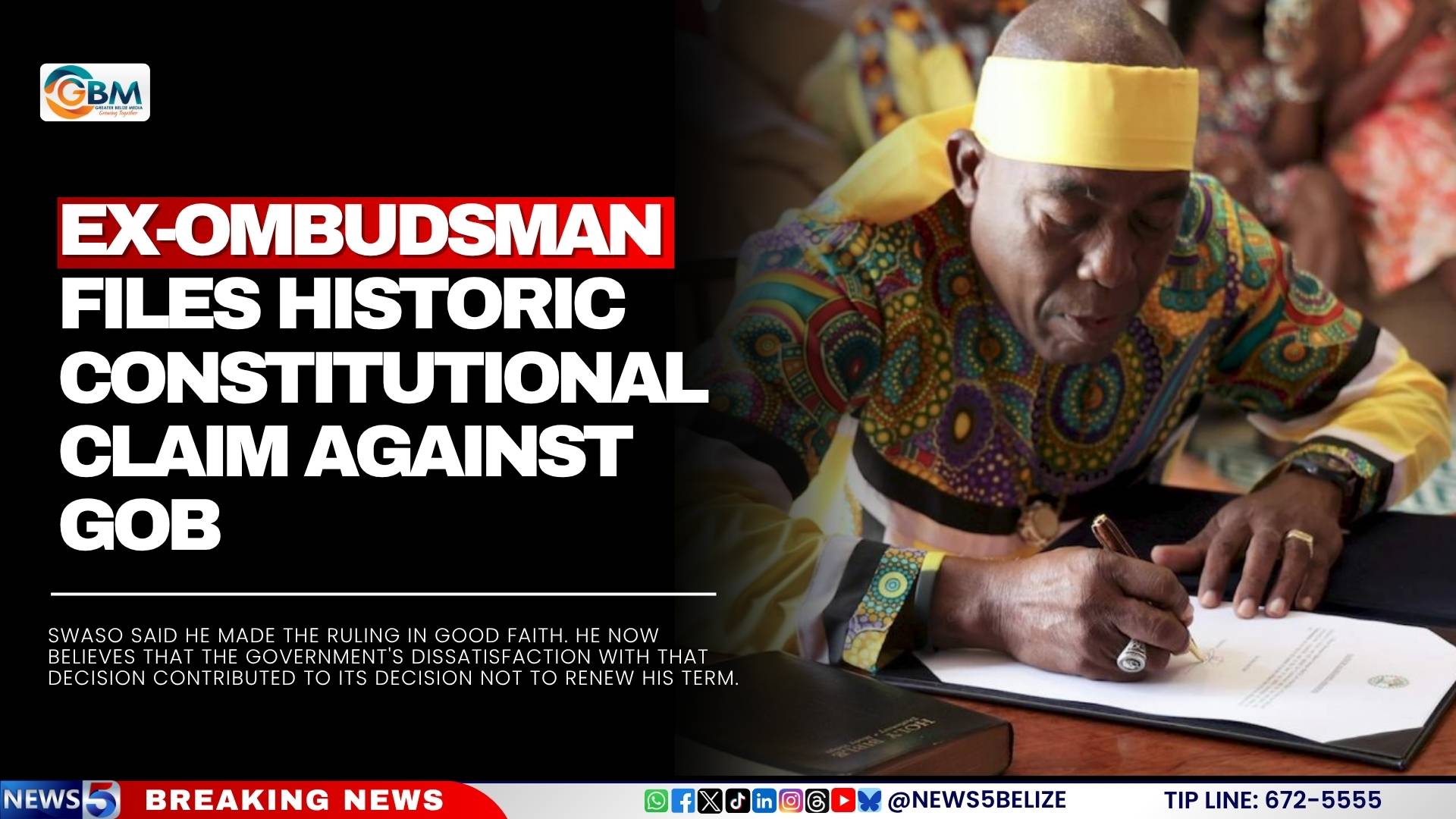
In a groundbreaking legal action that tests the boundaries of institutional independence in Belize, retired Major H. Gilbert Swaso, the country’s former Ombudsman, has submitted a landmark constitutional claim against the Government of Belize. The suit alleges that the state violated its own founding constitution by disregarding the legally mandated terms and protections of the Ombudsman’s office, and that it blocked the renewal of Swaso’s appointment as direct retaliation for a high-stakes Freedom of Information ruling that went against the sitting government.
The dispute stretches back to a Freedom of Information request filed by Jeremy Enriquez, a prominent local public transparency activist. Enriquez sought the release of details surrounding public funds spent on legal fees paid to outside lawyers hired by the Attorney General’s office. The legal work in question was tied to a controversial redistricting process, a matter widely recognized as politically sensitive in Belize’s domestic politics.
As the sitting Ombudsman at the time, Swaso was tasked with reviewing the Attorney General’s decision to deny Enriquez’s disclosure request. Exercising the statutory authority granted to his office, Swaso ruled in favor of transparency, ordering the release of both the identities of the contracted legal practitioners or firms and the full sum of public money allocated to their services.
In comments on the upcoming legal challenge, Swaso defended his original ruling, saying: “I was of the view that the government’s expenditure of public funds — that is, taxpayers’ money — was not a matter that should be kept secret from the people because it was, after all, their money that was being spent. It was therefore necessary for the government to account to the people for same.”
Swaso emphasized that his 202X ruling was made in good faith, aligned with the core mandates of his role to uphold government accountability. He now maintains that the government’s documented displeasure with that decision was the determining factor behind its refusal to extend his appointment when his term expired.
The former ombudsman argues that his non-renewal was clearly punitive in nature, designed to send a message to independent public officials. In his constitutional filing, he notes that penalizing any public officeholder for carrying out their statutory duties fairly and without fear undermines the very foundation of the Ombudsman’s constitutionally guaranteed independence. Without protection from retaliation for unpopular but legally sound rulings, the office cannot fulfill its role as a check on executive overreach, Swaso contends.
Full unredacted details of the constitutional claim will be aired during a special segment on News 5 Live’s 6pm broadcast the same day, with on-the-ground analysis from legal correspondents and interviews with policy experts.