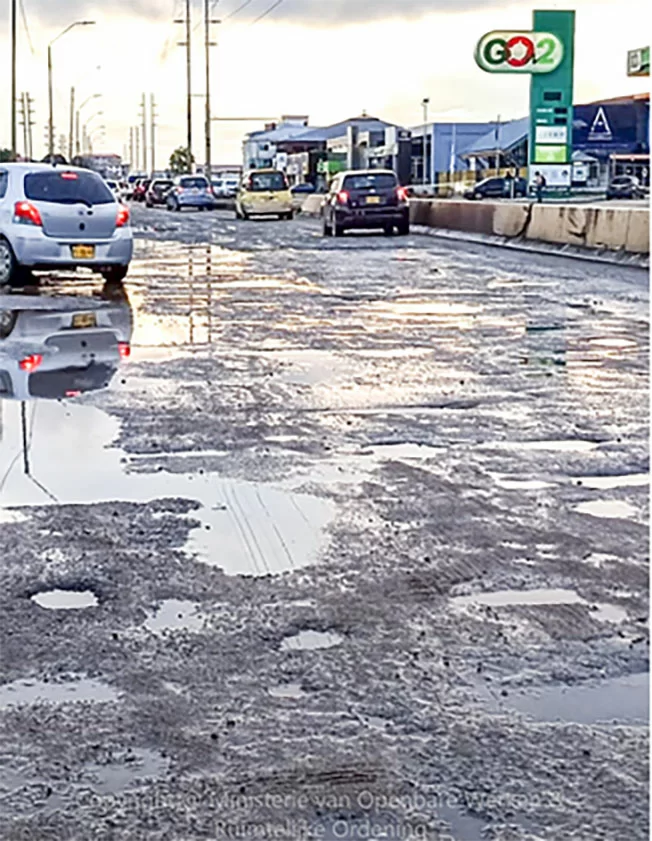
A months-long legal impasse over a stalled Surinamese road asphalt project has moved into a new phase, with government representatives and contractor Baitali N.V. launching constructive negotiations to find a mutually workable solution, according to Baitali CEO Farsi Khudabaks.
The conflict centers on the asphalt project for Van ’t Hogerhuysstraat and Slangenhoutstraat, part of a larger infrastructure initiative fully funded by the Inter-American Development Bank (IDB). After the government awarded the construction contract to rival firm Kuldipsingh N.V., Baitali launched legal action, arguing it had been wrongfully disqualified from the original tender process.
The cantonal court ultimately ruled in Baitali’s favor, ordering the government to withdraw the existing award, re-evaluate Baitali’s bid, and re-run the tender process in line with judicial standards. The ruling did not order the contract to be automatically reissued to Baitali, but it did invalidate the unsubstantiated grounds used to exclude the firm from consideration initially. What followed, however, was an unexpected standoff: the IDB has threatened to pull all funding for the project if the government complies with the court’s order, putting the administration in an impossible bind between upholding judicial rulings and retaining critical infrastructure financing.
To ramp up pressure on the government to enforce the original ruling, Baitali launched a new summary proceeding, asking the court to increase the daily astreinte (conditional fine) for non-compliance from SRD 5,000 to SRD 1 million. No ruling has been issued in this second case yet, but for the first time since the dispute began, both sides are now talking outside the courtroom.
Khudabaks confirmed that while no binding resolution has been put forward yet – including no agreement to withdraw Baitali’s latest legal claim, though that remains on the table as a possible outcome of talks – the shift to negotiation is a marked improvement after years of confrontation solely through legal channels. “The government has acknowledged mistakes were made in the original tender process, and both sides are now working to identify a path that corrects the unfair outcome for Baitali without triggering the IDB’s funding withdrawal,” Khudabaks explained in a statement.
He emphasized that the dispute is not with Kuldipsingh N.V., which secured the contract through the contested process. “We have never had any issue with Kuldipsingh. This conflict is about the integrity of the tender process and compliance with judicial orders, not any dispute with the current awarded contractor,” he said.
Still, key questions remain unresolved, particularly the IDB’s conflicting stance on the impasse. While the IDB’s president has publicly stated the organization respects national judicial process, the threat to pull funding if the ruling is implemented remains in place, continuing to complicate government negotiations.
Khudabaks stressed that a fast resolution is critical for the public. The project can only move forward during the upcoming dry season, so all parties need to reach a deal quickly to avoid further delays. “At the end of the day, the only people who lose from this standoff are local residents and commuters who rely on these badly upgraded roads every day,” he noted. “That’s why urgent clarity and a resolution are so important.” For now, he called the resumption of talks “an important breakthrough” after a long period of deadlock.