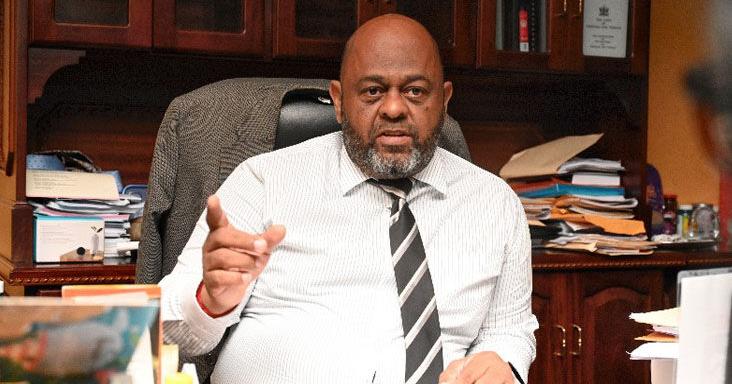
As Trinidad and Tobago approaches the June 17 expiration of its current state of emergency (SoE), the nation’s Defence Minister has publicly backed a three-month extension of the extraordinary security measure, arguing that recent progress against violent organized crime still needs more time to be cemented. In an extensive late-May interview with the *Sunday Express* held at his ministry’s Port of Spain headquarters, Minister Wayne Sturge laid out his nuanced position on the controversial policy: while the country can ultimately function without a state of emergency, he says that moment has not yet arrived.
Since the Kamla Persad-Bissessar administration took office in May 2025, the government has deployed two separate states of emergency to counter a sharp escalation in gang-linked violence, drug trafficking, and illegal gun smuggling that threatened public safety across the twin-island nation. The first SoE was enacted on July 18, 2025, after Trinidad and Tobago Police Service (TTPS) intelligence uncovered coordinated criminal plots tied to gang and prison networks. When national security advisors warned of a resurgence in gang violence and serious organized crime earlier this year, a second state of emergency was put in place on March 3, 2026. This latest measure also included new regulations that restrict public demonstrations in specific security-sensitive zones, adding fuel to existing political debate over the policy.
Opposition from the centre-right People’s National Movement (PNM) has already been made clear: the party will not vote to support any extension of the current SoE. Following the opening of Parliament last Friday, Prime Minister Persad-Bissessar convened an emergency meeting of the National Security Council (NSC) to weigh the future of the order, with a final decision expected shortly before the June 17 deadline. Sturge emphasized that while his personal recommendation is for a 90-day extension, the ultimate call rests with the full NSC, which includes leadership from the TTPS, the Chief of Defence Staff, and the Strategic Services Agency.
Sturge argued that the current SoE has already delivered tangible, meaningful results that have reversed the country’s trajectory on crime. A key win, he noted, was dismantling criminal networks that had infiltrated the national Unemployment Relief Programme (URP) — a move he says prevented what would have been a catastrophic explosion of gang violence across the country. Working alongside U.S. counter-narcotics authorities, security forces have also sharply curbed the flow of drug shipments into the country, blocking dozens of smuggling vessels from reaching shore and tightening control over the nation’s maritime borders. A recent high-profile successful rescue of a kidnap victim, Sturge added, demonstrates just how much more effective border security has become, even as authorities acknowledge they cannot intercept 100% of illegal traffic.
These enforcement efforts have already changed criminal dynamics on the ground, the minister claimed. Inland, cocaine availability has dropped dramatically, and the inflow of illegal firearms and ammunition that has long fueled gang wars over drug territory has been significantly stemmed. After over 100 guns were lost from a single municipal police station — with additional missing weapons reported at other departments across the country — authorities have already recovered a large portion of the diverted firearms, reducing the easy access to weapons that gang members previously enjoyed. Sturge confirmed that a full audit of firearms stockpiles at all municipal corporations is ongoing, though he had no updated findings to share, noting the final results will be presented to the NSC once the review is completed.
The SoE has also allowed authorities to neutralize a longstanding problem: criminal operations directed by gang leaders from inside the nation’s prison system. High-profile kingpins have been transferred to two newly designated prison facilities at Staubles Bay and Teteron, where communication with outside gang networks is effectively blocked. Critically, Sturge explained, this transfer arrangement does not expire with the SoE: both sites have been formally designated as permanent prisons, meaning that incarcerated criminal leaders will remain isolated from outside networks even after the emergency order is lifted.
While official crime data shows a roughly 50% drop in major violent offences, Sturge acknowledged that public anxiety around crime remains high. He attributed this disconnect to the pervasive spread of social media, where every criminal incident is now widely shared and circulated, creating a perception of higher violence than statistics actually reflect. Even with the progress made to date, Sturge said, key operational objectives against transnational criminal networks are still ongoing, and consolidating those gains requires more time under the emergency framework.
Addressing the core question of whether the nation can be governed without a state of emergency, Sturge reaffirmed that long-term governance without extraordinary measures is possible, but the country is not ready to end the policy yet. He added that no society with the complex social challenges facing Trinidad and Tobago can ever eliminate violent crime entirely — noting that non-gang homicides linked to domestic disputes and land conflicts will always exist. The main priority of the current crackdown is cutting gang-related murders, which have already dropped sharply as top criminal leaders are cut off from their networks. The remaining challenge, he said, is gathering admissible court evidence to secure long-term convictions against criminal leaders, a process that will be boosted by upcoming investments in new detection and enforcement assets.