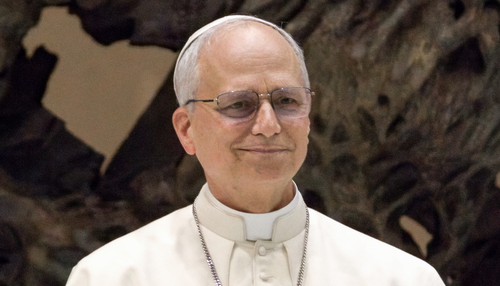
In a watershed moment for the global Catholic Church, Pope Leo XIV has delivered what leading theologians and historians broadly agree is the most unreserved papal apology in history for the institutional Church’s centuries-long role in legitimizing chattel slavery and delaying its formal condemnation, framing the long-overdue step as a critical prerequisite for meaningful redress.
The apology was formally unveiled in the pontiff’s May 25, 2026 encyclical *Magnifica Humanitas* (“Magnificent Humanity”), a document that opens with a discussion of artificial intelligence before turning to confront the Church’s historical sins, drawing a direct line between the transatlantic slave trade authorized by past papal edicts and the new forms of exploitative power and neocolonialism taking shape in the digital age.
Historical records confirm that while the Vatican has long claimed it always upheld the inherent dignity of all people as children of God, 15th-century papal directives explicitly granted European rulers permission to conquer Indigenous lands across Africa and the Americas and enslave non-Christian populations. The 1452 papal bull *Dum Diversas*, issued by Pope Nicholas V, gave the Portuguese crown authority to “invade, conquer, fight and subjugate” non-Christian communities and force them into “perpetual slavery”. A second 1455 bull, *Romanus Pontifex*, expanded these powers and laid the legal and theological groundwork for the Doctrine of Discovery, a framework that would be used for centuries to justify colonial land grabs and the systematic enslavement of African and Indigenous peoples. According to Jesuit historian Christopher J. Kellerman, these policies received endorsement from multiple successive popes over generations.
In his address accompanying the encyclical, Pope Leo characterized the transatlantic slave trade as an “open wound in Christian memory.” He explicitly acknowledged that the apostolic See repeatedly intervened to regulate and legitimize systems of subjugation, including the enslavement of people labeled as “infidels” by Church leaders.
Prior papal efforts to address the Church’s role in slavery have been far more limited. In 1888, Pope Leo XIII — the current pontiff’s namesake — became the first pope to formally condemn slavery, a step that came decades after most nations had already abolished the transatlantic trade. More recently, in 1992, Pope John Paul II delivered a speech on Senegal’s Gorée Island, once a central departure point for enslaved people bound for the Americas, in which he asked for forgiveness for the “heinous acts” of “baptized people” who failed to live out their faith. However, he stopped short of holding the institutional Church itself accountable.
By contrast, Pope Leo’s apology is the first to explicitly recognize the Vatican’s institutional responsibility for legitimizing slavery, a distinction that scholars and activists have emphasized. Anna Rowlands, a professor of Catholic thought at Durham University who took part in the encyclical’s official presentation, told the National Catholic Reporter that the document frames this reckoning as a collective responsibility for the entire global Church, not just a failure of individual Christians.
Historians have long documented that slavery was embedded within Church institutions for hundreds of years, drawing sustained criticism from Pan-African and radical thinkers. One of the most well-documented examples, cited in an NPR report, involves the U.S.-based Society of Jesus (the Jesuits). In 1838, Jesuit leaders sold 272 enslaved men, women, and children from their Maryland plantations to slaveholders in Louisiana, a transaction that propped up the Church’s financial standing in the young United States. Journalist and author Rachel Swarns chronicled this history in her book *The 272: The Families Who Were Enslaved and Sold to Build the American Catholic Church*, revealing that Jesuit priests prayed for the souls of the enslaved people they owned, while violently exploiting their labor.
Caribbean intellectuals have also long called out the Church’s role as a core participant in colonial systems of exploitation. Guyanese historian Sir Walter Rodney, in his 1972 foundational work *How Europe Underdeveloped Africa*, framed the gap between Christian teachings of equality and the Church’s active participation in slavery as a defining example of institutional hypocrisy. Rodney argued that the Church-sanctioned ideology of European “divine right” to Africa and its resources created a deeply ingrained racist system that formed the backbone of global colonial infrastructure whose harms persist today.
The historic apology has been widely welcomed by Black Catholic scholars and activists, who have spent decades organizing to pressure the Vatican to directly confront its institutional role in slavery. Shannen Dee Williams, a historian and author at the University of Dayton, told America Magazine that the pope’s statement marks a “monumental step” toward collective truth-telling and reparative justice. Williams noted that generations of Black Catholics have waited for the Vatican to openly acknowledge the Church’s involvement in the transatlantic slave trade, chattel slavery, and the ongoing legacy of anti-Black racism, saying: “The Catholic Church has never been an innocent bystander in the history of white supremacy.”
With more than 200 million Black Catholics across the globe, the apology comes amid a growing global movement demanding reparations for the harms of slavery and colonialism. Observers expect the announcement will open new avenues for ongoing dialogue about institutional accountability and redress within the global Catholic Church in the coming years.