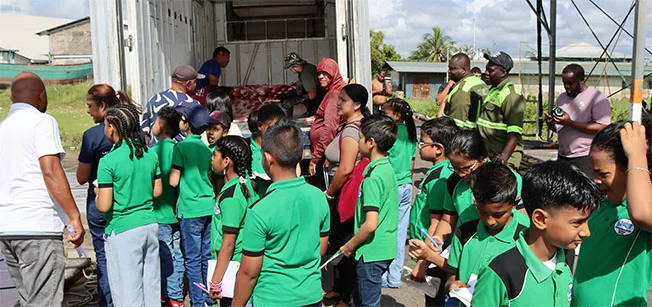
On the occasion of the International Day Against Illegal Fishing, Suriname’s fisheries authorities have launched a unique outreach initiative that targets young learners, aiming to build early awareness of the threats of unregulated fishing and the critical need for sustainable practices to protect local marine resources. The core message of the activity is that introducing children to the harms of illegal fishing from an early age creates a foundation for long-term stewardship of Suriname’s aquatic ecosystems and the future of the national fishing sector.
Illegal fishing, which includes fishing without valid permits, operating in restricted protected waters, and using banned gear that damages marine habitats, is a leading driver of overfishing and severe declines in wild fish populations. To keep fish stocks viable for decades to come, sustainable, rule-compliant fishing is non-negotiable. When fishermen adhere to established regulations and permit requirements, fish populations have adequate time and space to reproduce and replenish, ensuring that future generations can continue to benefit from the rich marine resources found in Suriname’s waters.
This public education message was delivered to students from Sharroyschool by Ranjit Soekhradj, a representative from the Fisheries Directorate of Suriname’s Ministry of Agriculture, Livestock and Fisheries (LVV). On Friday, the group of schoolchildren visited the Central Fishermen’s Harbors of Suriname (Cevihas) as part of the International Day commemoration. Staff from both LVV and Cevihas collaborated closely to host the students, leading guided tours of the facility and walking young attendees through the far-reaching consequences of unregulated fishing.
During the educational excursion, students gained hands-on insight into multiple facets of Suriname’s fishing industry. They received detailed explanations of daily operations at the fishing harbor, vessel maintenance protocols, post-catch fish processing procedures, and the significant role the sector plays in driving Suriname’s national economy. Beyond classroom-style explanations, the students got an up-close look at large commercial fishing vessels, learned how fresh catches are unloaded and stored, had the opportunity to ask industry experts pressing questions about fisheries management, and toured the local Small Scale Fisheries Center to learn about small-scale artisanal fishing operations.
For Larissa Kodjama, a teacher at Sharroyschool, the off-site excursion was an invaluable complement to standard geography lessons taught in the classroom. After the tour, students were assigned to compile their observations and takeaways into formal written reports and class presentations. Kodjama emphasized that hands-on, practical learning helps students absorb and retain information far more effectively than learning exclusively from textbooks.
Through this youth-focused activity, LVV and Cevihas have marked the International Day Against Illegal Fishing in a meaningful, long-term oriented way. By investing in youth awareness and education, the organizations have drawn national attention to the urgency of sustainable fishing practices and the ongoing work needed to protect and preserve Suriname’s valuable wild fish stocks for current and future communities.