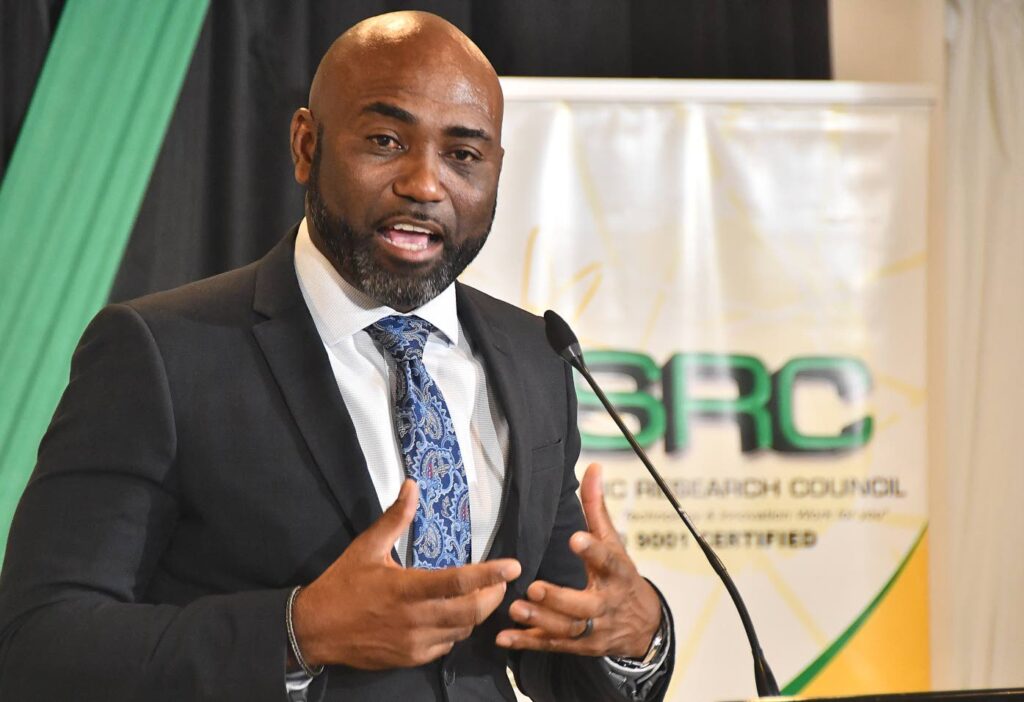
Against a backdrop of rising global energy instability and costly domestic grid disruptions, Jamaica is taking deliberate, structured steps to position itself among the first small developing nations to integrate nuclear power into its national energy portfolio. Science, Technology and Special Projects Minister Dr. Andrew Wheatley outlined the government’s progressive plan during a recent address to the House of Representatives’ Sectoral Debate, framing the move as a critical response to two pressing threats to Jamaica’s energy security: the widespread grid damage caused by Hurricane Melissa in October 2023, and the sharp spike in global oil prices driven by the ongoing Middle East conflict.
Dr. Wheatley emphasized that the Caribbean island’s overreliance on imported fossil fuels has created deep structural vulnerabilities that recent events have laid bare. “Hurricane Melissa did not simply damage our electricity infrastructure — it exposed how fragile our entire energy system is when it depends so heavily on one source of imported energy,” he told lawmakers. “Every supply disruption, every global price hike, every severe hurricane season leaves Jamaican consumers and businesses paying the price. Our energy future demands that we look beyond conventional fossil fuel sources.”
Against this context, the minister noted that Jamaica is breaking with historical precedent among small island developing states, which have long put off exploring nuclear energy as a viable option. Crucially, Dr. Wheatley clarified that the government is not moving immediately to construct a full-scale nuclear power plant. Instead, the country is focusing on the foundational, pre-development work that responsible policy requires: building national technical expertise, strengthening institutional capacity, and forging high-level international partnerships to inform a future evidence-based decision.
“We are moving forward deliberately, transparently, and with full scientific rigor, every step of the way,” he said.
The first major milestone in this process came in October 2024, when the Jamaican government signed a Memorandum of Understanding (MOU) with two of Canada’s leading federal nuclear research and technology institutions: Canadian Nuclear Laboratories and Atomic Energy of Canada Limited. The collaboration covers a range of areas including Small Modular Reactor (SMR) technology development, nuclear medicine, and industrial and agricultural applications of nuclear science. Canadian Nuclear Laboratories operates the Chalk River facility, one of the world’s most advanced nuclear research centers, and both organizations are key players in Canada’s own domestic SMR development program. Dr. Wheatley noted that the partnership gives Jamaica formal access to world-leading nuclear expertise at the highest global level.
Jamaica already has an established domestic foundation for this work through the International Centre for Environmental and Nuclear Sciences (ICENS), based at the University of the West Indies. Operating the institution’s SLOWPOKE research reactor, ICENS has decades of experience fulfilling reporting requirements for the International Atomic Energy Agency (IAEA), delivering national environmental monitoring and radiation protection services, and serving as Jamaica’s official liaison to the global nuclear community.
To coordinate the new national assessment effort, the government has reactivated the Nuclear Energy Working Committee under the Ministry of Science and Technology, with a clear mandate to conduct a systematic feasibility study for nuclear power in Jamaica and advance all required foundational actions. Dr. Wheatley stressed that these early steps are focused on institutional, legislative, and diplomatic capacity building, and do not require heavy upfront capital investment.
Key initial actions include launching a national public consultation and education program, which the minister says is a non-negotiable step for responsible governance: “No responsible government moves forward with a plan for nuclear energy without first engaging its people honestly and openly.” The government also intends to begin negotiations for a formal Nuclear Cooperation Agreement with Canada, which is required to unlock the full scope of technology transfer outlined in the existing MOU. Jamaica will also formally notify the IAEA of its intent to explore the deployment of small nuclear reactors, a step that opens access to no-cost technical assistance from the global nuclear watchdog. Finally, the government will begin drafting a national nuclear regulatory framework, to ensure an independent oversight architecture is in place before any commercial development decisions are made.
Dr. Wheatley told parliament that preliminary assessments of Jamaica’s energy needs have already converged on two key conclusions: SMR technology is the most appropriate fit for Jamaica’s smaller national grid, and a Build-Own-Operate-Transfer commercial model paired with a Power Purchase Agreement is the optimal structure for development. This framework, he explained, keeps large upfront infrastructure costs off the government’s national balance sheet while still delivering the long-term benefits of clean, reliable baseload power for the country.
“This is not some distant fantasy,” Dr. Wheatley concluded. “It is the clear energy pathway that serious small nations across the world are already pursuing. With our existing research infrastructure at ICENS, our new partnership with Canada, and a reactivated working committee to drive progress forward, Jamaica is positioning itself to join their ranks.”