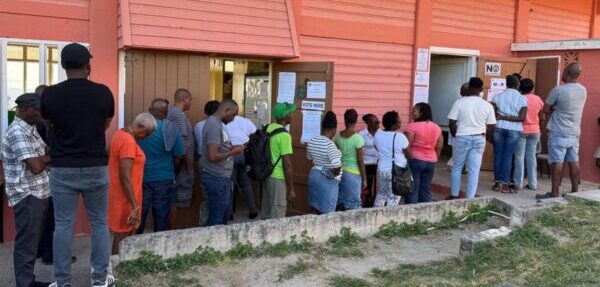
Nearly two months after the April 30, 2026 general elections in Antigua and Barbuda, the Commonwealth’s official observer mission has published its final assessment, delivering a balanced verdict that lauds the peaceful, transparent conduct of the vote while sounding the alarm on long-overdue changes to the nation’s electoral map.
The mission, which was assembled at the formal invitation of Antigua and Barbuda’s government by Commonwealth Secretary-General Shirley Botchwey, brought together four distinguished democratic figures from across the 56-nation bloc, led by former Botswana Foreign Minister Pelonomi Venson. During its pre-election and election-day observation work, the team confirmed the initial positive conclusions it shared in a preliminary public statement just one day after voting closed. The mission found that polling workers carried out their responsibilities with consistent professionalism, standard electoral procedures were followed across nearly all voting sites, and the election unfolded in an orderly, violence-free atmosphere. It also extended praise to voters, participating political parties, national police forces, and independent media outlets, all of which contributed to upholding the credibility of the democratic process.
Beneath this positive assessment, however, the report repeats and amplifies longstanding concerns first flagged by a 2023 Commonwealth observer mission: the nation’s constituency boundaries have remained almost entirely unadjusted since 1984, despite four decades of major demographic shifts that have left dramatic gaps in voter population across different districts. The observer group warned that these size imbalances directly threaten the core democratic principle of equal suffrage, as a vote in one constituency can carry significantly more weight than a vote in another, a gap that could erode public trust in the entire electoral system over time.
To address this systemic issue, the group has laid out a clear set of urgent recommendations. It calls on Antigua and Barbuda’s government to immediately grant the independent Boundaries Commission the authority and resources it needs to conduct a full, data-backed redrawing of electoral districts, using population data collected between the 2022 and 2025 national censuses. Crucially, the report emphasizes that the redistricting process must be fully insulated from political interference, to guarantee fair outcomes and uphold the fundamental “one person, one vote” principle that underpins legitimate democracy.
Following the report’s completion, Secretary-General Botchwey has distributed the full document to all relevant stakeholders, including Antigua and Barbuda’s national government, the national Electoral Commission, all registered political parties, and other civil society groups. In a statement accompanying the report’s release, Botchwey thanked the observer team for its rigorous, timely work, noting that the assessment arrives at a particularly pivotal moment for the nation: Antigua and Barbuda is set to host the upcoming Commonwealth Heads of Government Meeting (CHOGM) in the near future. Botchwey added that the report’s findings offer a valuable, honest assessment of the country’s electoral framework and broader democratic landscape, helping to reinforce Antigua and Barbuda’s commitment to shared Commonwealth democratic values while guiding the bloc’s future collaborative engagement with the nation’s stakeholders.