A new 12.5% tariff threat from the Trump administration targeting Bahamian exports to the U.S. is sending ripples of concern through the Caribbean nation’s key industries, with its $90 million annual fisheries exports facing the most immediate competitive danger. The penalties were announced after the Office of the U.S. Trade Representative (USTR) determined The Bahamas lacks both enacted legislation and active enforcement measures to block forced labor-made goods from entering its borders, placing the country among 54 global jurisdictions facing new trade restrictions.
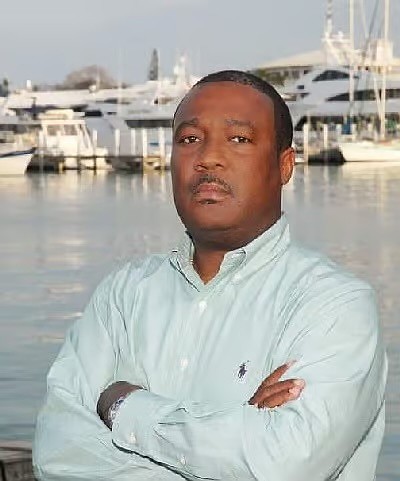
Adrian LaRoda, president of The Bahamas Commercial Fishers Alliance (BCFA), sounded the alarm on the proposed tariffs in an interview with Tribune Business, warning that the new levy would push the nation’s spiny lobster exports – one of its most valuable fisheries products – into a critical competitive disadvantage against U.S. domestic supplies. LaRoda noted that Bahamian spiny lobster already sells for 70% more than Maine lobster in U.S. retail locations, and the 12.5% tariff would effectively push the total cost increase to 15%, eroding what thin profit margins the sector already holds. “We are already breaking even and in survival mode, caught between shifting U.S. market trends and constant uncertainty over Washington’s trade policies,” LaRoda explained, adding that the new threat would only squeeze the industry further.
The USTR’s June 2, 2026, final investigation finding, released after months of written consultations and public hearings, concluded that The Bahamas’ failure to implement and enforce a forced labor import ban is “unreasonable” and “burdens or restricts U.S. commerce.” The penalty structure varies by jurisdiction: nations that have already enacted forced labor import bans or made formal commitments to do so face a lower 10% tariff, while countries like The Bahamas that have neither existing laws nor active enforcement face the full 12.5% rate. Major developed economies including Canada, Australia, the United Kingdom, the European Union, Israel, New Zealand, Saudi Arabia, the United Arab Emirates and Singapore are also among the jurisdictions targeted for tariffs.
Bahamian officials and industry leaders have roughly one month to take action to avert the tariffs, with the USTR scheduled to open a final round of consultations starting July 7, 2026, following a July 6 deadline for written submissions. Based on 2024 trade data submitted to USTR during the first consultation round by former Bahamian Attorney General Ryan Pinder KC, up to $985 million in annual Bahamian exports to the U.S. could be subject to the 12.5% tariff. The largest affected category is refined petroleum, valued at $610 million annually, with other impacted sectors including documents of title ($95.2 million), styrene polymers ($55.7 million) and pearl products ($39 million).
The USTR has signaled that some exports may qualify for exemption on the grounds of U.S. economic and national security, as well as critical supply chain needs. Refined petroleum from The Bahamas is widely seen as a likely exemption candidate: Buckeye Bahamas’ Grand Bahama refining facility currently supplies up to 40% of California’s gasoline demand after the state lost significant domestic refining capacity in recent years.
The Davis administration has moved swiftly to address the USTR’s concerns, tabling amendments to the nation’s Customs Management Act alongside the 2026-2027 national budget just last week. The Customs Management (Amendment) Bill 2026 adds a new Section 208A that grants the government power to ban imports of any goods produced wholly or partially by forced labor, with the explicit goal of blocking forced and child labor-made goods from entering Bahamian markets. During public hearings before the USTR, Danya Wallace, director of legal affairs at the Bahamian Attorney General’s Office, conceded that no existing Bahamian law directly addresses forced labor imports, but the new legislation would close that regulatory gap.
It remains unclear whether the last-minute legislative change will be enough to satisfy the Trump administration, as the USTR’s findings emphasize that it requires both enacted legislation and proof of active enforcement to avoid tariffs. For The Bahamas’ fishing industry, the uncertainty alone is already causing damage, LaRoda said. Currently, The Bahamas exports 12 million pounds of spiny lobster annually, worth approximately $90 million, with 4 million pounds (valued between $30 million and $60 million) destined for the U.S. market. While a slowdown in U.S. exports would not immediately cause catastrophic job losses on its own – much of the industry’s employment is seasonal – LaRoda warned of potential knock-on impacts if domestic markets cannot absorb the excess supply, leading processors and wholesalers to cut purchases and reduce staffing.
To insulate the industry from long-term trade volatility, LaRoda urged the Bahamian government to prioritize diversifying fisheries export markets, noting that the nation already benefits from existing spiny lobster sales in Europe, particularly France, but must expand further into markets like Canada to reduce reliance on the U.S. “Where does it end? We’ve already seen other Caribbean neighbors face tariffs as high as 45%, which would devastate our economy,” he said, calling for immediate trade and foreign policy intervention to protect the industry. “We depend on this export for critical economic injection. We’re already at breaking point on pricing, and we don’t know how much more of this we can take.”
U.S. Trade Representative Jamieson Greer defended the investigation and upcoming tariffs, arguing that failure by major U.S. trading partners to block forced labor goods creates an unlevel playing field that harms American workers. “Some trading partners have taken initial steps to prevent the importation of forced labor goods… However, each of our trading partners must do more to ensure that trade does not perversely encourage and entrench forced labour globally,” Greer said in a statement following the release of the findings.
Independent media analysts have noted the investigation carries wider geopolitical overtones, suggesting it is partially a targeted effort to limit the flow of Chinese goods through major U.S. trading partners like The Bahamas. The U.S. has long accused China of using forced labor for manufacturing, particularly against ethnic minority Uyghurs in the Xinjiang Uyghur Autonomous Region. Commentators also added that the probe could be a backdoor means for the Trump administration to reimpose its controversial 2025 “Liberation Day” tariffs, which were previously ruled unlawful by both the U.S. Supreme Court and U.S. Trade Court and are currently under appeal.