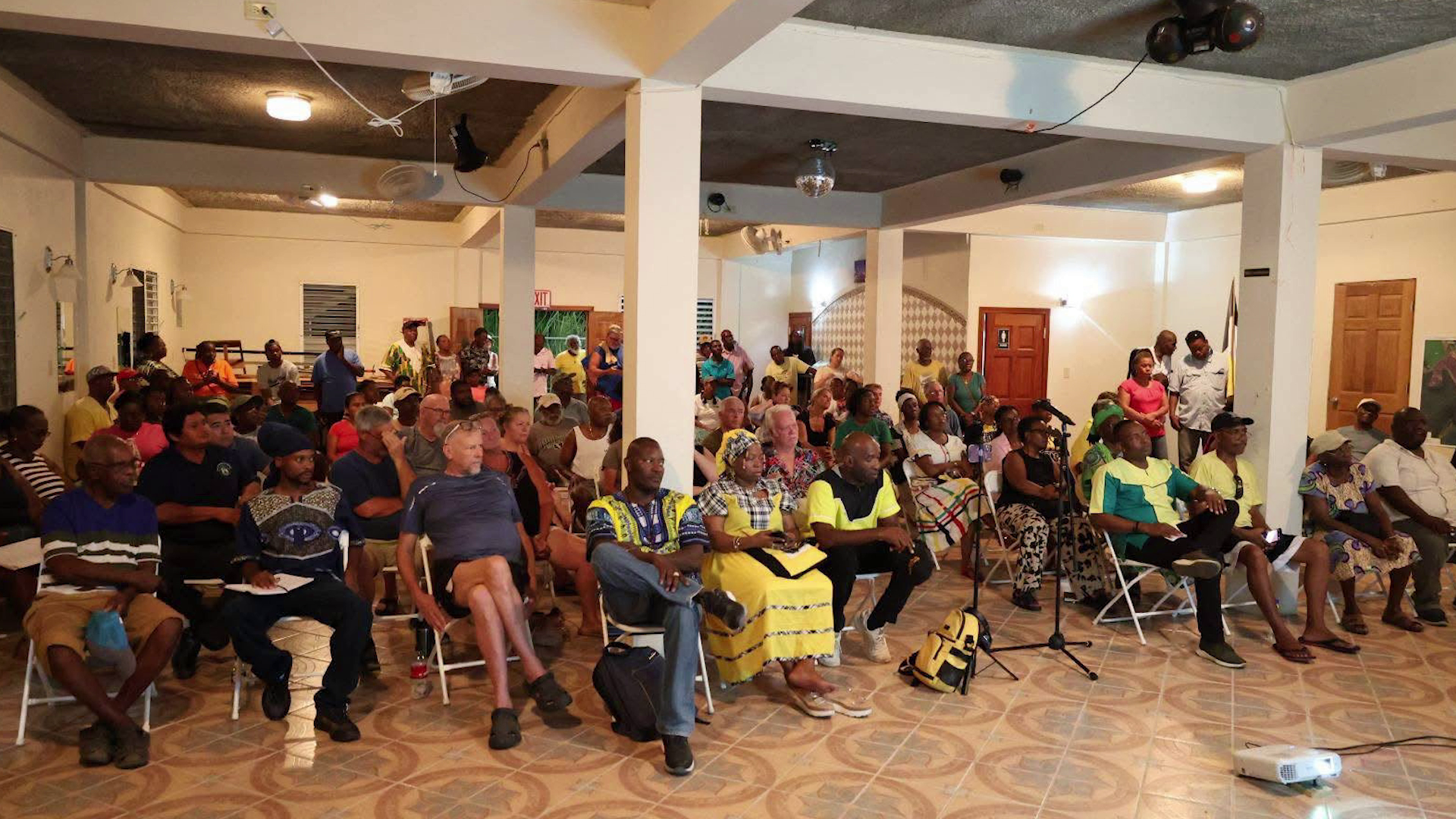
As Belize moves forward with a government-led initiative to formalize inter-communal border lines between pairs of southern communities including Hopkins and Sittee River, as well as Placencia and Seine Bight, Indigenous advocacy leaders are raising urgent alarms over hidden power plays that could erode long-held ancestral land claims. The National Garifuna Council (NGC), the leading representative body for Garifuna people in Belize, is warning all Belizeans against falling for a deliberate divide-and-conquer strategy that it says seeks to pit different ethnic groups against one another while powerful political and commercial interests seize collective Indigenous land.
At the center of the dispute is the ongoing work of the Independent Commission on Village Boundary Disputes, which launched public consultation sessions in southern Belizean villages in October 2025 and is scheduled to wrap up its boundary finalization work by September 2026. NGC leadership argues that the process has become increasingly politicized, opening the door for outside forces to advance their own agendas at the expense of marginalized Indigenous and local communities.
Alex Nolberto, president of the National Garifuna Council, explained that the shift of local village councils from historically nonpartisan governing bodies to deeply politically polarized institutions has created fertile ground for power grabs. “This process, in my view, is taking somewhat of a political line because we know how the village councils have gone from being non-partisan to very polarized and very political,” Nolberto said. “So hence the reason why it is important that the NGC leads this charge, is in the front of these conversations to ensure that Garifuna rights are protected and that they don’t try to score a win using the established political system.”
Ifasina Efunyemi, NGC assistant treasurer, emphasized that the conflict is not a confrontation between Belize’s different ethnic communities, but a fight against systemic disenfranchisement that harms all ordinary Belizeans. Efunyemi urged all people across the country’s traditional ethnic groups to see past manipulated divisions. “Don’t be fooled. I’ll tell every Belizean really and truly of all those traditional ethnic groups that call themselves Belizeans, please don’t fool yourself into thinking that this is an us versus them situation,” Efunyemi said. “You need to be clear who are the us and who are the them, because the us and the them is not Garifuna versus Maya or Maya versus Mestizo or Creole versus Garifuna. We have to recognize who the common enemy is in what has been transpiring in our country and the systematic disenfranchisement of the regular Belizean. That is important for all Belizeans to understand.”
The NGC’s warning comes as land displacement driven by political interests and large-scale private investment has become a growing flashpoint for Indigenous communities across Central America, where many groups still lack full formal recognition of their collective ancestral land rights. The council’s call for cross-ethnic solidarity marks a major push to reframe the boundary debate, shifting focus from inter-communal tension to shared concerns over outside exploitation of local land.