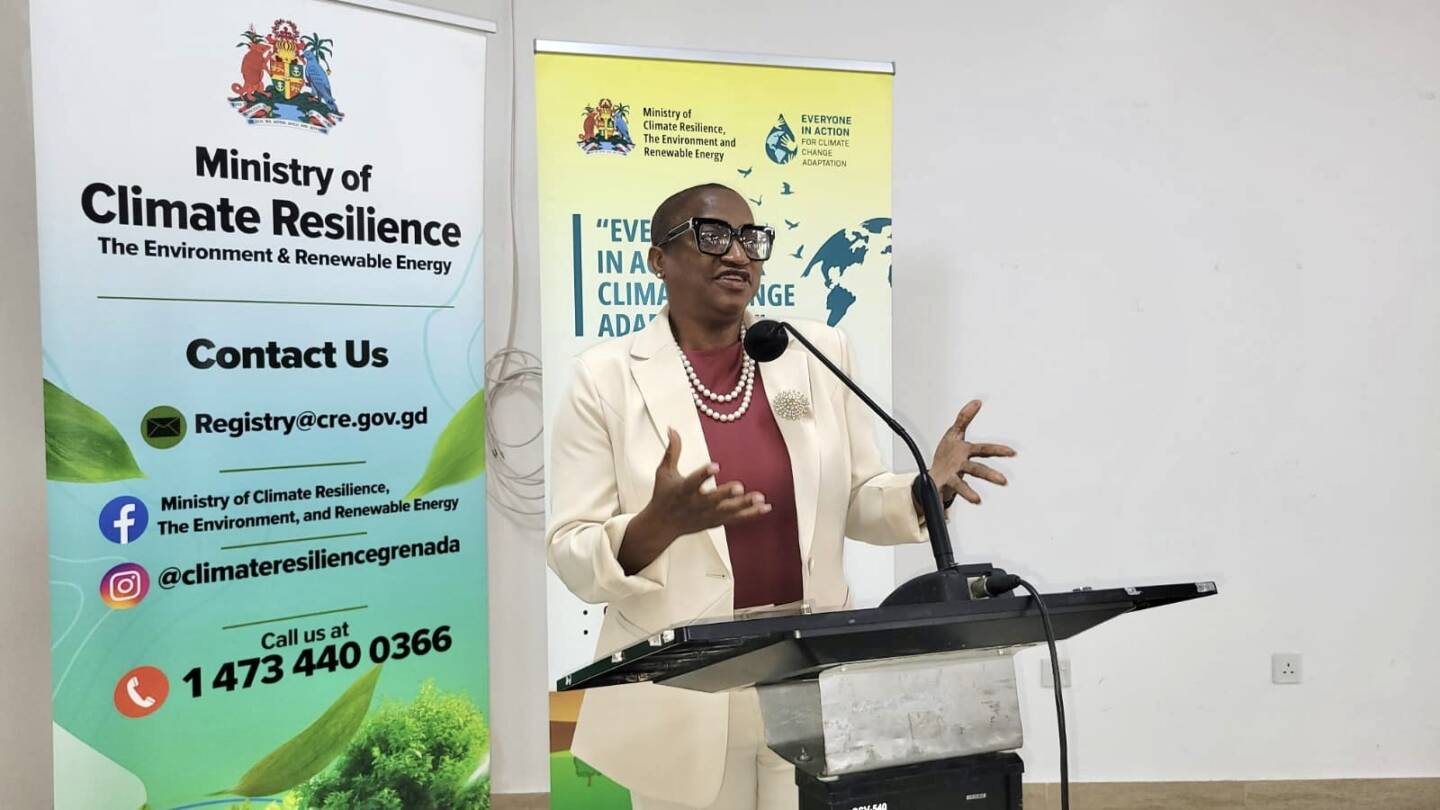
On June 1, 2026, Grenada’s Ministry of Climate Resilience, the Environment and Renewable Energy marked a major milestone in the island nation’s ongoing push to strengthen climate preparedness, hosting a full stakeholder validation workshop for the *Citizen’s Guide to Climate Change Adaptation for Grenada, Carriacou and Petite Martinique* at St. George’s Kirani James Athletic Stadium.
The workshop gathered a cross-section of key actors, from senior government ministry and agency officials to civil society leaders, community organizers, academic researchers, youth delegates, and international development partners. The group’s core task was to review and sign off on the revised draft of the guide before it enters its final editing stage and official public release. This validation session forms an integrated part of the ministry’s broader work to boost public awareness, inclusive participation, and collective ownership of climate adaptation initiatives outlined in Grenada’s updated 2025–2030 National Adaptation Plan (NAP).
The revised draft presented at the June workshop was built on iterative stakeholder feedback collected during an earlier Focus Group Session held on April 27, 2026. During that initial meeting, participants conducted a line-by-line review of the guide’s zero draft and submitted detailed recommendations to refine its structure, accessibility, clarity, on-the-ground relevance, and practical usability. All of these suggestions were integrated into the revised version, with key updates including simplified, jargon-free language, clearer alignment with national climate adaptation priorities, real-world examples of actionable adaptation measures, and enhanced visual design to make the content more approachable for general readers.
In his opening address to attendees, Permanent Secretary Peron Johnson emphasized that the core mission of the guide is to demystify national climate policy for everyday Grenadians. “The National Adaptation Plan is a critical national framework for building resilience across all sectors of our economy and society. However, formal policy documents can often be highly technical and inaccessible to the average person. The Citizen’s Guide is intended to bridge that gap by translating complex adaptation concepts into information that households, communities, schools, businesses, civil society organisations, and citizens can understand, relate to, and act upon.”
Johnson went on to stress that climate resilience cannot be delivered by the government alone; it requires collective, informed engagement from every segment of Grenadian society. “Climate resilience will only be achieved when adaptation becomes everyone’s business. This Guide is designed to empower citizens with the knowledge needed to understand climate risks, identify opportunities for action, and contribute meaningfully to building a more resilient Grenada, Carriacou and Petite Martinique.”
National Adaptation Plan Officer Dr. Roxanne Graham-Victor highlighted that inclusive stakeholder engagement has been central to the guide’s entire development process, noting that the validation workshop was a critical step to ensure the final document meets the practical needs of its target audience. “The objective of this process is to ensure that the Guide is clear, practical, accessible, and useful to the people it is intended to serve. Stakeholder feedback remains central to achieving that objective,” she explained.
Acting Director of Climate Resilience Titus Antoine added that the guide will serve as a cornerstone public resource to support full implementation of the National Adaptation Plan and deepen ongoing public participation in national climate action.
The ministry extended formal gratitude to all workshop participants for their input and sustained commitment to advancing Grenada’s climate resilience goals. It also gave special recognition to the National Adaptation Plan Global Network and the International Institute for Sustainable Development (IISD) for their long-standing technical and financial support to strengthen Grenada’s adaptation planning systems and make the development of the Citizen’s Guide possible.
Following the conclusion of the workshop, the guide’s drafting team will implement the final round of stakeholder recommendations. Once finalized, the document will be distributed across all three islands as a foundational public resource to support climate adaptation education, awareness, and local action.