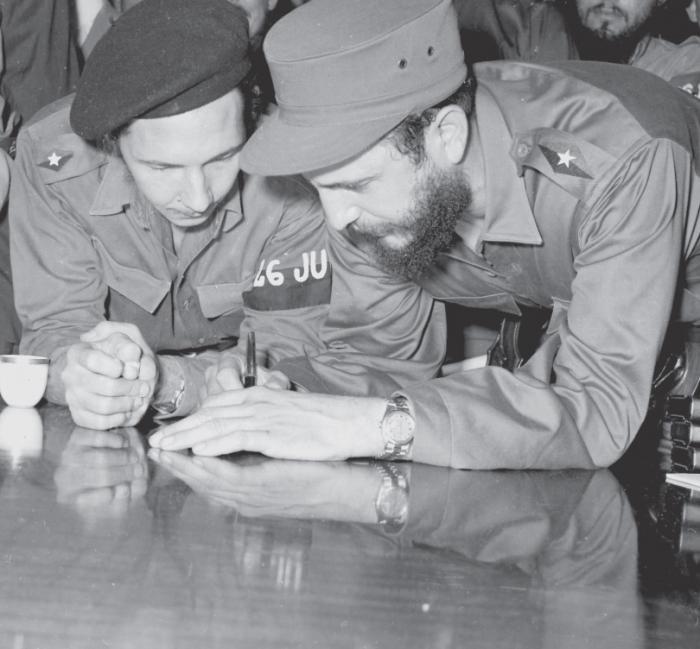
On the occasion of Raúl Castro Ruz’s 95th birthday, a new reflection from Granma journalist Daily Sánchez Lemus honors the Cuban revolutionary leader’s decades-long, deeply rooted connection to the island’s younger generations — a bond that has always stretched far beyond the formal obligations of his decades of public office. As the piece highlights, Raúl has never been merely a senior leader guiding youth; he has always carried the spirit of a young revolutionary himself, one forged in the earliest struggles for Cuban independence from tyranny.
The article opens with a powerful, enduring quote drawn from Raúl’s 1990 speech ahead of the Fourth Congress of the Communist Party of Cuba, delivered on the anniversary of the Protest of Baraguá. In these words, Raúl frames the core test of Cuba’s ideological work: can younger generations stand ready to carry forward the revolutionary legacy, answering the fundamental questions that define Cuban national identity: Who are we? Where do our roots lie? To whom do we owe our freedom? What legacy must we prove worthy of? What contribution do we owe to the homeland?
These words are not just abstract political guidance — they are drawn from Raúl’s own lived experience as a young revolutionary. A member of Cuba’s Centennial Generation, Raúl stood alongside his older brother Fidel in the 1953 attack on the Moncada Barracks, turned 25 in Mexican exile while planning the invasion that would overthrow the Batista dictatorship, and spent years of his youth away from family, fighting for a just cause. He spent New Year’s celebrations imprisoned on the Isle of Pines in 1953 and 1954, in exile in 1955, and waging guerrilla war across Cuba’s mountains from 1956 to 1958. By the age of just 28, he was serving as a young minister in the new revolutionary government, a role he poured his entire self into for decades. In his guerrilla campaign diary, he even noted that a wartime Valentine’s Day was dedicated entirely to his love for Cuba.
Bold, unapologetically Marxist, fiercely loyal to the Cuban people, quick-witted, and deeply sensitive to systemic injustice, Raúl carried that youthful revolutionary spirit across decades. Even as his hair grayed, he remained young at heart among both veteran revolutionaries and new generations of activists just beginning their own revolutionary journeys.
In that same 1990 speech, Raúl laid bare the persistent threat facing the Cuban Revolution from global imperialism. He warned that at the time, Western powers were pushing a narrative of irreversible socialism in crisis, and were counting on Cuba — geographically close to the United States and long targeted by Washington — to collapse and surrender. “Blinded by their triumphalist intoxication, they calculate that Cuba, seemingly isolated in its geographic proximity to the United States, will not be able to resist and will have to surrender,” he said. “They lie in wait for the slightest crack to launch an attack against our homeland and thus fulfill one of their dearest imperial dreams: to crush the Cuban Revolution, eliminate its example, and forever subjugate the people who dared to defy them.”
This persistent external pressure, the article emphasizes, makes investing in youth development and ideological continuity all the more critical. The revolutionary struggle that Fidel Castro once called the “true destiny” of Cuban revolutionaries must be carried forward by each new generation, and preparing those generations to defend Cuban sovereignty is the only way to protect the project of social justice launched in 1959 — the realization of Cuban national icon José Martí’s long-held dream.
Across all of his senior roles, from head of Cuba’s Armed Forces to Second Secretary of the Party’s Central Committee, Raúl’s connection to young people has always been personal and authentic. He has continuously sought to learn from new generations, collaborate with them as equal team members, stand alongside them in shared labor from cutting sugarcane to mountain expeditions, support global solidarity efforts with other marginalized peoples across the world, evaluate new strategies without abandoning core revolutionary principles, and ensure the movement itself never loses the urgent, courageous momentum of the guerrilla struggle that has held imperial aggression at bay for more than 60 years. For Raúl, just as for Fidel, it is non-negotiable that younger Cubans know their nation’s full history, so that they can love it and defend it with conviction.
Raúl stands as a mentor to young Cubans and emerging revolutionary leaders, teaching core values through consistent example: that a legitimate, lasting revolution is built through collective sacrifice and independent struggle against the enemies of national sovereignty. He has long emphasized that for the people of Latin America, often called “Our America” in revolutionary discourse, veneration of the United States powers that have repeatedly intervened to oppress the region is a mark of deep national and human degradation — a truth proven by long centuries of history.
As Cuba prepares to mark Raúl’s 95th birthday, the article argues that his early guidance on youth and revolutionary continuity remains a compass for the current moment. Today, as the nation marks the centenary of Fidel Castro’s birth, it calls on all Cubans to embrace the shared legacy of unity, anti-imperialism, national independence, and social justice that Raúl continues to defend alongside the Cuban people, just as the young mambí independence fighters who stood with General Antonio Maceo at Baraguá did more than a century ago. In keeping the revolutionary legacy alive, every Cuban must contribute the same level of sacrifice and love that the nation’s long history of struggle deserves.