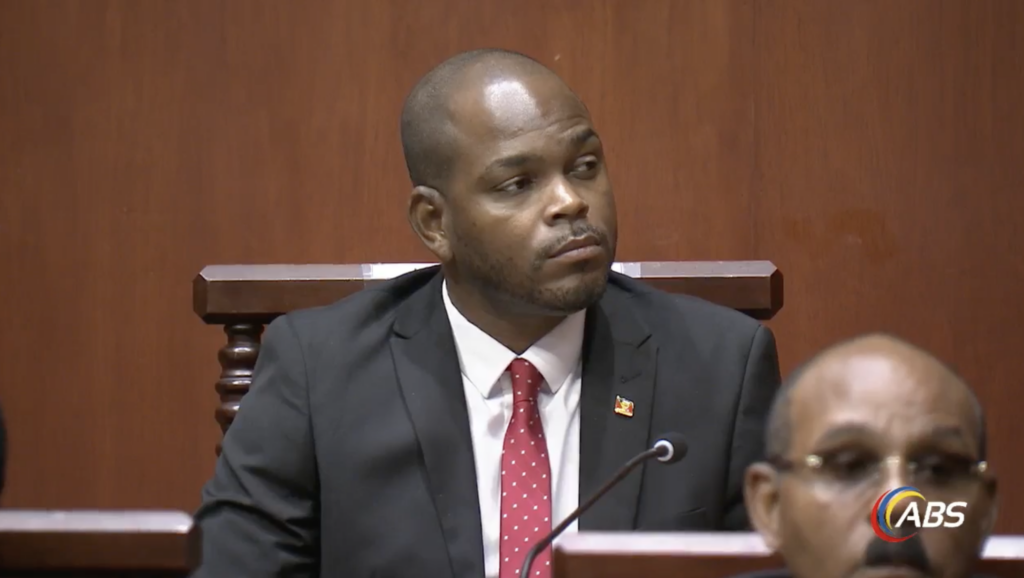
A revelatory encounter with the true scope of autism spectrum disorder (ASD) in Antigua and Barbuda has spurred Health Minister Michael Joseph to launch a landmark new support initiative: the national Cognitive Behaviour Centre, a dedicated facility designed to lift up autistic children and the families that care for them.
Joseph shared the story of how this project came to be during an interview on Pointe FM’s popular public affairs program *On Pointe*, explaining that his perspective shifted dramatically during recent national autism awareness outreach activities. As he pored over official prevalence data and listened first-hand to parents describe their daily struggles, the scale of the unmet need in the country became impossible to ignore.
“CDC data puts the current diagnosis rate at one in every 31 children. That was a wow moment for me — I had to stop and ask, what is really happening here?” Joseph told the program.
This awakening did not come out of nowhere: the minister had already started questioning existing understanding of ASD prevalence during his recent election campaign in the St. John’s Rural West constituency. Over just five weeks of door-to-door campaigning, he encountered eight separate families raising autistic children across a range of support needs — a number far higher than he had expected to see in a single electoral district.
Many of the parents he spoke with shared a common, crippling challenge: balancing full or part-time work with the intensive caregiving required for children with more severe forms of autism, with little to no systemic support to ease their burden. That weight hit even closer to home for Joseph when parents shared emotional, personal testimonies at a recent community autism event, pleading with the government to expand accessible support services across the country.
He recalled one mother’s plea: “She told me straight out that we need more help, that this is so hard for parents like me.”
Moved by these accounts, Joseph immediately began pushing for action, reaching out to senior health officials to launch planning for the new support center. “I said to Dr. Bell-Jarvis, we cannot wait — we have to do something for these families right now,” he said.
Under the current timeline, the center will launch operations initially out of the existing Sir Lester Bird Medical Centre, with plans to transition to a purpose-built standalone facility as the project scales. To lay a strong foundational framework for the program, the health ministry is currently in talks to recruit an ASD services specialist who is originally from Antigua and has built expertise abroad to return home and lead the center’s setup. The government is also actively recruiting additional specialized staff, including occupational therapists and speech pathologists, to join the initiative.
In a promising development for long-term programming, an Atlanta-based university with a leading department focused on ASD research and social integration has already reached out to explore a formal partnership with Antigua and Barbuda’s new center.
Unlike narrow support models that only focus on clinical care for children, the new Cognitive Behaviour Centre will take a whole-system approach to support: it will serve autistic children, their families, local schools, and classroom educators alike. A core priority of the initiative is to map tailored educational pathways that match each child’s unique support needs, while helping mainstream schools build capacity to integrate autistic students wherever appropriate.
“Inclusion has to be our top priority,” Joseph emphasized. “But we also have to recognize that autism exists on a spectrum, and different children need different levels of targeted support to thrive.”