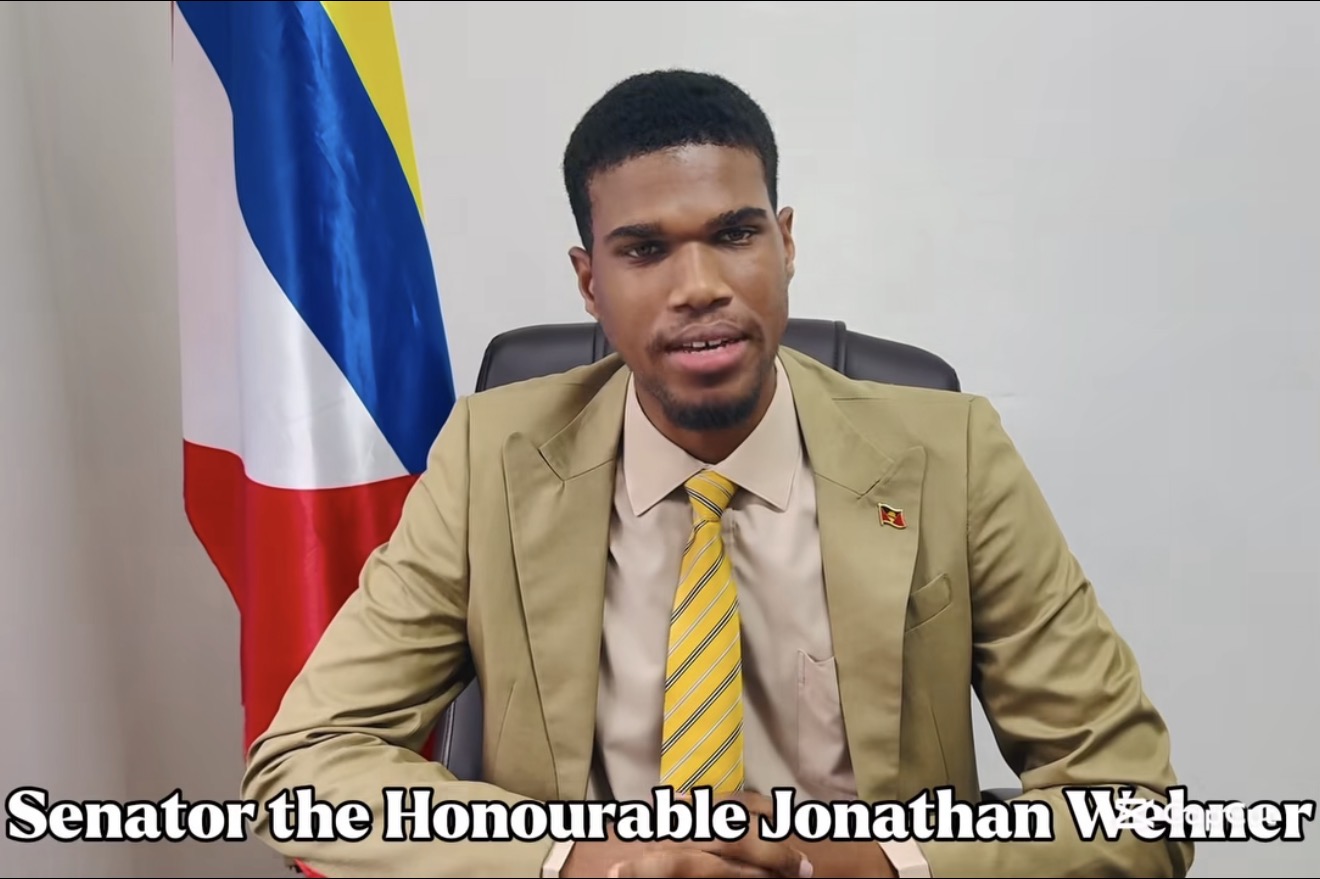
A rising opposition political figure in Antigua and Barbuda has sparked a national conversation about civil discourse in public office, after declining to trade verbal blows with the country’s sitting prime minister following sharp public criticism.
United Progressive Party (UPP) Senator Jonathan Wehner pushed back against recent remarks from Prime Minister Gaston Browne, who attacked Wehner’s behavior during an opposition walkout from Parliament last week. The walkout was tied to a broader parliamentary controversy surrounding Opposition Leader Jamale Pringle, and Browne doubled down on his criticism during his weekly “Browne and Browne” radio program, where he labeled Wehner “totally agitated” and claimed the first-term senator was “going down the wrong path.”
Rather than matching the prime minister’s critical tone, Wehner has taken a deliberate stance of refusing to engage in reciprocal name-calling, framing the exchange as a broader example of the declining standards of public conversation in Antigua and Barbuda’s national politics. In a formal statement responding to Browne’s comments, Wehner described the prime minister’s remarks as deeply unfortunate, arguing that top elected officials have a responsibility to lift up public dialogue rather than drag it into petty conflict.
“It is unfortunate that our leaders continue to lower the bar of our political and national discourse by engaging themselves in frivolous and disgraceful comments which debase the high office they hold,” Wehner said. The senator added that retaliating in kind would violate both his personal religious values and the integrity of the public office he holds. “I will not degrade the Christianity I profess or the public office I hold by participating in the ‘tit for tat’ melee of disgracefully juvenile discourse often spewed by our leaders,” he added.
Wehner also noted he has no expectation of, nor interest in, seeking an apology from Browne, pointing to the prime minister’s 12 years in office as evidence that his confrontational style is a consistent feature of his leadership. “Nor will I waste any time asking for an apology that I know will never come, especially when the Prime Minister has consistently shown the nation this is who he is throughout his 12 years in office,” Wehner said.
Instead of escalating the personal conflict, Wehner is turning to the Antiguan and Barbudan public to open a broader debate about what standards of conduct voters should demand from their elected representatives. He posed two direct questions to citizens to frame the conversation: “Is this the behavior we find desirous in our nation’s leaders? Is this the behavior you want your children to emulate?”
Wehner closed his statement by urging all voters to reject complacency when elected officials act in ways that undermine the dignity of their offices, urging people to speak out against unbecoming conduct rather than stay silent. “Let us never condone or be silently complicit when those who occupy the high office we, the people, elected them to debase that office through their unbecoming behavior,” he said.