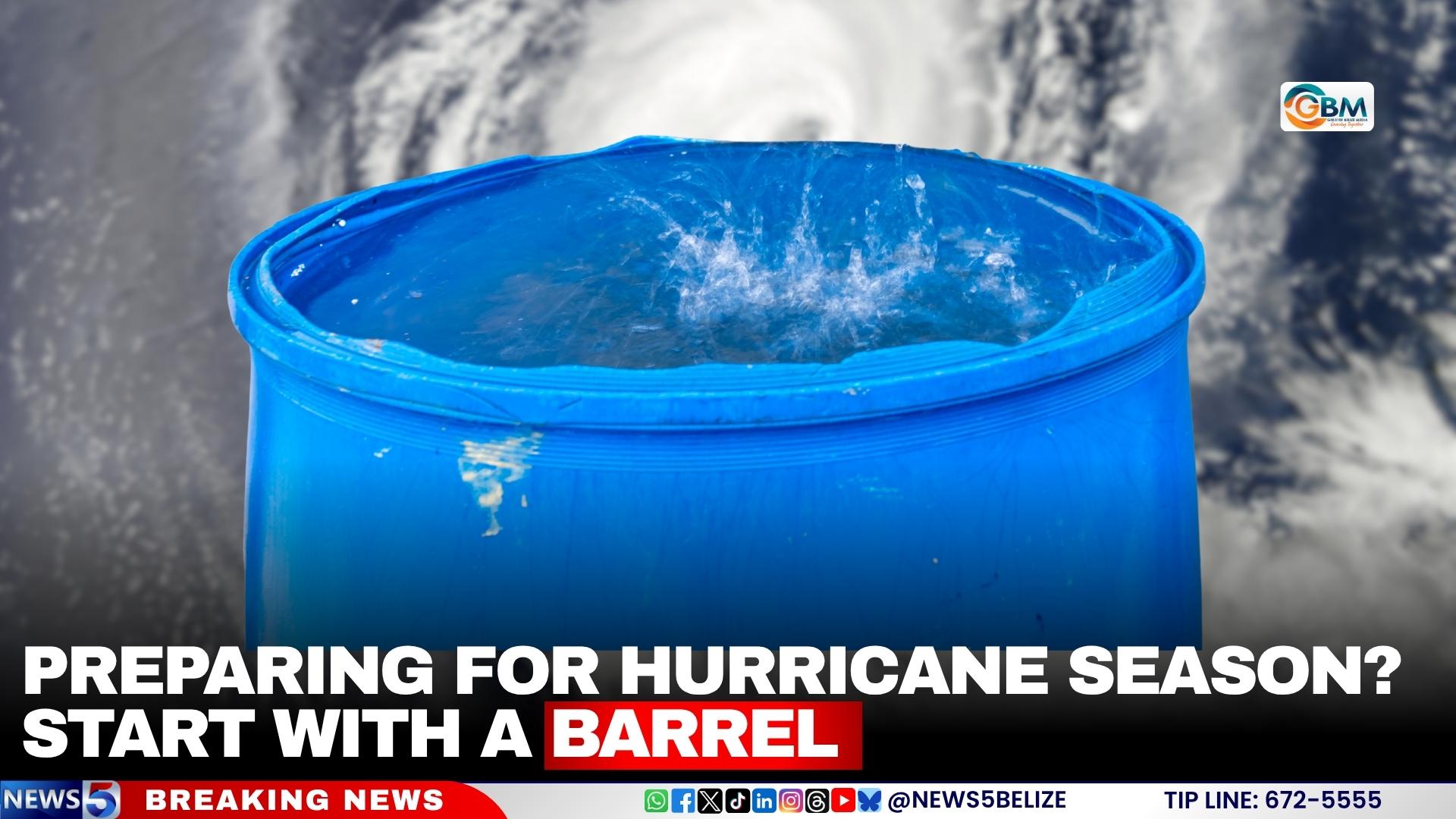
As the 2026 Atlantic hurricane season approaches, households across Belize are already beginning the annual rush to stock up on emergency supplies, a process that can quickly strain budgets already stretched thin by rising living costs. But during an appearance on the popular *Open Your Eyes* morning news program, Chief Hydrologist Tenille Hendy is highlighting a simple, low-cost, and often overlooked preparedness step that could save lives when disaster strikes: securing access to clean drinking water ahead of time.
Hendy emphasized a critical public health fact that many emergency prep novices overlook: the human body can only maintain safe hydration levels for a maximum of three days without clean water. Unlike many pricey emergency supplies, the solution she recommends relies on items most Belizean households already own, or can purchase for just a few dollars.
Drawing on long-standing local tradition, Hendy pointed to the common practice of repurposing used food buckets, such as the classic “pigtail bucket” or lard storage buckets that many families keep after emptying. The preparation process is straightforward: wash the container thoroughly with soap powder and a small amount of chlorine bleach (Clorox) to eliminate contaminants, then fill it with clean water once the Meteorological Service issues an incoming storm alert. This simple pre-storage step drastically reduces the stress of water scarcity after a storm hits, Hendy explained.
For households looking to store larger volumes of water, Hendy said repurposed food barrels work equally well. To harvest natural rainwater, residents can secure a layer of fine mesh netting (often referred to locally as cheese cloth) over the opening of the barrel to filter out debris, add a small measured amount of chlorine bleach to purify the water, and store it for emergency use. This method not only provides free emergency water but also reduces strain on public water systems that often struggle to meet demand in the lead-up to a major storm, she added.
Hendy also outlined the simple purification steps that make stored water safe for consumption: a controlled amount of bleach, or water purification tablets distributed for free or low-cost by the Ministry of Health and Wellness, is enough to eliminate harmful pathogens. This is particularly critical after a storm, when floodwaters filled with debris and sediment contaminate river systems, compromising public drinking water supplies for days or even weeks.
Beyond the direct impacts of hurricanes that make landfall in Belize, Hendy warned of a lesser-known but persistent flood risk that makes early water preparation non-negotiable: transboundary flooding. This phenomenon occurs when heavy rainfall falls in neighboring Mexico and Guatemala, even when Belize records no rain at all. The excess runoff flows downhill through shared cross-border river systems, triggering widespread flooding in Belize without any local warning signs.
Hendy pointed to past flooding events in the Benque region as a key example: residents were often caught completely off guard because the storm activity that caused the flood was hundreds of miles away in neighboring countries. Waiting for a storm to be approaching Belize’s coast to start preparing, she stressed, is already too late. By prepping clean water storage containers weeks or even months ahead of hurricane season, households can cut down on last-minute expenses and avoid the risk of being left without safe drinking water when disaster strikes.