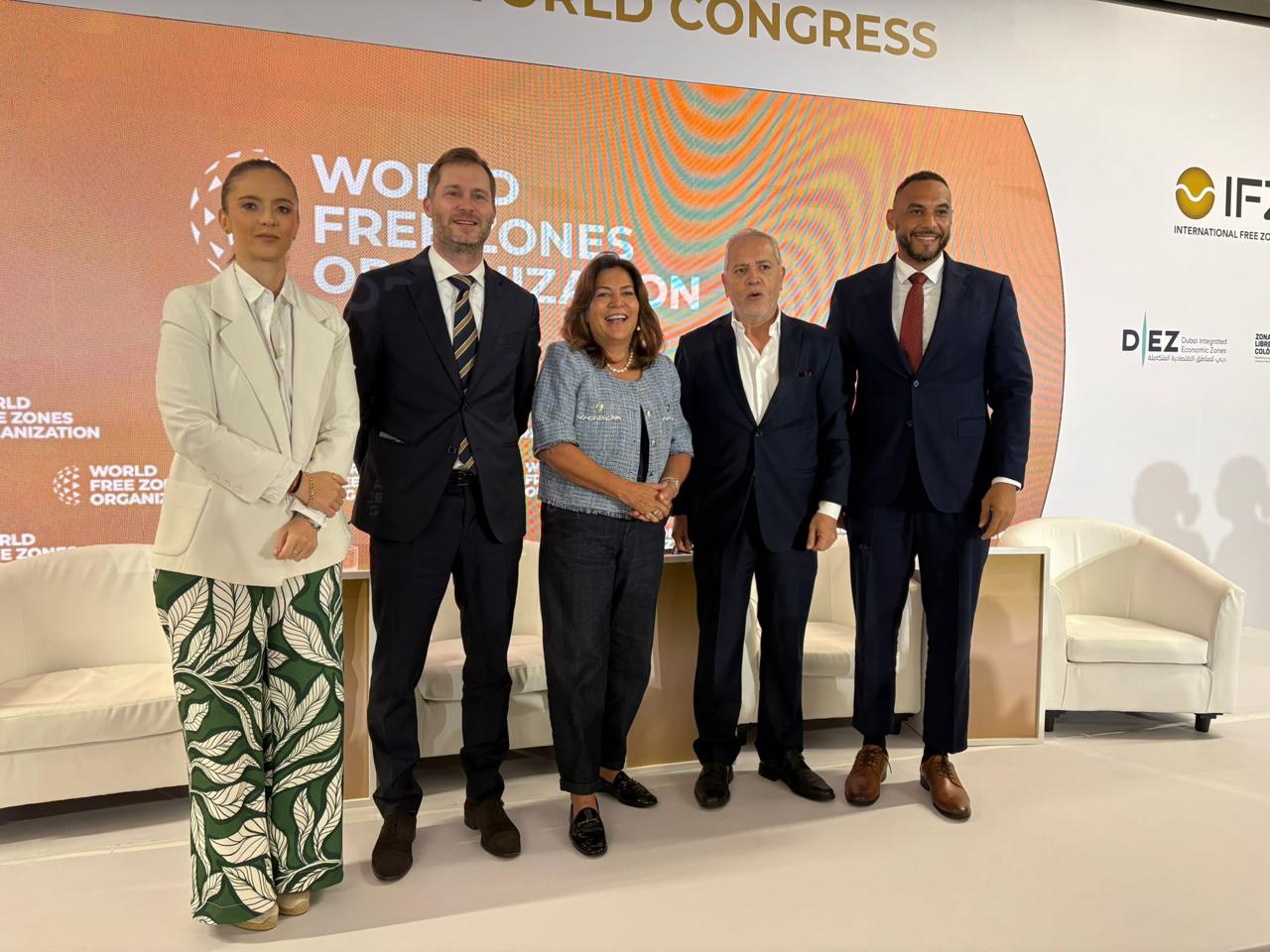
At the 12th World Free Zones Organisation (WFZO) World Congress held in Panama, a landmark new joint report from UN Tourism and WFZO has placed Tourism Special Economic Zones (TSEZs) firmly at the center of global economic development discourse, with Citez Grenada Ltd. emphasizing the transformative potential of this model for small island developing states across the Eastern Caribbean. Titled *Rethinking Investable Destinations: An Approach to Tourism Special Economic Zones*, the report arrives at a critical juncture for the region, where governments and private stakeholders are actively pursuing new pathways to attract foreign capital, diversify traditional tourism offerings, uplift local cultural enterprises, and strengthen their overall global investment competitiveness.
Cory Zufelt, founder of Grenada-based economic development firm Citez Grenada Ltd., joined a high-profile panel discussion at the congress titled Anchoring Tourism and Culture in the Knowledge Economy, alongside an international lineup of sector leaders including Peter Janech, UN Tourism’s Coordinator of Education, Innovation and Investments; Liriola Pitti, Executive Director of AEI Panama; and Juan Carlos Abud, Minister of Economic Development of Jujuy, Argentina. The conversation, moderated by Juliana Villegas Restrepo, Director of International Promotion and Business Development at Araújo Ibarra Consultores en Negocios Internacionales, centered on a paradigm shift in how global tourism is evaluated: no longer is success measured solely by annual visitor arrival numbers, but by tourism’s capacity to drive broad-based gains including cross-sector investment, innovative enterprise development, cultural export growth, high-skilled job creation, expansion of digital services, scaling of local small businesses, and long-term improvements to national economic competitiveness.
Currently, Citez Grenada is collaborating directly with UN Tourism to advance planning for a more than 100-acre pioneering economic development project in the Eastern Caribbean, designed to test and demonstrate a modern, zone-integrated model that unites tourism, cultural enterprise, digital trade, workforce upskilling, streamlined investment facilitation, and inclusive local business participation.
For small island developing states like Grenada, Zufelt argued, the rising global focus on TSEZs is inseparable from the region’s long-term economic future. “Tourism can no longer be seen only as a visitor economy,” he noted. “For small island states like Grenada, tourism must become a platform for investment, knowledge economy, business creation, skills development, digital services and export growth. The opportunity is to move from simply attracting visitors to building systems that allow visitors, investors, founders, diaspora members and local businesses to participate in the economy in a deeper way.”
Citez Grenada’s analysis positions the country as having unique potential to emerge as a regional leader in this emerging development model, provided it moves quickly to update its national economic zone regulatory framework, and aligns public policy with priorities including expanded digital infrastructure, workforce development, and targeted investment attraction.
The new UN Tourism-WFZO report formalizes TSEZs as a core pillar of next-generation special economic zone development, noting that modern TSEZ competitiveness extends far beyond traditional tax incentives. Instead, successful zones are defined by the quality of their overall ecosystem: including transparent, effective governance, fit-for-purpose infrastructure, end-to-end investor support, robust environmental stewardship, inclusive community participation, and strong interconnected supply chains that link the zone to the broader national economy.
Zufelt emphasized that Grenada’s competitive edge extends well beyond its well-known natural beauty and tourism appeal. The country’s unique combination of strong business tourism infrastructure, growing digital connectivity, rich cultural heritage, established reputation for safety and quality of life, existing talent pool, deep diaspora connections, and strategic geographic location creates a powerful foundation for building a globally competitive, investment-ready TSEZ platform. “Grenada already has an emotional attraction. People love the country. The question now is how we convert that attraction into long-term value. How do we turn a visitor into an investor, a cultural experience into an export, a local product into a global brand, and a tourism destination into a knowledge economy platform?” he said.
The proposed TSEZ model being developed for Grenada is structured to be led by the private sector, while building intentional, direct linkages that create opportunities for local workers, small and medium-sized entrepreneurs, domestic suppliers, cultural practitioners, and diaspora investors to participate in and benefit from the zone’s growth.
Across the globe, Zufelt noted, nations are increasingly turning to zone-based development tools to attract global capital, improve national investment readiness, deliver critical infrastructure, diversify tourism economies, and build new sustainable engines of employment. With forward-thinking policy alignment, he argued, Grenada can capture a first-mover advantage across the Eastern Caribbean to position itself as a regional hub for TSEZ-led development.
“This is a moment for Grenada to be bold but strategic,” Zufelt added. “The world is now looking at Tourism SEZs as platforms for sustainable investment and broader economic transformation. Grenada has the culture, the people, the location, and the brand but it must act fast. What is needed now is the framework to organise that opportunity.”
Headquartered in Grenada, Citez Grenada Ltd. is a locally owned economic development company focused on building integrated platforms for trade, investment, business services, migration, workforce development, digital onboarding, tourism, culture, and future-focused industries. It is a member of the global Citez Global network, with a core mission to position the Eastern Caribbean as a strategic connection point for global business, investment, tourism, culture, innovation, and sustainable development. UN Tourism is the United Nations’ specialized agency leading global efforts to advance responsible, sustainable, and universally accessible tourism, serving as the leading global forum for tourism policy dialogue and a central source of sector knowledge for governments, destinations, investors, and industry stakeholders. The World Free Zones Organisation is the leading global body supporting special economic zones, free zones, and industrial parks, facilitating cross-border cooperation, knowledge sharing, policy dialogue, and dissemination of best practices to position zones as catalysts for inclusive, sustainable economic growth.