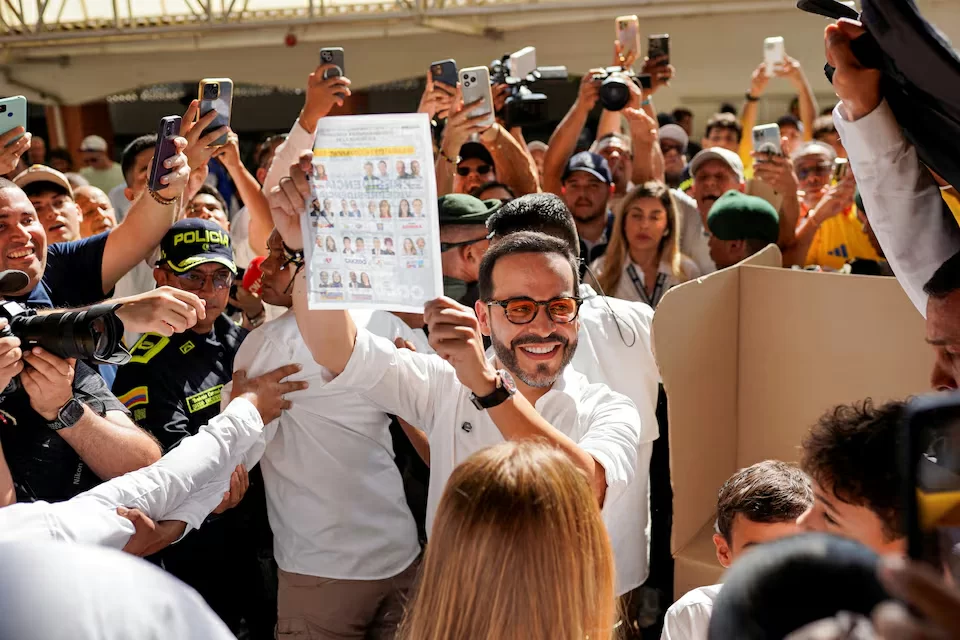
Colombia’s path to a new president has entered a tense new phase, with preliminary results from Sunday’s first-round vote confirming that a June 21 runoff will pit right-wing political newcomer Abelardo De La Espriella against long-serving left-wing senator Iván Cepeda, according to official data from the country’s national registration office.
With over 97% of ballots counted, the gap between the two top finishers narrowed to just a few percentage points, setting the stage for a hard-fought campaign over the coming weeks. The first-round contest centered on deeply divisive core issues: public security, economic policy, and competing populist agendas that have sharply split the Colombian electorate.
De La Espriella, a 47-year-old lawyer who has never held public office, secured 43.7% of the first-round vote. A figure from the political movement Defenders of the Fatherland, he has drawn frequent comparisons to El Salvador’s President Nayib Bukele for his combative rhetoric and hardline policy agenda. Positioning himself as an anti-establishment outsider untainted by traditional political careerism, De La Espriella has pledged aggressive crackdowns on illegal armed groups, a plan to construct 10 new maximum-security mega-prisons, and poverty reduction investments in education, healthcare, and housing for Colombia’s most disadvantaged communities. He has also emphasized that his campaign is fully self-funded, rejecting donations from established political parties and large corporate interests. On the campaign trail, he has warned that a Cepeda victory would lock in the controversial economic policies of current left-wing president Gustavo Petro, including a ban on new oil exploration projects that has drawn fierce pushback from establishment politicians and foreign investors alike.
His challenger in the runoff, Cepeda, is a 63-year-old veteran activist and senator from the Historic Pact coalition who captured just under 41% of the first-round vote. The son of a murdered communist leader, Cepeda carries on a long legacy of leftist advocacy in Colombia. Echoing elements of Petro’s current governing agenda, Cepeda supports pursuing peace with illegal armed groups through negotiated dialogue — an approach that has made limited progress under Petro’s current term. His policy platform centers on deep structural reforms to reduce systemic inequality and poverty, including higher tax rates for top earners, the transfer of 1 million hectares of land to victims of Colombia’s 60-year internal armed conflict, and expanded public access to healthcare.
The first round saw low voter turnout, with only a little more than half of Colombia’s 41 million eligible voters casting ballots. This low participation leaves both candidates with a critical opportunity to reorient their campaigns, consolidate support from losing factions, and mobilize disengaged voters ahead of the June 21 runoff. One major casualty of the first round was prominent right-wing candidate Paloma Valencia, who had been backed by former president Álvaro Uribe and was long seen as the leading right-wing contender. She ultimately won less than 7% of the vote, ending her campaign and clearing the way for De La Espriella’s unexpected breakthrough to the runoff.