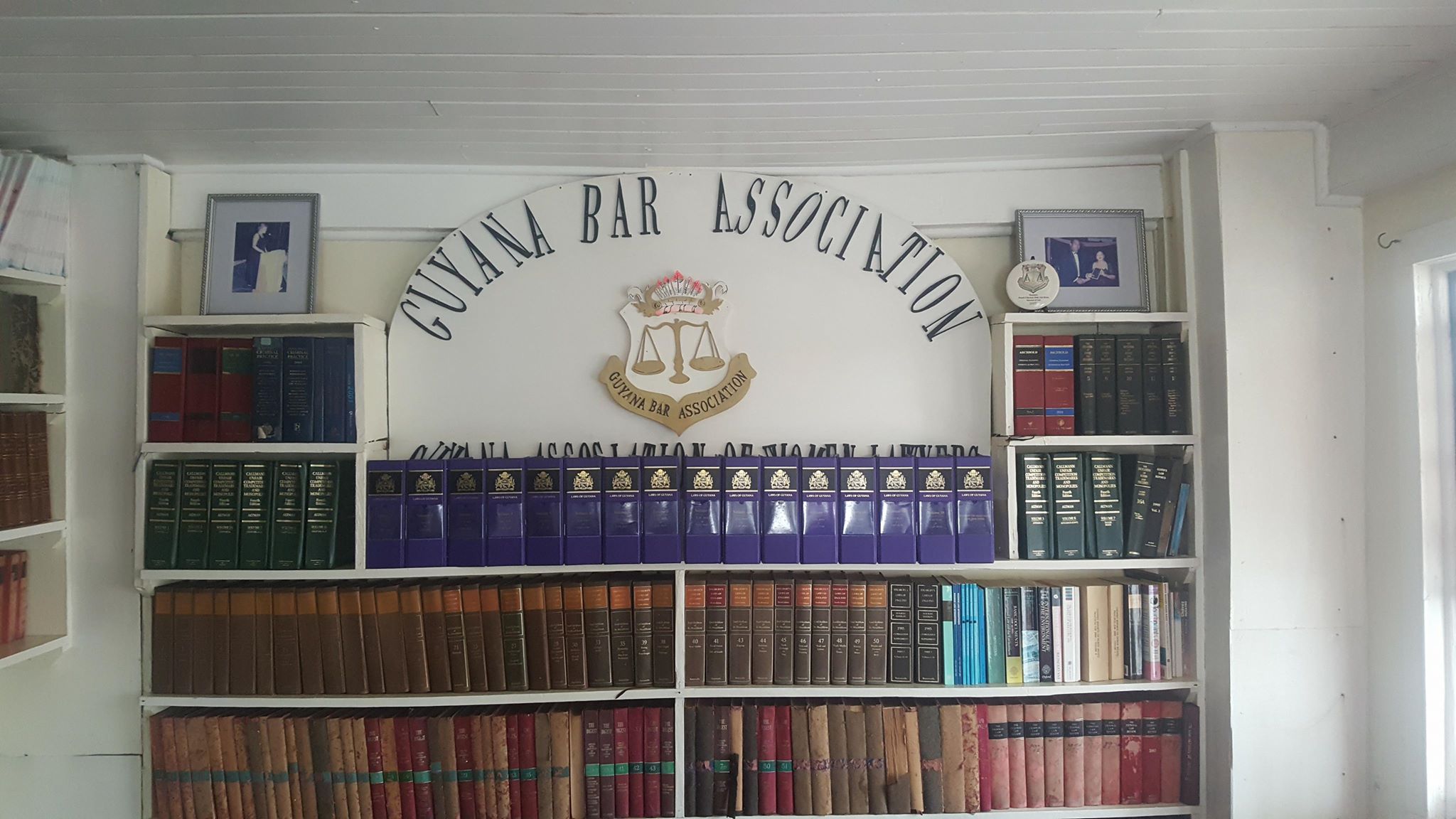
On Sunday, May 31, 2026, defeated candidate and attorney-at-law Darren Wade announced plans to mount a legal challenge to last Friday’s Guyana Bar Association (GBA) Council election, claiming ineligible voters were permitted to cast ballots in direct violation of the professional body’s bylaws.
Wade, whose slate of candidates lost to the opposing ticket led by incoming GBA President Arudranauth Gossai, confirmed his firm intention to file a lawsuit over the disputed poll. He told Demerara Waves Online News that the core of the legal challenge rests on the GBA’s decision to allow government-employed attorneys, who hold non-private practice positions, to vote. Under GBA regulations, only full private practice attorneys qualify for regular voting membership, while government-employed and other non-private practitioners are limited to associate membership that carries no voting rights.
The contested election was held via a virtual Zoom Annual General Meeting (AGM), which the GBA says drew the highest number of attending members in the organization’s history. But Wade alleged that after he raised formal objections to the presence of government-employed attorneys in the voting process, GBA organizers allowed these ineligible participants to remain. He added that official records do not clearly identify who cast ballots, despite preliminary data indicating that 100 percent of the ineligible government-employed lawyers he identified participated in the vote.
Citing explicit GBA bylaws, Wade explained that Section 3 of the organization’s governing rules restricts voting membership exclusively to attorneys engaged in full private practice, defined as attorneys not employed by the state. All other attorneys, including those on government payrolls, are restricted to associate membership, which explicitly excludes voting rights, a restriction that is also clearly posted on the GBA’s official website. Wade emphasized that the election’s core irregularity stems from organizers’ failure to adhere to these longstanding rules.
The GBA has formally confirmed that Gossai’s ticket defeated Wade’s slate to take control of the 2026-2027 GBA Council. The new leadership includes former GBA President Kamal Ramkarran as First Vice-President, Teni Housty as Second Vice-President, Yashmini Singh as re-elected Secretary, Samuel Glasgow as Treasurer, and Mohanie Anganoo as Assistant Secretary. Seven additional members, including senior counsels Robin Stoby and Jamela Ali, were elected to fill at-large Council seats. Wade has criticized that the GBA only released vote results as percentages, refusing to publish raw vote totals to verify the outcome.
Ramkarran, who served as outgoing GBA President during the election, has rejected Wade’s allegations outright. In a May 25 response to Wade’s pre-election concerns, Ramkarran denied any rules were broken and challenged Wade to produce concrete evidence to back his claims. “Despite your allegations, I must point out that the Bar Association’s rules have been complied with in every regard, as always. If you are aware of any rule in particular which has been inadvertently missed, I would be grateful if you could bring it to our attention,” Ramkarran said. He also dismissed as “untrue and defamatory” Wade’s claim that the outgoing Council refused to commit to a transparent, free and fair election without intervention from senior independent members of the legal profession.
Wade’s concerns over electoral fairness predated the Friday vote. In the lead-up to the election, he raised multiple red flags about procedural irregularities, including his claim that a number of eligible voting members were not invited to the virtual AGM. He also formally requested key procedural details ahead of the poll, including the identity of the appointed Returning Officer, formal rules governing nominations, voting, counting and result declarations, Zoom platform participant access and capacity controls, constitutional provisions governing the election, contingency plans for technical failures, and a complete official list of eligible voters. Wade also warned of an uneven playing field, noting that the incumbent GBA leadership had full access to all member contact and eligibility data that was not shared equally with all competing candidate slates.
This electoral controversy comes amid a similar recent dispute in Guyana’s independent professional bodies: just prior to the GBA vote, elections for the Guyana Press Association (GPA) were also marred by allegations of partisan political preference from the ruling People’s Progressive Party Civic (PPPC).