In a ruling that underscores the importance of procedural accountability for judicial oversight bodies in Belize, the country’s High Court has delivered a decisive judgment against the Judicial and Legal Services Commission (JLSC), ordering the agency to cover all legal costs incurred by activist Jeremy Enriquez, who brought a challenge over the JLSC’s botched handling of his misconduct complaint against a senior justice.
The dispute traces back to the high-stakes redistricting legal battle that has drawn significant public attention across Belize. In that case, Enriquez filed a formal misconduct complaint against Justice Tawanda Hondora, claiming that an accidentally unmuted microphone during a court lunch break captured a problematic conversation between Hondora and another sitting judge. The activist argued that the exposed conversation irreparably eroded his trust in Hondora’s ability to fairly preside over the redistricting proceedings. To support his allegations, Enriquez submitted audio recordings of the exchange to the JLSC, the body legally tasked with investigating judicial misconduct claims in the country, and awaited a substantive response.
Instead of launching a formal review or issuing a detailed reply to the complaint, the JLSC only provided Enriquez with a series of generic, vague single-sentence acknowledgements that provided no clarity on whether the commission would investigate his claims. Frustrated by the months of inaction and stonewalling, Enriquez turned to the High Court to challenge the JLSC’s failure to meet its legal obligations.
In his written judgment delivered on May 28, 2026, Justice Alexander rejected the core defense put forward by the JLSC: that Enriquez had acted prematurely and impatiently in bringing the court challenge. Alexander explicitly found that Enriquez “acted reasonably in filing his application,” noting that the activist had waited an appropriate length of time for a substantive response from the oversight commission before pursuing legal action. The justice further ruled that the JLSC’s non-responsive conduct directly violated the core principles of Belize’s pre-action protocols, which require government and judicial bodies to engage in good-faith processing of public complaints before parties turn to the courts for resolution.
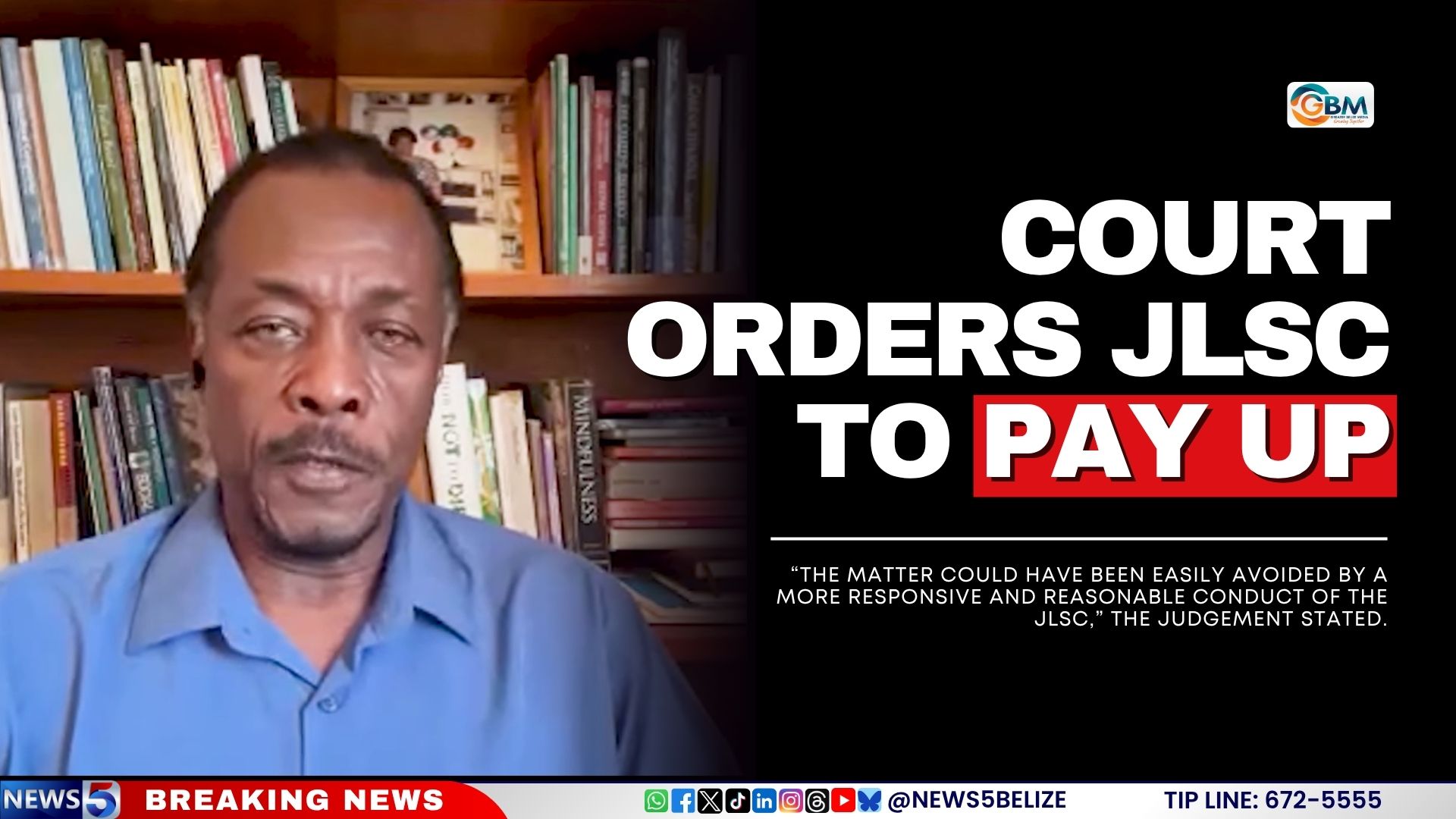
“The matter could have been easily avoided by a more responsive and reasonable conduct of the JLSC,” the judgment noted. Enriquez had not only requested the JLSC be ordered to cover his legal costs but also asked the court to certify the case as sufficiently complex to justify his legal team including both a senior and junior barrister, meaning the JLSC would be required to pay for both legal professionals. Justice Alexander granted this request, emphasizing that the entire court challenge would have been unnecessary if the JLSC had simply followed established procedural rules when handling Enriquez’s original complaint.
While the court has issued a clear ruling on liability, the final total amount of costs that the JLSC will be required to pay is still pending formal calculation, and has not yet been publicly announced.