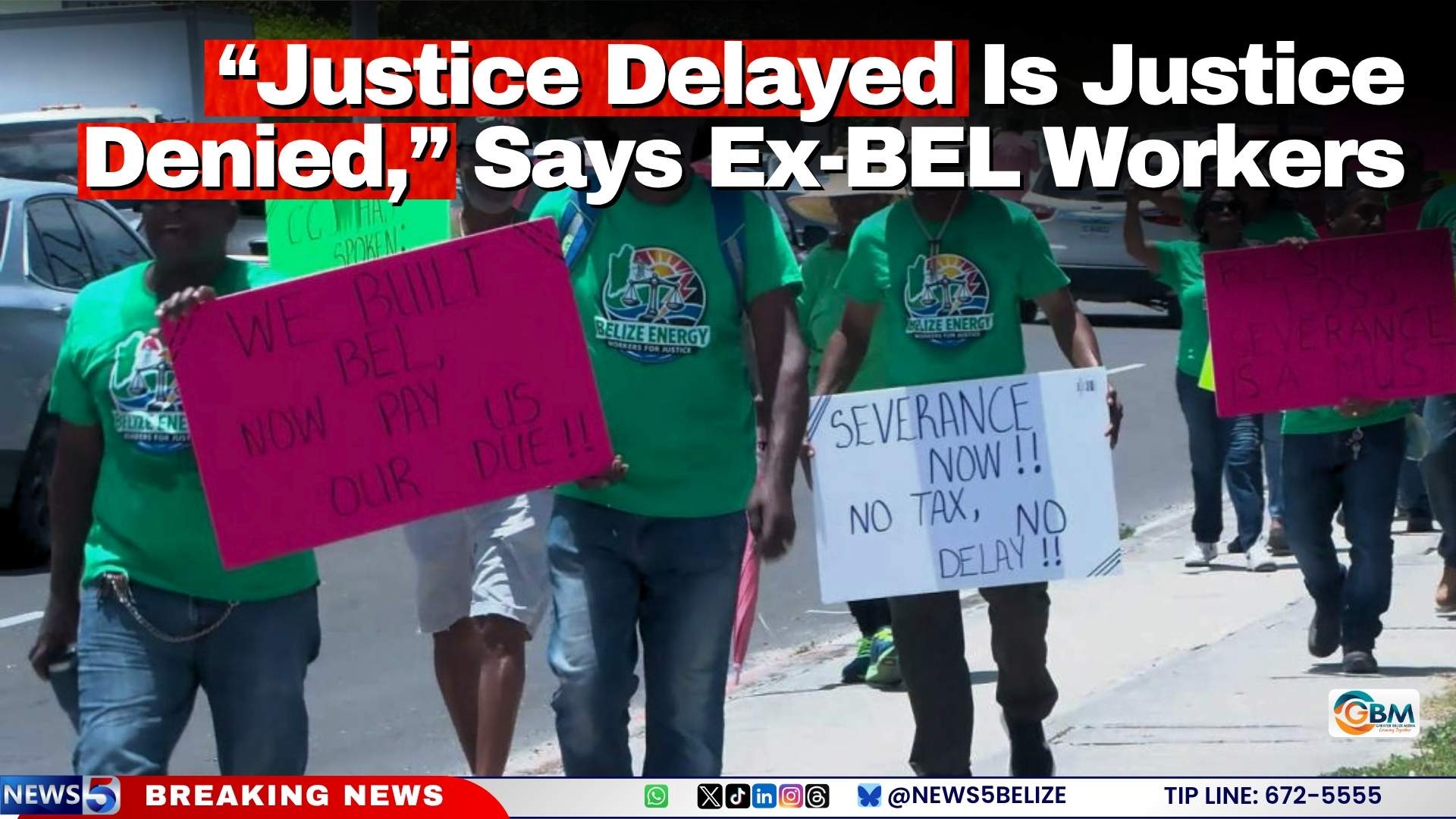
A years-long battle over unpaid severance benefits has reignited in Belize, as former employees of state-linked Belize Electricity Limited (BEL) are doubling down on calls for the company to honor a regional court ruling that backs their financial claims.
Organized under the banner Belize Energy Workers for Justice (BEWJ), the group of ex-staff has issued a new public rebuke of BEL, accusing the utility provider of violating its own stated corporate values by continuing to withhold funds the former workers say they are legally owed.
At the core of the dispute is a fundamental disagreement over how severance obligations should be fulfilled. BEL has long argued that severance payments were already covered through the employer-funded portion of the company’s existing pension plan. But the ex-workers have flatly rejected this interpretation, pointing directly to a binding ruling from the Caribbean Court of Justice (CCJ) that clarifies the two benefits are distinct.
In the BEWJ’s latest press statement, the group emphasized that the CCJ explicitly ruled pension and severance represent separate entitlements, noting that severance is an independent statutory right guaranteed under Belizean law. The former workers add that the contributory pension scheme offered by BEL never included provisions to cover severance benefits, negating the company’s core argument.
Citing BEL’s own public commitment to prioritizing worker welfare and its corporate principle of “putting People First,” the BEWJ is calling on company leadership to match its rhetoric with action. “We demand that BEL pays us our outstanding Severance Payments,” the group stated, adding “We call on BEL to put us first.”
After years of stalled progress on the issue, the former workers have now appealed to top Belizean government officials to intervene to resolve the impasse. BEWJ has specifically reached out to Labour Minister Kareem Musa and Prime Minister John Briceño, asking the national government to step in and ensure the CCJ’s ruling is implemented.
Frustrated by repeated delays, the group summed up their position with a longstanding legal maxim: “Justice delayed is justice denied.”