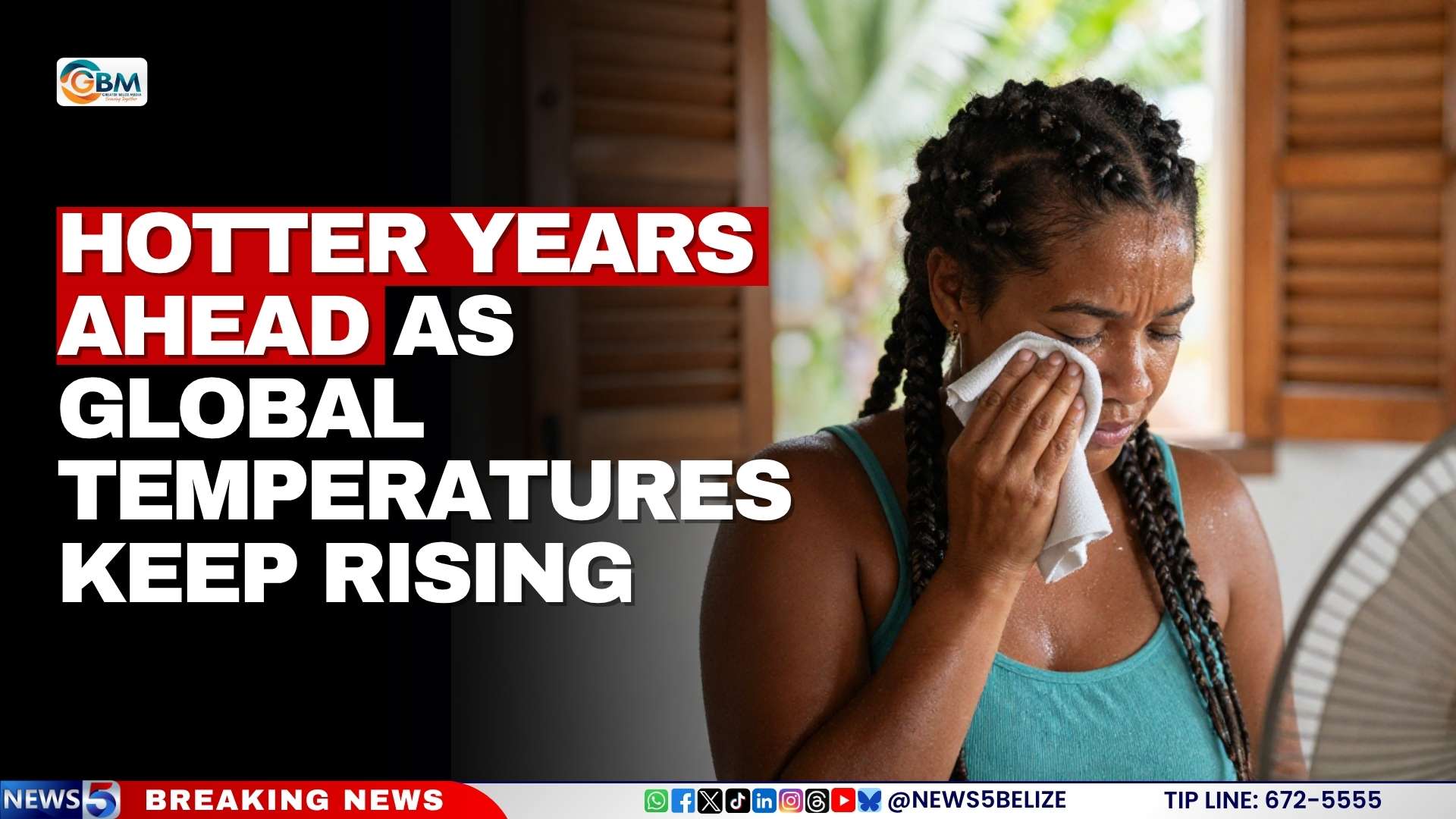
A landmark new climate assessment from the World Meteorological Organization (WMO), developed in partnership with the UK Met Office, delivers a sobering outlook for global temperatures over the coming half-decade: the planet is bracing for a streak of extraordinary hot years, with at least one 2026–2030 period year set to exceed the warmth of 2024, currently ranked among the hottest years ever documented in modern climate records.
The collaborative analysis projects that global average temperatures will hold near all-time record levels across the entire five-year window, hovering between 1.3°C and 1.9°C above the baseline average measured before large-scale industrial expansion began in the 19th century. This range puts the world on track to brush close to the 1.5°C warming threshold that the 2015 Paris Agreement identifies as a critical limit to avoid the most catastrophic, irreversible climate impacts.
One of the most striking disparities highlighted in the report is the accelerated warming of the Arctic, a polar region that has long acted as the planet’s natural cooling buffer. Scientists confirm the Arctic will continue to warm far more rapidly than any other region on Earth, with projected winter temperatures in the area coming in roughly 2.8°C above pre-industrial averages — a rate of warming more than three times the global average.
This rapid temperature rise will drive continued dramatic shrinkage of Arctic sea ice, the report predicts, with the most significant losses concentrated in key regional bodies of water: the Barents Sea, located between Norway and Russia, and the Bering Sea, which separates Russia and Alaska. Reduced Arctic sea ice not only threatens vulnerable polar ecosystems and Indigenous communities dependent on traditional hunting practices but also amplifies warming further through the albedo effect, when dark open ocean absorbs more solar energy than reflective ice, creating a dangerous feedback loop.
Beyond Arctic trends, the assessment also flags a notable risk of a new El Niño event developing in late 2026. The El Niño Southern Oscillation’s warm phase is known to trap additional heat in the global climate system, and its emergence would likely push global temperatures even higher, drastically boosting the probability that 2027 will become a new all-time record hot year for the planet.