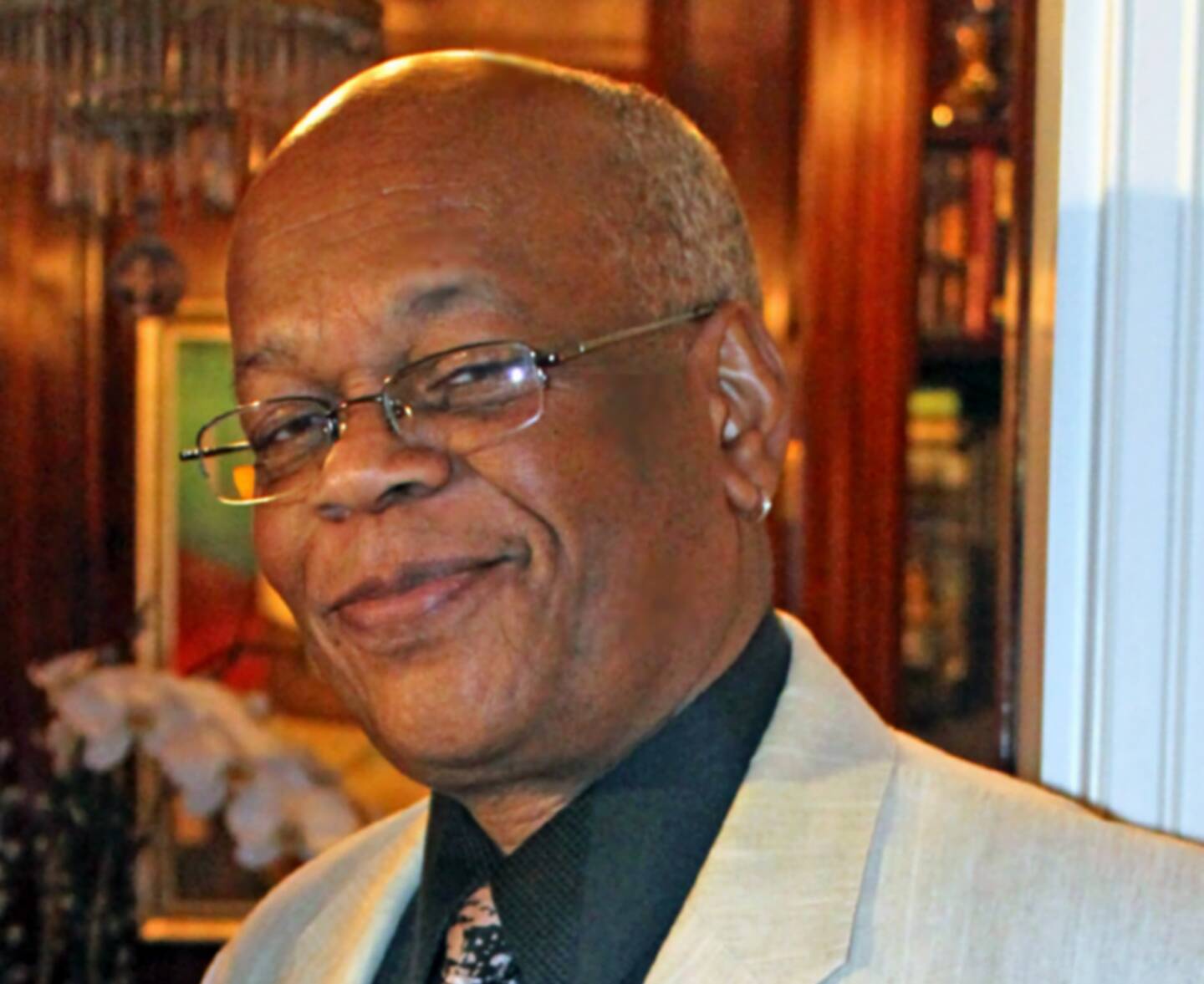
Grenada’s newest political actor, the Democratic People’s Movement (DPM), has centered its recent electoral appeal around a bold, voter-friendly climate and energy policy: universal rooftop solar installations for every household across the island, marketed with zero upfront costs, guaranteed lower monthly energy bills, and a cleaner, more economically resilient national future. On its surface, the proposal aligns with widespread public support for expanding renewable energy and cutting household energy costs, but political analyst Michael Derek Roberts argues that the missing granular details in the campaign’s messaging undermine its credibility, leaving critical questions unanswered ahead of any potential implementation.\n\nThe first and most pressing unaddressed question, Roberts notes, centers on financing. While the DPM touts a $0 upfront cost for households, this marketing framing does not mean the installations themselves are free. If residential customers are not covering the initial capital outlay, that cost must fall to another stakeholder: the national government, a third-party lender, the public utility, an external private investor, or ultimately the general public through hidden taxes, new regulatory fees, or increased baseline electricity rates. Campaign communications conveniently omit this core part of the plan, but actionable energy policy requires clarity around who bears financial risk. Roberts points out that DPM leadership, led by veteran politician Peter David, is well-aware of these gaps; David, a seasoned political operator, has a track record of packaging polished spin and obfuscation as straightforward, voter-focused facts.\n\nA second critical gap is the lack of clarity around operational feasibility. Rooftop solar is not an untested concept in Grenada: the island already has regulatory frameworks for residential self-generation and net metering, which allow households to earn credit for excess energy they send back to the main grid. This existing infrastructure means small-scale expansion is technically achievable, but technical viability for a handful of projects does not translate to workability at the universal scale the DPM promises. Rolling out solar panels to every household would require coordinated, large-scale investment across multiple sectors: mandatory structural roof inspections to confirm suitability, streamlined permitting processes, mass customer enrollment campaigns, close coordination with the national utility, and almost certainly major upgrades to Grenada’s aging electricity grid to accommodate distributed energy generation. None of these logistical requirements or associated costs are mentioned in the DPM’s campaign slogans, leaving the entire universal rollout claim unmoored from on-the-ground reality.\n\nThe DPM’s guarantee of lower monthly energy bills for all households also fails to hold up under scrutiny, Roberts argues. It is true that a properly sized, well-structured rooftop solar system can cut monthly energy costs for Grenadian households, where most electricity is still generated by expensive imported fossil fuels. But actual savings depend on a wide range of variable factors: a household’s total energy consumption, the size of the solar system installed, the value of net metering export credits, whether a home has battery storage for excess power, and the utility’s existing tariff rules. If a system is undersized for a home’s needs, financed under unfavorable terms, or poorly installed, promised savings could end up being minimal or nonexistent for many households. In short, the general claim that solar can lower bills is plausible, but a blanket guarantee of savings for every household is unsupported by the realities of residential energy generation.\n\nThe DPM’s pledge to reach every household and every community highlights how the party’s political messaging has outpaced actual policy development, Roberts notes. A credible national rollout of universal solar would require a fully costed implementation roadmap, a dedicated financing body to manage the program, clear eligibility rules for consumers, and a public timeline for deployment. It would also need to confront long-standing structural inequities across Grenada: not every residential roof is structurally suitable for solar panels, not every household meets credit requirements to participate in zero-upfront programs, and different communities start with vastly different existing infrastructure and economic resources. This means the core policy question is not whether Grenada should expand solar energy — a goal that enjoys broad cross-party support — but how to prioritize access, what terms participation will follow, and how much public subsidy will be directed to low-income households. All of these critical details are missing from the DPM’s current campaign pitch.\n\nThe DPM has also framed small businesses as key beneficiaries of the plan, noting that commercial operations that run primarily during daylight hours can directly consume the power their rooftop panels generate, unlocking immediate savings. Roberts acknowledges that this benefit is real for many small businesses, but again, the lack of detail leaves critical questions open. The relevant policy question is not whether businesses can save money with solar, but how much those savings will be, how quickly businesses will see a return on their (or the program’s) investment, and who will absorb the upfront capital costs if businesses do not. Too often, political campaigns frame energy savings as an automatic outcome of installing solar, but in practice, consistent savings only come from carefully structured contracts and a phased, well-managed rollout.\n\nAt its core, the DPM’s solar plan aligns with a widely shared, legitimate national goal: both the party and current Prime Minister Dickon Mitchell have repeatedly emphasized that Grenada needs to cut its costly dependence on imported fossil fuels and make household electricity more affordable. But Roberts stresses that voters should not mistake polished campaign graphics for a complete, actionable policy blueprint. If the DPM wants to build credibility around its proposal, it must release full, transparent details to the public: total projected program costs, average cost per residential installation, the level of public subsidy that will be allocated, loan repayment terms for zero-upfront models, the expected impact on utility rates and grid reliability, and a clear implementation timeline. Until those details are published, Roberts concludes, the DPM’s universal rooftop solar plan will remain what many pre-election campaign promises are: an attractive, directionally popular proposal that is far too incomplete to be considered a serious policy.\n\n*Disclaimer: This content represents the opinion of contributor Michael Derek Roberts. NOW Grenada does not take responsibility for contributor statements or analysis.*