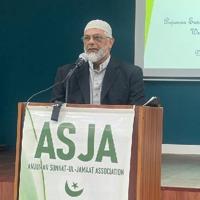
As Muslims across Trinidad and Tobago prepare to mark one of Islam’s most sacred annual observances, the acting leader of one of the country’s largest Muslim religious organizations has amplified longstanding calls for the national government to grant Eid-ul-Adha official public holiday status. Imam Ahamad Hosein, acting president of the Anjuman Sunnat ul Jamaat Association (ASJA), first publicly pushed for the designation in 2023, and he is reiterating his appeal this year to draw renewed government attention to what he calls a critical equity issue for the national Muslim community.
In an interview with local outlet the Express on the eve of this year’s Eid-ul-Adha celebration, Hosein laid out three core reasons why a nationwide public holiday is necessary to accommodate the country’s Muslim population. First, thousands of Trinidad and Tobago Muslims travel annually to Mecca in Saudi Arabia to complete the Hajj pilgrimage, which falls in alignment with Eid-ul-Adha. Second, while ASJA’s 15 educational institutions — which include two early childhood care and education centers, seven primary schools, and six secondary schools — already receive yearly approved holidays for the observance through the Ministry of Education, non-affiliated schools do not extend this accommodation to Muslim students. A 2026 memorandum dated April 16 from the Ministry of Education’s CEO confirmed that all ASJA schools would close for the 2026 Eid-ul-Adha observance, with regular operations resuming the following day. Third, Muslim workers across all private and public sector industries are currently forced to use accrued personal time off or forgo pay to attend congregational prayers at local mosques and complete the traditional qurbani (animal sacrifice) ritual, placing unnecessary financial and logistical burdens on the community. “Therefore, a national holiday for Eid-ul-Adha is necessary for ease and comfort for Muslims of Trinidad and Tobago,” Hosein emphasized.
Beyond calling for policy change, Hosein also used the occasion to explain the deeper spiritual meaning of Eid-ul-Adha, often translated as the Festival of Sacrifice. As the second major holy celebration in the Islamic calendar following Eid-ul-Fitr, which marks the end of the holy month of Ramadan, the holiday traces its origins to the prophet Abraham’s test of faith from God, he explained. When God commanded Abraham to sacrifice his beloved son Ishmael as a proof of devotion, both Abraham and Ishmael submitted unhesitatingly to the divine will. Only as Abraham prepared to carry out the command did God intervene, replacing Ishmael with a ram to be sacrificed instead.
Hosein stressed that the core meaning of the traditional qurbani sacrifice is often misunderstood. Citing verse 22:37 from the Holy Qur’an, which states “neither their meat nor blood reaches Allah, rather it is your piety that reaches Him”, he explained that the ritual is not centered on the slaughter of the animal itself. Instead, it calls on all believers to reflect on what they are willing to surrender to God: time, personal pride, comfort, and selfish desires. “True Eid comes when obedience to Allah outweighs everything else,” he said.
The holiday also creates a powerful global bond between all Muslims, regardless of whether they are able to complete the Hajj pilgrimage in Mecca, Hosein added. The days of Dhul-Hijjah, the final month of the Islamic calendar when Eid-ul-Adha falls, are considered the most blessed days of the year for good deeds. Even believers observing the holiday at home are connected to the millions of pilgrims in Mecca through shared ritual, fostering a global sense of Islamic unity.
Hosein also reminded worshippers of the traditional rules for dividing qurbani meat, which mandate splitting the harvest equally into three portions: one for the worshipper’s immediate family, one for extended relatives and friends, and one for low-income and food-insecure community members. “Eid-ul-Adha reminds us that our celebration is incomplete if our neighbour is left hungry,” he said. Ultimately, he added, the holiday serves as an annual reminder that faith is demonstrated through action, not just words: it calls on believers to kill their own ego, reaffirm their devotion to God, and share the blessings they have received with those in need.