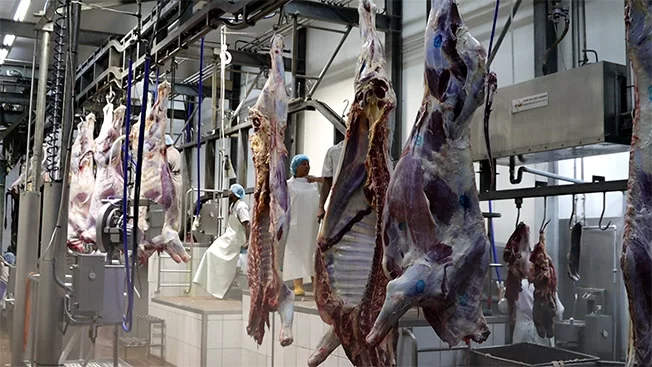
As preparations for the Islamic Feast of Sacrifice (Eid al-Adha) get underway in the Netherlands, food safety has been positioned as the top priority for all ritual cattle slaughter operations carried out for the holiday. The country’s Ministry of Agriculture, Livestock and Fisheries (LVV) has issued binding mandatory guidelines that all participating mosques must strictly adhere to during the process, industry leaders have confirmed.
René Gosen, managing director of Sure Beef, a Halal-certified slaughterhouse operating in the region, noted that established certified facilities like his operation are already well-positioned to meet the new regulatory requirements. “We already hold all the necessary certifications and have our full safety protocol set up permanently, so food safety has always been our leading priority here,” Gosen explained in an interview.
Under standard long-standing rules, cattle must be at least two years old to be eligible for slaughter during the Feast of Sacrifice. However, 2026 has brought an unexpected challenge: a widespread shortage of mature qualified bulls in the national livestock herd. To address this gap, regulators have granted a one-year exception to the age and gender rules, allowing uncalved female cattle to be processed for the holiday ritual this year.
Last week, LVV Minister Mike Noersalim led a dedicated coordination meeting alongside industry experts and representatives from major Islamic organizations to walk through the new hygiene and food safety guidelines for the holiday slaughter period. On Wednesday, official food inspectors began carrying out rigorous pre- and post-slaughter inspections to confirm all meat processed is safe for human consumption.
Ricardo Balai, one of the senior inspectors leading the checks, emphasized that rigorous inspection is a critical line of defense against dangerous notifiable animal diseases that can pose public health risks. “Our job is to identify any abnormalities or disease indicators that point to a dangerous, regulated animal disease, so we can confirm that the slaughtered animal is completely free of health hazards,” Balai said.
The standard inspection protocol includes two key stages: a pre-slaughter examination of the live animal and a post-slaughter assessment of the carcass. During the live check, inspectors look for any visible external abnormalities that may signal underlying health issues. After slaughter, the team conducts a hands-on assessment of all internal organs, cutting into tissue, feeling for irregularities, and checking for unusual discoloration or odors that indicate contamination or disease.
If a hazardous condition such as jaundice is detected, the entire carcass is immediately rejected and permanently destroyed, as the meat is deemed unfit for consumption by humans or even animals. Officials noted that this strict rejection process is non-negotiable to protect public health.
So far, 2026 has seen lower overall volumes of slaughter animals presented for the Feast of Sacrifice compared to previous years, according to Grace Mohamedali, HR Manager and Senior Quality Manager at Sure Beef. The ritual slaughter period for the holiday spans two full days, and in typical years, the slaughterhouse receives between 100 and 120 animals across both days.
On the first day of this year’s slaughter period, the facility received 108 cattle and 17 small ruminants, including sheep and goats. On the second day, an additional 35 cattle are scheduled to be processed. Mohamedali confirmed that all slaughter operations at the facility are carried out in full compliance with Islamic religious requirements. “We have our own on-site imams who lead the ritual kurbani sacrifice according to religious tradition, so participants can be fully confident their offering meets all spiritual requirements, while also meeting the strict government food safety standards,” she added.