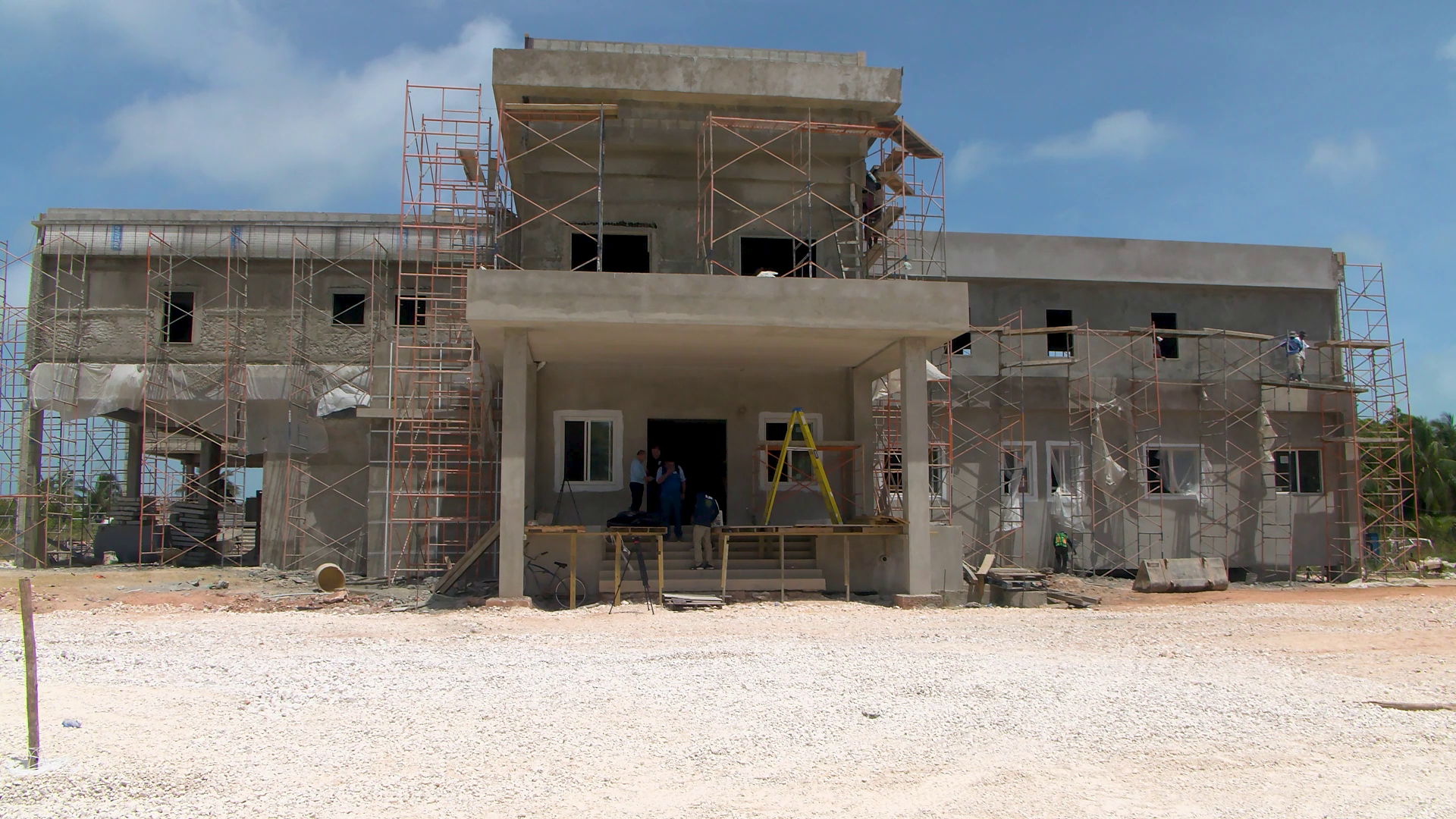
Nestled on Ambergris Caye, one of Belize’s most bustling tourist hotspots, the island community of San Pedro has waited decades for improved local emergency medical care. That long wait finally moved into a tangible new phase in May 2026, as construction advances on the promised San Pedro and Caye Caulker General Hospital — a project that has faced repeated costly delays that tested the patience of local residents.
The push for a full-service general hospital on the island gained urgent momentum after a devastating 2025 tragedy: two-year-old Kaleel Nah died from a high fever after his family was unable to secure an emergency air evacuation off the island, forcing the child to be transported via water ambulance. More than a year after that heartbreaking loss, the $33 million project remains unfinished, with multiple unforeseen setbacks pushing back the original completion target of December 2026.
Belizean Prime Minister John Briceño outlined the core challenges derailing the original timeline and budget in comments to local reporters. Two major headwinds have driven unexpected cost overruns: skyrocketing prices for core construction materials, and a fierce local labor shortage that has pushed daily wages far higher than initial projections. “You could ask any contractor, from the most ardent UDP supporter to PUP, the cost of building supplies have gone up and we can’t get away from that,” Briceño explained. On the labor front, he added, competing construction projects across San Pedro are actively poaching skilled workers, with employers offering higher daily wages to steal talent from existing job sites, further driving up project costs. Currently, daily wages for construction workers on the site exceed $100 a day — a figure not accounted for in the original 2020s budget.
Funding for the 37,000 square-foot, two-story facility comes from a multi-million dollar grant from the Republic of China (Taiwan), with Taiwan’s Overseas Engineering and Construction Company (OECC) leading all design, construction and outfitting work for the hospital. Once complete, it will be the second largest hospital in Belize, trailing only the Karl Heusner Memorial Hospital in the capital.
Andre Perez, the Area Representative for Belize Rural South, confirmed that the original $33 million allocation is no longer expected to cover the full cost of completing the project. While rumors have circulated that total costs could balloon to $50 million, Perez pushed back on that estimate, noting that government and OECC teams are still calculating the exact additional funding needed. “It certainly is not $50 million,” Perez emphasized, adding that the Ministry of Finance is working alongside OECC and Taiwanese government representatives to secure the extra capital required to cross the finish line. Despite the budget gaps, Perez stressed that construction will continue uninterrupted, and the government remains fully committed to delivering the facility to island residents.
A walk through the active construction site with Project Support officer David Schart revealed the detailed scope of care the hospital will offer once open. A large section of the facility is dedicated to maternity services, including dedicated labor rooms, delivery suites, postnatal recovery areas, a pediatric wing, and an entire maternity ward. The facility will also feature two operating rooms (one ready for immediate use upon opening, and one prepped for future expansion), two-bed isolation units, a full central sterilization department, and additional upgrades that were not part of the original plan, including a requested CT scanner. An earlier proposal to add an elevator to serve the second floor was later removed from the plans to help control costs, Briceño noted.
After years of delays, pushed by rising costs, labor shortages, and incremental changes to the facility’s design, the government has updated the official completion timeline: the hospital is now projected to open to residents between early and mid-2027. When finished, it will bring full-service emergency and routine medical care directly to the 10,000+ permanent residents of San Pedro and Caye Caulker, eliminating the dangerous and time-consuming need to evacuate emergency patients off the island for urgent care — a gap that has cost lives in the past. The facility is also being built with space to accommodate future expansion as the region’s tourism and resident population continues to grow. As of late May 2026, officials have not released a final figure for how much additional funding will be required to complete the project.