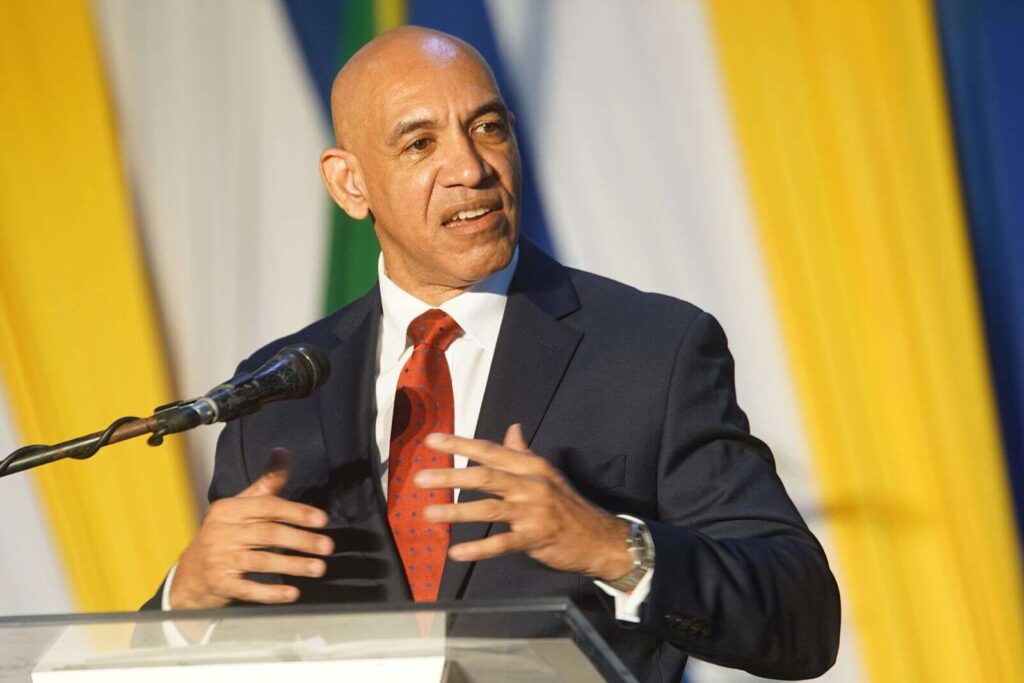
KINGSTON, Jamaica — In a formal announcement from a special post-cabinet press briefing held Monday, Prime Minister Andrew Holness confirmed that current Jamaican Ambassador to the United States, Ambassador Major General Antony Anderson, will take the helm as the first chief executive officer of the newly launched National Reconstruction and Resilience Authority (NaRRA), with his term set to begin June 1. The appointment lands at a pivotal juncture for Jamaica, as the national government ramps up implementation of its post-Hurricane Melissa recovery and rebuilding program, while committing to upholding strict standards of accountability, transparent governance, and fiscal responsibility.
Created to centralize coordination and advance Jamaica’s national agenda for reconstruction and long-term disaster resilience, NaRRA carries a broad mandate to accelerate the delivery of large-scale infrastructure, social, and economic recovery projects across every major sector of the country. Holness emphasized that Anderson’s career background aligns perfectly with the demands of the role at this critical moment, noting that the veteran leader brings a proven track record of discipline, unwavering integrity, and large-scale operational command that Jamaica’s rebuilding effort requires.
“Jamaica is entering a period of reconstruction that must be defined by speed, but also by transparency, proper planning and accountability,” Holness stated. “His experience leading national institutions, responding to crises and strengthening disaster risk management systems makes him well-suited to drive this mandate. NaRRA’s mission is to build stronger, safer and more resilient communities.”
The prime minister reaffirmed his administration’s commitment to ensuring every public dollar allocated to reconstruction directly advances Jamaica’s long-term development, national productivity, and sustained economic expansion. Anderson’s professional credentials span decades of leadership in public administration, national security, disaster response, institutional governance, and crisis management. Most recently, he chaired Jamaica’s post-Hurricane Beryl Disaster Risk Management Review Committee, a panel tasked with assessing gaps in the country’s hurricane response, distilling key lessons, and developing actionable recommendations to strengthen national disaster preparedness and resilience frameworks.
In remarks following the announcement, Anderson framed the post-Hurricane Melissa recovery effort as a transformative opportunity for Jamaica, noting that the storm and accompanying financial resourcing have created space for national development on an unprecedented scale and at an accelerated pace. Even with the urgent need to get projects off the ground, he stressed, the work must be guided by deliberate planning, open contracting processes, clear approval workflows, and structured, time-bound execution that upholds public trust.
Anderson argued that cross-sector infrastructure programs must be integrated strategically to maximize the impact of every public investment, with the core goal of building a foundation for improved public service delivery, higher productivity, and broad-based economic growth. Beyond short-term rebuilding, he emphasized that NaRRA’s work will have long-lasting implications for Jamaica’s national development trajectory.
“Jamaica stands at a defining moment. The establishment of NaRRD (National Reconstruction & Resilience Department) as the precursor to NaRRA following Hurricane Melissa represents more than a reconstruction initiative; it is an opportunity to embed resilience, climate adaptation, fiscal discipline, and institutional integrity into the nation’s long-term development architecture,” Anderson said.
Drawing on his experience leading large national institutions through crisis conditions and his recent work reviewing disaster risk systems after Hurricane Beryl, Anderson confirmed he is prepared to deliver the strategic leadership, operational oversight, and fiduciary accountability required to execute NaRRA’s mandate at scale. Holness echoed that confidence, noting that Anderson’s leadership will be central to balancing urgent progress with the strict discipline needed to protect public funds, coordinate cross-agency major projects, and deliver lasting, nationwide benefits.
Moving forward, NaRRA will play a central coordinating role in integrating a wide range of recovery projects — including new and upgraded infrastructure, affordable housing, public facilities, critical utilities, roads, bridges, and community resilience programs — into a unified national strategy. The authority will also advance the government’s broader core objective: ensuring that post-Hurricane Melissa reconstruction does not just repair damaged infrastructure, but strengthens Jamaica’s long-term capacity for inclusive growth, reliable public service delivery, improved productivity, and climate resilience that protects communities for decades to come.