As the Davis administration of the Bahamas prepares to publicly introduce its 2026/2027 national budget on Thursday, two senior cabinet ministers have confirmed that targeted investments in national infrastructure and public healthcare will continue to top the government’s priority agenda.
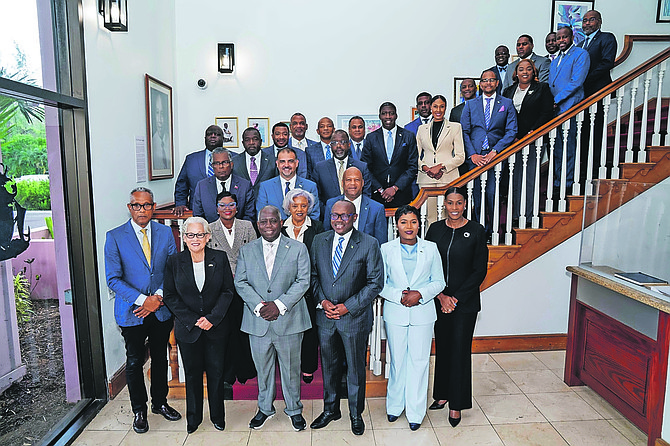
Works and Family Island Affairs Minister Clay Sweeting and Health and Wellness Minister Dr. Michael Darville shared details of their respective ministries’ budget plans with reporters on Wednesday, ahead of the first Cabinet meeting convened for the administration’s new term. The gathering brought together both long-serving incumbent ministers and newly appointed officials, many of whom voiced cautious optimism for the policy agenda ahead.
In his remarks to press, Minister Sweeting confirmed that ongoing core projects to upgrade transportation infrastructure and flood drainage systems across the Bahamas will continue to receive budget allocation, with development in the outlying Family Islands remaining a central focus. This focus responds to years of public complaints about deteriorating road conditions across the country, where motorists have repeatedly reported vehicle damage caused by widespread potholes.
One key upcoming project is the Pinewood road remediation and drainage initiative, for which Sweeting confirmed all mobilization costs have already been settled, with construction set to kick off within the coming weeks. In a new policy development, Sweeting also announced that his ministry will integrate artificial intelligence into its internal operations, specifically noting that AI tools will be used to streamline and speed up building plan approval processes that have historically faced long delays. On the administration’s ongoing shantytown clearance campaign, Sweeting reported that more than 700 unregulated structures have been demolished across the country over the past two years. The Shanty Town Task Force will continue its work in partnership with the Department of Immigration, the Department of Social Services, and the Royal Bahamas Police Force, he added.
Alongside infrastructure, public healthcare will hold a central place in the new budget, a long-stated commitment of the Davis administration that first made strengthening the country’s struggling health sector a core campaign promise when it took office. That agenda has faced significant setbacks in previous years, however, marked by worsening conditions at public hospitals and repeated project delays.
Dr. Darville told reporters Wednesday that the government’s core goal for the health sector remains unchanged: expanding the healthcare workforce to ensure enough trained staff are available to deliver consistent, quality care to patients across the country. He also confirmed that major capital repairs are set to begin imminently at Nassau’s Princess Margaret Hospital (PMH), the country’s flagship public health facility that critics say is currently in the worst condition it has seen in decades.
The facility has drawn widespread public criticism in recent months: frontline healthcare workers have repeatedly reported working with severe shortages of essential medical supplies, while patients regularly complain of waiting multiple hours for basic care. Earlier this month, photos circulating on social media purporting to show unsanitary, overcrowded conditions in PMH’s male medical ward sparked widespread public outcry over the facility’s decline. Dr. Darville noted that he had directly addressed the issue with leadership from the Public Hospitals Authority, and the specific concerns raised in the photos have now been resolved. He added that ongoing challenges are inevitable for an ageing facility like PMH, which has served the Bahamian public for decades.
To fund the upcoming upgrades, the government has secured a $75 million loan earmarked for improvements to public health infrastructure across the country, with a large portion allocated to PMH renovations. The project will include the full demolition and reconstruction of the hospital’s main kitchen facility, alongside targeted renovations to the Legacy Unit, the eye surgery theatre, and multiple other clinical and support areas.
When asked whether the Ministry of Health would request a substantial budget increase to fund its large pipeline of projects, Dr. Darville said officials do not expect a major boost in allocation, as the government prioritizes fiscal sustainability alongside service improvements. The administration is currently in the process of restructuring the national National Health Insurance (NHI) program, he explained, with a focus on developing a more stable economic model that ensures healthcare providers and attending physicians are paid on time, a longstanding grievance from the country’s medical community. He added that the government is also exploring the addition of a catastrophic care insurance benefit, with officials working to build a sustainable funding model that will allow the new benefit to launch without straining public finances.