Parliamentary proceedings to amend Suriname’s 2024 Comptabiliteitswet (Accountability Act) were paused on Tuesday, with the debate rescheduled for this Thursday. The extension grants Finance and Planning Minister Adelien Wijnerman additional time to refine proposals submitted by both governing coalition and opposition lawmakers, as cross-party consensus grows around retaining core provisions of the new law while building a feasible implementation framework.
The administration has proposed pushing full implementation of the 2024 Accountability Act to the 2029 national budget, arguing that critical administrative infrastructure, regulatory frameworks, and oversight mechanisms remain insufficiently prepared to roll out the full reform package. The scheduled Tuesday session, originally set to begin at 10 a.m., was delayed until 1:45 p.m. due to a lack of quorum. Once underway, multiple assembly members pushed back against the idea of pausing all provisions of the law, instead advocating for a phased rollout that would keep already actionable provisions in effect immediately.
Lawmakers also clashed over the length of the proposed delay, with many arguing a two-year postponement is sufficient rather than the administration’s requested three-year delay. The debate repeatedly centered on 2028, the year Suriname expects to begin collecting revenues from offshore oil production. Multiple parliamentarians emphasized that by 2028, the country’s financial oversight mechanisms, procurement rules, and accountability structures must be fully operational and aligned with the new law’s standards.
Following a procedural suspension, closed-door negotiations were held between faction leaders, National Assembly Speaker Ashwin Adhin, and Minister Wijnerman. After the talks, Rabin Parmessar, leader of the opposition NDP faction, stated that participants had collaborated to develop workable implementation models. “We reviewed every proposal put forward in this chamber, and I believe we have developed shared frameworks that we have presented to the minister,” Parmessar said, noting that negotiators had drawn a clear distinction between budget drafting processes and post-implementation accountability requirements. “Especially on the accountability side, the minister’s responsibilities have now been clearly outlined,” he added, confirming that the minister will now refine the proposals and return an adjusted plan to the full assembly for consideration.
Asis Gajadien, leader of the governing VHP faction, echoed the call for shared parliamentary responsibility, noting that the reform is far more than a technical technical adjustment to legislation – it shapes the long-term financial and governance trajectory of Suriname. “This is about who we are and where we as Surinamese want to go,” Gajadien said. He reiterated that parliament must identify which components of the law can enter into force immediately, and which can be rolled out in stages. “At the end of the day, all of us want a system that can deliver accurate accountability both to the public and to this parliament,” he added.
Rossellie Cotino, an NDP lawmaker who chairs the assembly’s rapporteur committee, framed the current delay as a consequence of inadequate preparatory work when the 2024 Accountability Act was originally passed. She noted that the bill was originally approved without the required supporting legislation and institutional preparations in place, but emphasized: “This is not a cancellation of the 2024 Accountability Act, it is merely a postponement.” Cotino added that stakeholders have now mapped out all the supplemental reforms needed to make the law fully implementable.
She also confirmed that the Ministry of Finance has received technical support from an International Monetary Fund macroeconomic expert to assist line ministries in developing a multi-year financial framework and five-year strategic plan aligned with the act. Minister Wijnerman has already submitted an adjusted action plan and revised draft amendment, which includes a requirement for semi-annual progress evaluations of the act’s implementation.
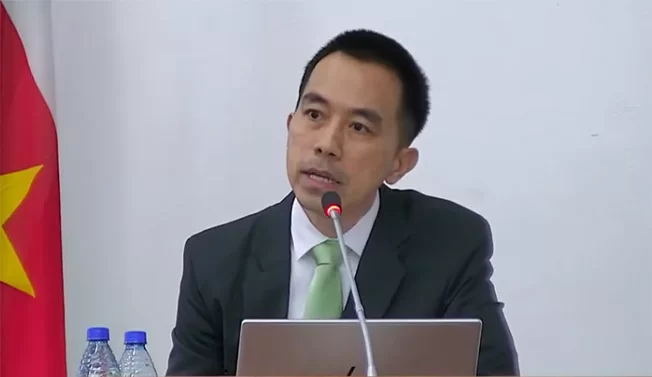
Assembly member Jeffrey Lau of the opposition NPS has emerged with broad cross-party support for his proposal to implement already ready provisions of the act on a phased basis, rather than delaying the entire legislation for years. Lau stressed that as Suriname prepares to receive 2028 offshore oil revenues, the country urgently needs strong oversight mechanisms, transparent procurement procedures, and a robust financial accountability system. He argued that policymakers must avoid pushing needed, long-awaited reforms off for additional years, at a time when the public is demanding greater transparency and improved public financial governance.