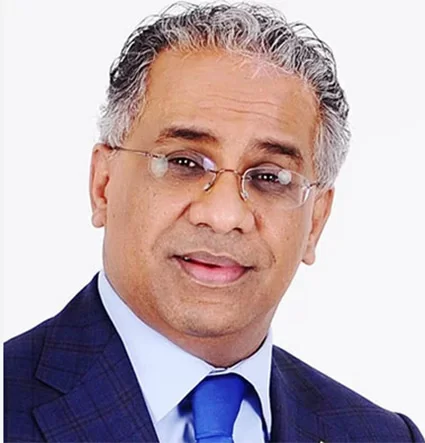
On May 25, exactly one year has passed since the last general elections that brought the Simons-led coalition government to power in Suriname. Veteran fiscal-financial analyst Robby Makka, who has delivered annual economic and fiscal (ecofin) assessments from macro, meso, and micro perspectives for over 12 years, has released his annual evaluation of the administration’s first 12 months in office, pulling together data, official documents, policy reports, recent developments, and stakeholder feedback to build his analysis.
This year’s review comes amid the regular cycle of International Monetary Fund (IMF) assessments, which typically take place in March with follow-up visits scheduled for May or June. Makka centers much of his analysis on this ongoing IMF engagement, framing his assessment around six core benchmarks aligned with the six parties that make up Suriname’s current ruling coalition. Echoing the government’s own framing of a rapid policy review, Makka argues that fiscal and economic policy must remain fully sovereign across all three levels of analysis, warning that instead of benefiting from broad-based oil-driven growth, Suriname faces the looming threat of the resource curse known as the “oil curse.”
In his initial quick scan of the administration’s performance, Makka criticizes President Simons for declining to hold a national press conference by the first anniversary of the election to address the coalition’s policy mandate, governing agreement, pressing fiscal and economic challenges, and the recently released IMF assessment. Instead of prioritizing this critical domestic accountability moment, the president has prioritized overseas official visits to the Dominican Republic and Brazil. While a press conference was scheduled for 9:30 a.m. on the anniversary, Makka points out that it is led solely by the government’s own fiscal spokesperson, a format he rejects as insufficient.
Makka pushes back against the spokesperson’s framing of the current economic landscape as “moderate,” noting that official forecasts predict 3.4% economic growth this year, a metric that demands far more transparent and comprehensive public discussion. He argues the entire six-party coalition should have appeared before the public to present a data-driven, fact-checked annual evaluation of its performance, and calls on President Simons to immediately order full annual progress reports from the President’s Cabinet, Vice President’s Cabinet, and all 17 government ministries.
Digging into an independent review of the administration’s foundational policy work, Makka argues that the 2025–2030 governing agreement *Samen naar fundamentele verandering* (Together for Fundamental Change), struck between the six coalition parties, has largely proven to be performative, designed more for public presentation than for delivering tangible systemic change. While coalition negotiators moved quickly to finalize the power-sharing agreement, Makka says the administration has failed to deliver a unified Simons economic and fiscal plan, produce a cohesive cross-coalition policy framework, or even draft its own national budget. Instead, the government is still operating on a budget approved by the previous Santokhi administration.
Worsening this institutional gridlock, the key 2026 financial memorandum, the core policy document for the national budget, has still not been submitted to the National Assembly (DNA) for oversight, even with the year already half over. Suriname’s Planning Bureau has not been empowered to carry out rigorous, independent policy modeling, reliable economic projections, or fully developed scenario planning, Makka says.
Most notably, the most recent IMF report is unsparing in its criticism of the Simons administration’s first year of fiscal and economic governance. The global financial body cites major constraints including implementation delays, weak oversight mechanisms, critical data gaps, fragile institutional systems, and a severe shortage of qualified technical experts. The IMF concludes that policy implementation “is not yet complete due to limitations in institutional capacity, delayed secondary legislation, and limited political engagement”—with Makka emphasizing that the emphasis on “limited political engagement” is particularly telling. These gaps leave Suriname exposed to widespread budget errors and growing systemic financial risks, the analyst warns.
Suriname’s Accountability Act is currently stuck in legislative processing in the National Assembly for what Makka describes as questionable political reasons. Minister Adelien Wijnerman has publicly cited the lack of a five-year financial plan, a consolidated budget memorandum, formal budget rules, and primary expenditure ceilings as core reasons for the delay.
Makka questions what tangible progress has been delivered since the president’s October 1, 2025, address to the nation, arguing that the bar for policy performance was set far too low, and needs to be raised through more robust planning, programming, and project implementation. One year in office cannot erase the country’s long-standing economic and fiscal challenges, he notes, and the delay to the Accountability Act has only raised more pressing questions about the administration’s commitment to reform. Makka concludes that after 12 months in power, President Simons has not demonstrated effective leadership or managerial capacity, lacks a clear policy agenda, and has failed to deliver meaningful change at every level from local community outcomes to national strategic direction.
Calling on President Simons to take more active ownership of the country’s fiscal and economic trajectory—what Makka frames as “ecofin motherhood”—the analyst says the administration must move past planning to full implementation, institutionalize reform processes, strengthen technical fiscal teams, establish sovereign savings and macroeconomic stabilization funds, accelerate anti-corruption efforts, and most importantly, abandon plans to delay the passage of the Accountability Act.
In his concluding assessment, Makka notes that despite having six coalition parties, a full network of economic and fiscal institutions, and hundreds of qualified technical fiscal professionals, the Simons administration has yet to deliver any meaningful policy progress. “There has been one year of economic and fiscal stagnation. The ‘enemy of the Simons administration’ is inertia,” he writes. He stresses that this assessment is not malicious criticism, but a conclusion drawn from 50 years of Suriname’s post-independence statehood and 160 years of parliamentary democracy. The country still lacks a required medium-term fiscal report and a multi-year financial framework, even as qualified technical fiscal experts are pushed out or removed from their positions, he adds.
Makka lays out clear recommendations for the administration’s second year in office: the government should immediately deepen engagement with experienced fiscal and financial experts, carry out a cabinet reshuffle if necessary, and formally re-engage the IMF for full technical support if required. His closing advice to the administration centers on four core demands: change yourself, change your practices, change your governing style, and build a cohesive, coherent Simons-specific national strategy.
Bringing together the findings of stalled implementation, growing financial risks, and the absence of long-term fiscal planning, Makka sums up his assessment of the Simons administration’s first year: “1 year of Simons is a bad honeymoon.”