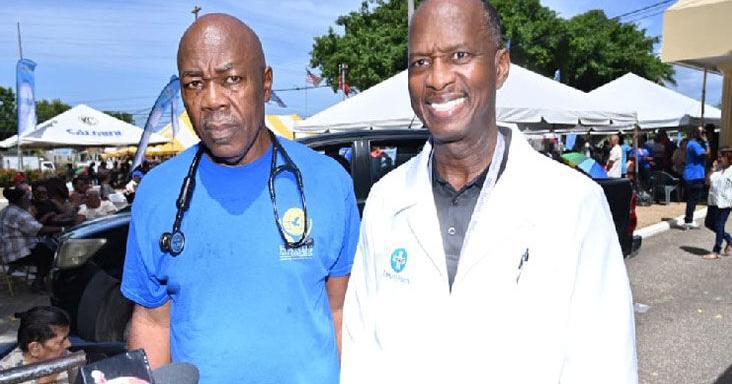
A recent four-day humanitarian cataract surgery mission in Trinidad and Tobago has thrown a sharp spotlight on a growing public health crisis: thousands of elderly citizens across the twin-island nation are living with preventable blindness, trapped by financial barriers and limited access to timely care. Leading the mission organized by disaster and medical humanitarian group HANDS International at the Community Hospital of Seventh-day Adventists in Cocorite, Trinidad-born US-based physician Dr. Reynold Agard detailed the scale of unmet need that his team encountered during their work.
According to Agard, the vast majority of patients affected are elderly people living with age-related cataracts, a condition whose progression is significantly accelerated by common regional health issues including high diabetes rates, poor dietary habits, and chronic overexposure to strong Caribbean sunlight. Cataracts develop when the eye’s natural lens becomes clouded, essentially leaving sufferers to view the world through frosted glass, and surgery is the only effective treatment to restore vision. Across the entire Caribbean, Agard noted, cataracts have emerged as a leading cause of preventable blindness, driven by overlapping demographic and public health trends: populations across the region are aging, rates of lifestyle-related conditions such as diabetes and heart disease are rising rapidly, and many low-income patients cannot access or afford the care they need.
When the mission launched, organizers initially set a goal of completing 3,000 free or subsidized cataract surgeries. But the overwhelming flood of demand pushed the team to raise their target to 4,000 procedures. Despite this adjustment, multiple logistical and financial barriers prevented the team from hitting the expanded goal. Pre-surgery screenings and lens measurements, required to prepare for successful procedures, normally cost patients between TT$300 and TT$500 — a sum that was out of reach for most patients seeking care through the mission. As a result, the surgical team had to divert significant time and resources away from procedures to conduct these essential screenings on-site for free. Additional delays came from supply chain holdups and broken air conditioning at the hospital, further slowing the pace of work.
Agard emphasized that the issue is not a lack of local medical skill: Trinidad already has highly trained surgeons capable of performing cataract procedures. To address the gap in access, Agard and his team, which included world-renowned high-volume cataract surgeon Dr. Jacobs — one of the pioneers of the four-minute rapid cataract procedure — have offered to train local clinicians in this efficient, high-throughput surgical technique that allows more patients to be treated in less time.
For the patients who did receive surgery, the results have been life-changing. Agard shared moving accounts of the emotional reactions many had when their bandages were removed and vision was restored. One elderly woman, who had only been able to see the faint shadows of her grandchildren for three years, trembled and cried when she was able to view clear photos of her family on her mobile phone for the first time. “Everyone cries when they realize blue is really blue again, and they can finally see red clearly,” Agard said.
For Agard, the mission was far more than a humanitarian project — it was a personal homecoming. A graduate of Roxborough Secondary School and the Polytechnic Institute, Agard migrated to the US, where he completed medical training at Penn State College of Medicine, now runs a private practice in Delaware, and teaches at hospitals across the Philadelphia-Delaware region. He has been part of HANDS International since the organization was founded 18 years ago, in the wake of devastating hurricanes that struck the eastern Caribbean. Since its launch, the group has deployed to respond to humanitarian crises and medical needs across the globe, including disaster response in Haiti, Dominica, Nepal, Ukraine, and multiple African nations, as well as post-hurricane relief in Jamaica, the Bahamas, Louisiana, and New York after Hurricane Sandy.
Preliminary discussions are already underway for HANDS International to return to Trinidad next year, with plans to expand services to Tobago and South Trinidad, with the goal of making these cataract mission an annual event. Agard praised the support the mission received from the Trinidadian government, Minister of Health Dr. Lackram Bodoe, and the South Caribbean Conference of Seventh-day Adventists, which was instrumental in hosting the project. All medications used during the mission were provided free of charge, with only one unregistered drug held up at customs — an issue organizers are working to resolve ahead of the next trip. The team is also encouraging all patients who received surgery to complete their required follow-up care at the host hospital.
Beyond the immediate surgical work, the mission highlights broader public health priorities for the region. Agard emphasized that simple lifestyle adjustments can significantly slow the progression of cataracts and reduce risk, especially for people with diabetes. He encouraged Caribbean residents to adopt a diet centered on whole, plant-based foods, rich in vitamins A, C, and E, limit consumption of red meat and ultra-processed foods, and avoid smoking and excessive alcohol consumption — two major modifiable risk factors for early cataract development.
“Some people literally go to their graves blind with a procedure that could have given them sight and improved their quality of life,” Agard said. For thousands of underserved Trinbagonians, this mission has already changed that outcome — and future trips hope to bring clear vision to thousands more.