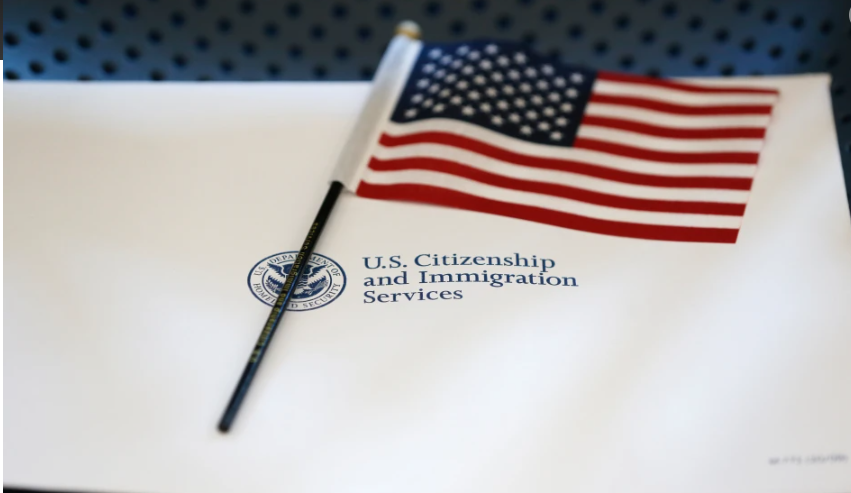
In an unexpected policy shift that upends more than 50 years of established U.S. immigration practice, the Trump administration has announced a new rule requiring most foreign nationals already residing in the U.S. on temporary status to leave the country and submit their green card applications from their home countries, triggering widespread confusion and alarm among immigrant advocates, legal practitioners and foreign nationals themselves.
For more than half a century, eligible foreign nationals holding temporary legal status in the U.S. — including spouses of U.S. citizens, work visa holders, students, refugees and individuals granted political asylum — have been permitted to complete their entire application process for lawful permanent residency (commonly known as a green card) without leaving the country through a process called status adjustment. This longstanding framework has been a core part of the U.S. immigration system since the mid-20th century.
The new policy, announced by U.S. Citizenship and Immigration Services (USCIS), states that temporary visa holders seeking to become lawful permanent residents must complete their application process from their home country, with exceptions only granted for “extraordinary circumstances” that will be decided on a case-by-case basis by USCIS officers. In a formal statement, the agency defended the change, arguing that nonimmigrants such as students, temporary workers and tourists enter the U.S. for limited time and specific purposes, and their stays should not double as the first step toward permanent residency. The change is framed by USCIS as a return to the “original intent of the law” that closes an existing regulatory loophole.
This policy marks the latest in a series of moves by the Trump administration to tighten legal immigration pathways for both current U.S. residents and prospective new arrivals. Doug Rand, a former senior USCIS advisor during the Biden administration, explained that the administration’s goal is explicit: to reduce the overall number of people gaining permanent residency, since permanent residency paves the way to U.S. citizenship, and officials aim to block that pathway for as many people as possible. Rand noted that roughly 600,000 people already residing in the U.S. submit green card applications annually, all of whom could be impacted by the new rule.
Notably, USCIS has left critical details of the policy change unresolved. The agency has not announced an official effective date, clarified whether applicants must remain outside the U.S. for the full duration of the application process, or specified whether the new rules will apply to applicants who already have pending green card applications. In an emailed response to the Associated Press, USCIS indicated that applicants whose cases serve the U.S. national interest or bring significant economic benefit will likely qualify for the exception to remain in the country during processing.
The new requirement comes on top of pre-existing travel and entry restrictions imposed by the Trump administration on dozens of countries, including outright travel bans and halted visa processing in multiple regions. Immigration experts and legal advocates warn that for nationals of these restricted countries, being forced to return home to apply will effectively bar them from ever re-entering the U.S. Humanitarian organization World Relief pointed out that the policy creates an impossible Catch-22: if a non-citizen is ordered to return to their origin country to process their visa, but no visa processing is available there, families will face indefinite separation.
Critics also note that many applicants cannot safely return to their home countries, or lack access to a functioning U.S. embassy to submit their application. For example, the U.S. Embassy in Afghanistan has remained closed since the American military withdrawal in August 2021, leaving Afghan nationals with no way to complete the offshore application process. Shev Dalal-Dheini, senior director of government relations at the American Immigration Lawyers Association, said the policy upends decades of established status adjustment processing, and applies broadly to every category of green card applicant currently in the U.S. This includes spouses of U.S. citizens, humanitarian protection seekers, skilled work visa holders such as practicing doctors and other professionals, students and religious worker visa holders.