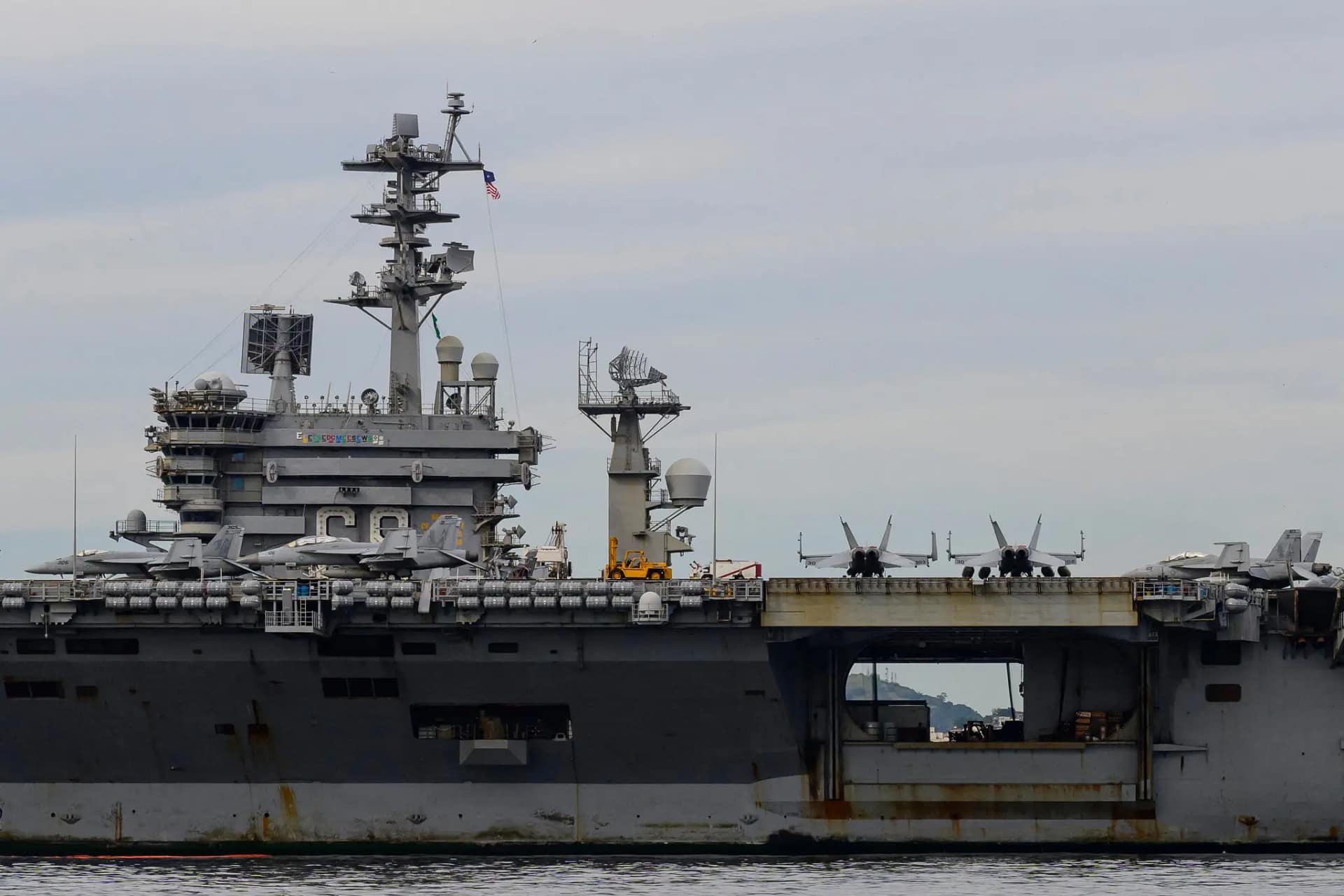
In a high-profile demonstration of American military power amid a sharp escalation of tensions between Washington and Havana, the USS Nimitz aircraft carrier and its accompanying strike group arrived in the southern Caribbean this week. The deployment comes as the former Trump administration ramped up diplomatic and legal pressure on Cuba, just after federal law enforcement officials unsealed rare criminal charges against former Cuban President Raúl Castro.
U.S. Southern Command has publicly clarified that the movement of the massive naval contingent is designed as a show of force, not a precursor to imminent direct military action against the island nation. Prior to repositioning to Caribbean waters, the carrier and its crew had been completing joint maritime training exercises with the Brazilian Navy, a routine partnership activity that predated the current escalation.
The timing of the strike group’s arrival aligned exactly with the Justice Department’s decision to publicly unseal the long-sealed charges against Castro. The allegations tie Castro directly to the 1996 shooting down of two civilian aircraft piloted by members of Brothers to the Rescue, a prominent anti-Castro exile group based in the United States.
The heavily equipped strike group, which consists of the nuclear-powered supercarrier, advanced fighter aircraft squadrons, guided-missile destroyers, and dedicated logistics support vessels, marks a measurable expansion of already growing U.S. military and intelligence surveillance activity in the maritime region surrounding Cuba. This deployment is the most visible step in a steady build-up of American pressure on the Cuban government in recent years, as bilateral relations between the two nations deteriorated sharply during the administration’s tenure.