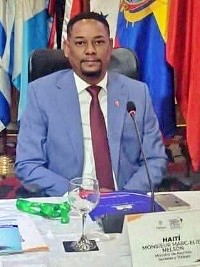
Against a backdrop of growing regional migration pressures and shifting labor market dynamics across Latin America and the Caribbean, Haiti has put forward a bold proposal for cross-border cooperation at the region’s highest-level gathering of labor ministers. The Conference of Ministers of Labor of Latin America and the Caribbean, hosted in Bogotá, Colombia from May 21 to 22, 2026, brought together top labor and social affairs officials to address shared challenges spanning migration, inclusive economic growth, and climate-linked labor disruption.
Leading Haiti’s delegation to the conference, Marc-Elie Nelson, Minister of Haiti’s Ministry of Social Affairs and Labor (MAST), introduced a landmark initiative: the creation of a standardized regional system for the recognition of professional skills. Nelson argued that such a coordinated mechanism would unlock tangible benefits for the entire region, from encouraging cross-border entrepreneurship to expanding equitable access to public employment support services. Most critically, he emphasized, the framework would advance the financial and digital inclusion of migrant workers, a group that often faces systemic barriers to formal economic participation across the region.
“Investing in these areas is investing directly in the stability, prosperity, and cohesion of our region,” Nelson told conference attendees. Alongside his call for the skills recognition system, Nelson urged regional partners to establish a dedicated regional innovation fund focused on expanding professional inclusion for marginalized and mobile worker populations.
Beyond labor market reform, Nelson called for unified, coordinated action from regional governments to tackle two of the most pressing shared challenges: irregular migration patterns and climate change impacts on labor systems. He also made a forceful stand against exclusion in workplaces across the region, stating, “We must raise our voices together strongly against xenophobia, discrimination, and all forms of exclusion in the world of work.”
By the close of the two-day conference, participating officials advanced regional cooperation through two key multilateral agreements: a memorandum of understanding and a joint policy statement titled the Bogota Declaration on Dignified Labor Migration and Rights-Based Mobility in Latin America and the Caribbean. Both documents were initialed by attending delegations, laying the groundwork for future coordinated action.
For Haiti, signing onto the agreements reaffirms the country’s long-standing commitment to building a regional governance model that centers human dignity as a core priority of public policy, aligning with the nation’s proposal to center marginalized migrant workers in regional labor reform efforts.