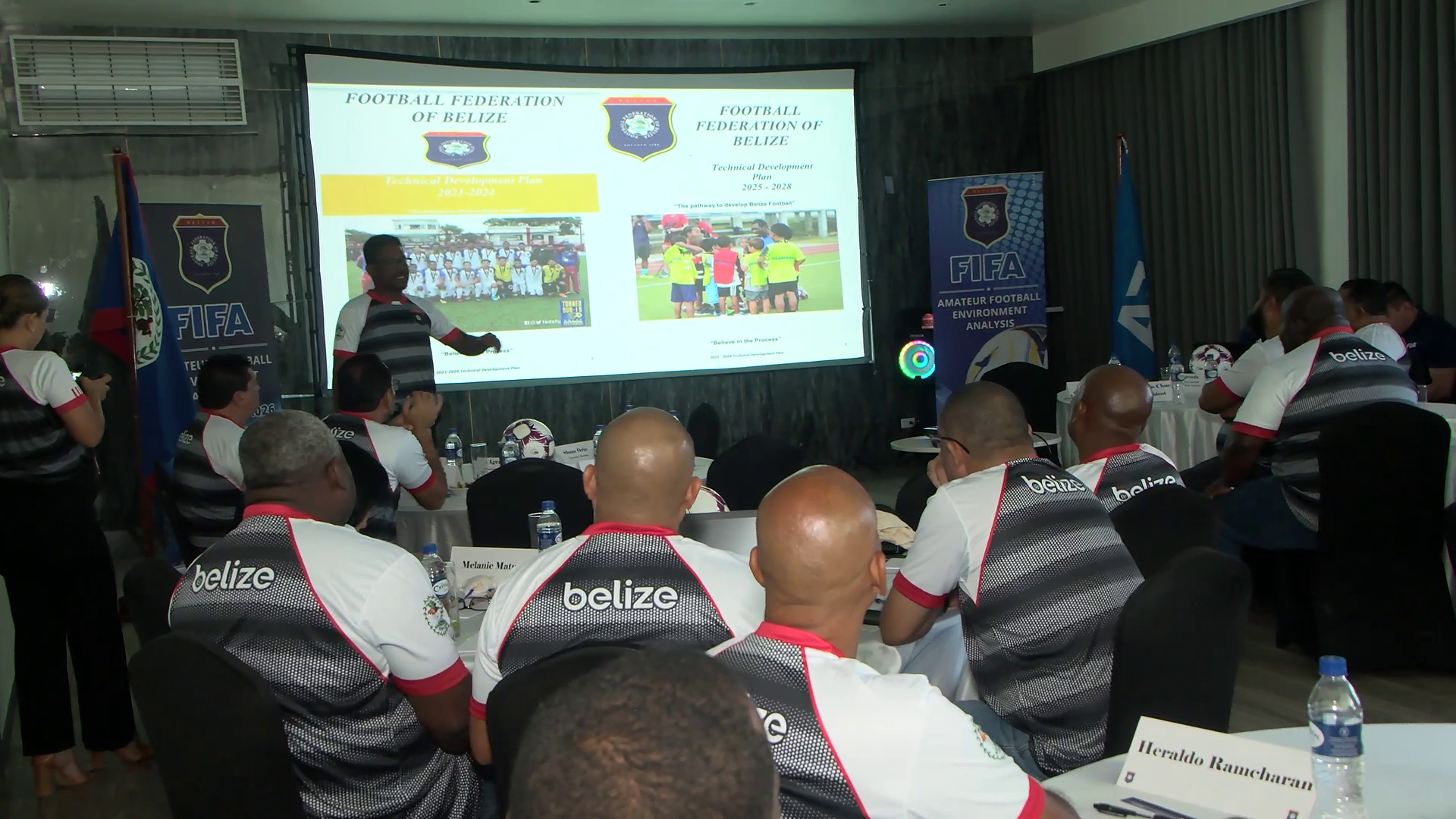
In a landmark step for football development in the small Central American nation of Belize, national governing body the Football Federation of Belize (FFB) has partnered with FIFA to conduct a landmark comparative analysis of the country’s amateur and grassroots football ecosystems. The review, which draws on 2023-2024 survey data collected across 106 countries worldwide, is designed to deliver a clear, data-backed assessment of Belize’s standing in global community football development, and lay the groundwork for future growth that supports all players, not just those on track for elite competition.
The collaborative assessment was presented at a national workshop bringing together certified football coaches from every region of Belize, where stakeholders broke down key findings and actionable recommendations for expanding access to the sport. Speaking at the event, FFB President Sergio Chuc emphasized that the analysis has delivered tangible, documented insights into Belize’s current progress, allowing leaders to benchmark the country’s work against international peers. Early findings suggest Belize’s existing grassroots and amateur framework is well-organized and aligned with global best practices, though Chuc noted that consistent, ongoing work will be critical to driving further improvement.
Javier Sanchez, FIFA’s Amateur Football Manager, outlined the dual global goals that guided the analysis: boosting broad-based participation in football across all demographics, and growing the sport to be inclusive of players of all skill levels and aspirations. Unlike elite-focused assessments that center only on top-tier professional and national team performance, this project prioritizes the massive segment of players who participate in football for community, recreation, and personal development rather than professional advancement.
FFB Technical Development Director Phillip Marin echoed this priority, noting that globally, fewer than 1% of grassroots players ultimately advance to elite competitive levels. That reality makes targeted investment in amateur pathways not just a nicety, but a core responsibility for football governing bodies at every level – from the FFB to regional confederation CONCACAF and global governing body FIFA. Without structured, supported opportunities for the vast majority of players who will not go pro, Marin argued, the sport misses out on widespread community buy-in and the broad base of participation that ultimately nurtures the rare elite talent that does emerge.
This collaborative review marks one of the most comprehensive third-party assessments of Belize’s national football structure in recent years, reflecting a growing global shift toward prioritizing inclusive grassroots development alongside high-performance elite programs. For Belize, the findings will shape future funding, coaching training, and infrastructure investment decisions as the country works to expand access to football and solidify its position on the global football landscape.