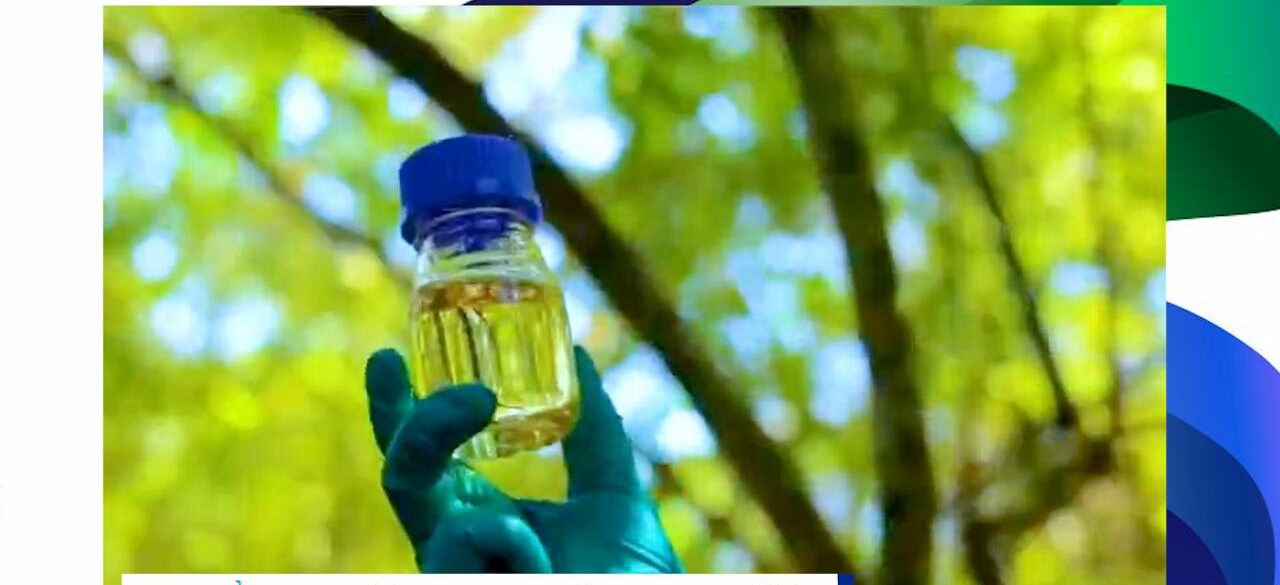
Across Latin America and the Caribbean, a paradigm shift is underway in rural agriculture: a new cohort of young entrepreneurs is moving beyond the traditional focus of maximizing food output to build a thriving, innovation-led agro-bioeconomy centered on sustainability, circularity and value addition. This transformation is not a hypothetical future—it is already taking root in business models across the region, as highlighted by the results of the 2025 LATAM Impact Agro-bioentrepreneurship Competition, co-hosted by the Inter-American Institute for Cooperation on Agriculture (IICA) and FONTAGRO.
When organizers opened the competition to submissions, they received more than 1,100 projects from 20 countries across the region, far exceeding initial expectations. The entries spanned the full breadth of the modern bioeconomy: from climate-focused carbon capture systems and crop-boosting bioinputs to biomaterials, bioenergy, and novel bioproducts for food, health, and cosmetic applications. This diverse response offered a clear snapshot of a fast-growing ecosystem that has outpaced all early projections.
The global bioeconomy is already valued at close to $4 trillion, according to World Economic Forum estimates, with more than 50 nations rolling out dedicated national development strategies. This growth has been fueled by breakthroughs in synthetic biology, advanced engineering, and decentralized production models—and Latin America is emerging as a key hub for this global transition.
The new face of 21st-century rural entrepreneurship
Young producers across the Americas are embedding this new thinking into daily operations, as profiled in IICA’s *Leaders of Rurality* interview series. Canadian young farmer Mackenzie Fingerhut framed a key gap driving innovation: a persistent “enormous disconnect” between urban consumers and rural production, where most city dwellers have never witnessed how their food is grown, shaping consumer choices in unproductive ways. To bridge this gap, Fingerhut has prioritized full transparency and traceability, rolling out QR code systems that let consumers scan product packaging to access the full journey of their food: from where ingredients were planted, how they were processed, and who grew them. This tool, he explained, is more than a marketing add-on—it builds critical trust between producers and consumers.
For another young entrepreneurial couple based in Saint Kitts and Nevis, Akiesha Fergus and Ryan Khadou, limited infrastructure and growing climate threats have not slowed their adoption of innovative practices. Their core motto is “work smart, not hard,” Fergus explained: modern agriculture no longer relies on the brute-force methods of past decades. Instead, it leverages science and technology to understand local environments and land, delivering better crop yields while reducing unnecessary strain.
A shift from incipient trend to mature ecosystem
Just six years ago, a 2019 IDB Lab report mapping AgTech innovation in Latin America and the Caribbean identified the agro-bioeconomy as an incipient, highly concentrated emerging sector. Today, that gap between 2019 projections and on-the-ground reality is striking: what was once a niche trend has exploded into a mature, widespread movement. The core difference, leaders note, is that sustainability is no longer framed as a separate “green agenda” or symbolic declaration—it is a core financial and competitive asset. Agricultural biomass that was once treated as valueless waste is now a high-value raw material for circular business models that add value directly at the production source.
At the competition’s results presentation in April, IICA Director General Muhammad Ibrahim validated this paradigm shift. Promoting agro-bioentrepreneurship, he said, is key to “building a world of innovation in rural areas that increasingly integrates young people and women into the sustainable use of biodiversity.” The competition’s core goal, he added, was to help scale initiatives that connect agriculture, energy, health, and environmental stewardship, proving that the bioeconomy is far more than a theoretical concept: it delivers tangible, beneficial products for communities across the region.
Standout innovations turning challenges into opportunities
Several winning projects from the competition exemplify how this new model works in practice. Dominican Republic-based startup SOS Biotech, for example, turned a major regional environmental crisis into an opportunity for inclusive economic growth. The Caribbean has struggled with massive invasive blooms of sargassum macroalgae that disrupt coastlines and local ecosystems. SOS Biotech co-founder and CTO Elena Martínez explained that the company developed a low-cost collection system mounted on artisanal fishing boats, training more than 130 local fishers to harvest the algae. To date, the firm has recovered more than 16,000 tons of sargassum, which it processes through a zero-waste closed system to extract bioactive compounds and produce biostimulants and growing substrates for local Dominican farmers. The startup has already earned certifications to enter the U.S. and Spanish markets, proving that sargassum can replace synthetic, petroleum-derived compounds while mitigating environmental damage. “What generated a crisis became a great opportunity for industrial diversification in the region,” Martínez noted.
Another winning project, Carbonlytics, was developed by a team of Colombian engineers to unlock new income streams for smallholder farmers through carbon credit markets. The system uses drone technology and advanced data analytics to measure crop biomass with more than 95% accuracy, generating the precise data required for carbon capture credit certification. This lets farmers earn additional revenue from sustainable land management practices, delivering what creators call a “double impact” that benefits both local communities and the global climate.
From Argentina, award-winning startup Prix Biotech recently notched a major scientific milestone: using genetic editing to enhance commercial biofertilizers that boost productivity of major crops including soybeans and alfalfa. Lead researcher Nicolás Ayub explained that the team edits already existing functional characteristics of natural microorganisms to develop more efficient biological fertilization solutions. The resulting products have a far lower environmental footprint, deliver more consistent results in the field, and cut the time and cost of fertilization processes for producers.
Leading the global transition to regenerative agriculture
What was once a niche, little-noticed trend on global financial radars is now a fully formed business network where applied science sets the new rules for agricultural competitiveness. The volume and sophistication of competition entries and winning projects confirms that Latin America is no longer just a raw material exporter—it has become a large-scale living laboratory for global climate and agricultural innovation. For this new generation of entrepreneurs, success is no longer measured only in tons of output per hectare, but in the ability to manage the full biological complexity of rural landscapes to deliver both profit and regeneration. With a thriving ecosystem already delivering measurable, scalable results, the Latin American agro-bioeconomy has proven it is mature enough to lead the global transition toward a new productive model where efficiency and environmental regeneration are two sides of the same coin.