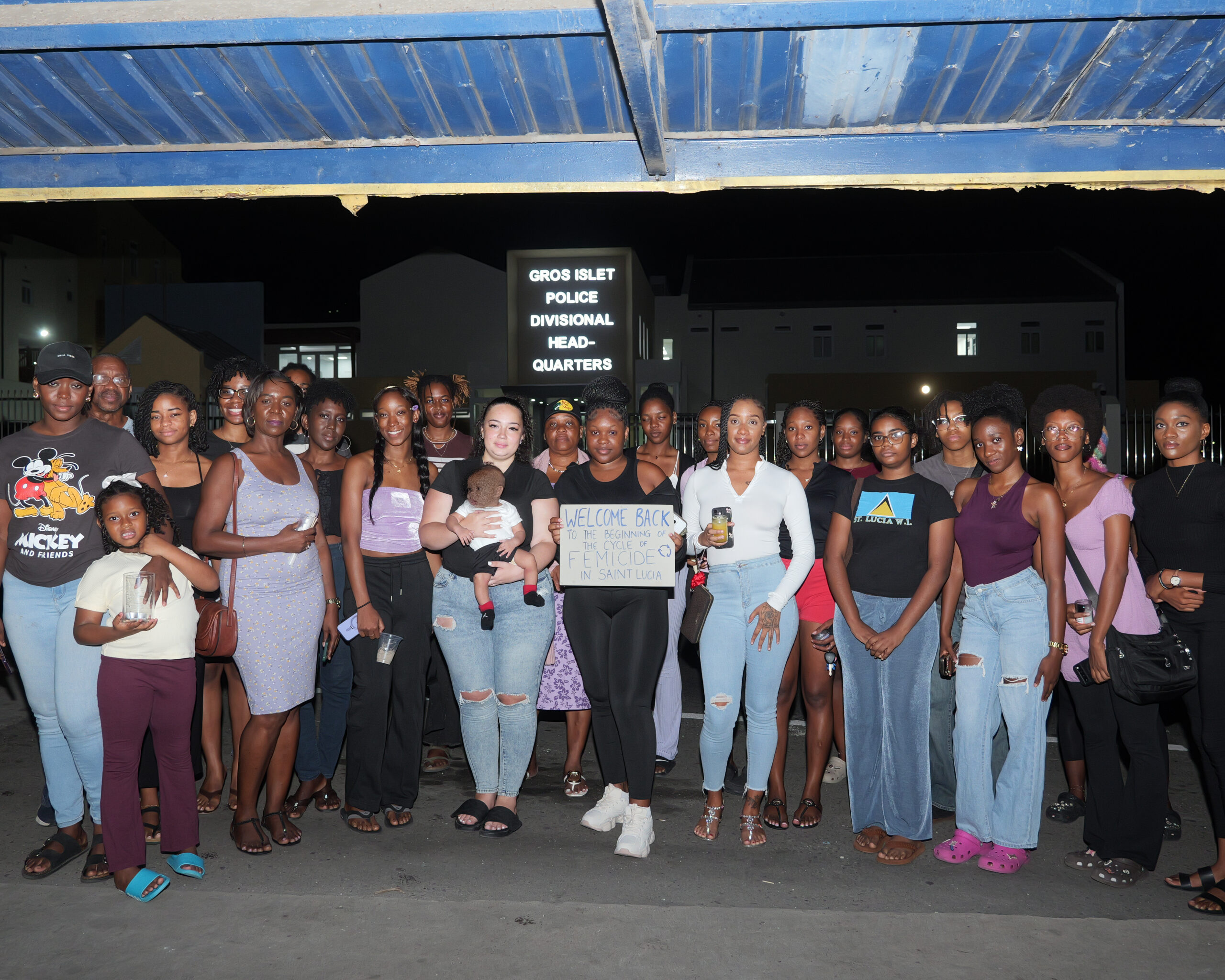
On a quiet Thursday evening in Gros Islet, Saint Lucia, the space outside the local police station became a sea of flickering candlelight, broken only by quiet tears and impassioned calls for systemic change. Hundreds of Saint Lucians, led by young mothers and survivors who have lived through intimate partner violence, gathered to hold a peaceful vigil for 24-year-old Joy St Omer, a mother of one killed just one day prior. What began as a solemn tribute to a lost life quickly transformed into a coordinated, powerful public demonstration against the growing crisis of gender-based violence, widespread institutional failures, and the urgent unmet demand for stronger legal and protective measures for women across the island.
Multiple reports confirm St Omer had repeatedly reached out to law enforcement and legal authorities to report escalating threats from her estranged husband, the primary suspect in her killing. Days before her death, a valid active protection order was already on the books against the suspect, who later turned himself in to police. An ongoing court case was already pending over allegations he had violated the terms of that order multiple times. In an official statement released the day of the vigil, police confirmed St Omer filed an additional complaint against her estranged husband on Wednesday morning, but officers were unable to locate him before that same night, when she was fatally shot while sitting in a vehicle in the Marigot district.
Angel Foster, the community organizer who spearheaded the vigil, said she could not stay silent after learning the full details of St Omer’s final days. “I organised this because I think I’m not the only woman that woke up yesterday irritated, angry and upset about what happened to Joy,” Foster shared in an interview on site. “She was a young mother, a young woman who actually reported this multiple times to the police and the justice system.” Foster added that the vast majority of attendees were fellow survivors of domestic abuse, who all share the experience of being failed by Saint Lucia’s current support and protection systems. She alleged St Omer’s repeated pleas for help were dismissed out of hand: “She was laughed at, ridiculed, belittled and put down. She’s not the only woman suffering silently.”
As the sky darkened, attendees stood shoulder to shoulder, many openly weeping as they shared their own experiences of living in fear amid abusive relationships. One attendee, who spoke to reporters on condition of anonymity, argued authorities had every opportunity to prevent St Omer’s senseless killing. “She could have been given an escort. She could have been placed into emergency custody for a time until they found him. They could have done way more than they did,” she said. The survivor called for binding, mandatory enforcement protocols that would require law enforcement to treat all domestic violence reports with the urgency they deserve. “The way you change things is you compel people to comply through laws, protocols and guidelines,” she explained.
She also issued a stark warning against the dangerous pattern that has played out after past acts of fatal violence against women: “There is outrage, there is discourse, but eventually it goes back into normalcy and inaction.” For the gathered crowd, the vigil was not just a chance to mourn St Omer, but a starting point for long-overdue reform that will save the lives of other women at risk across Saint Lucia.