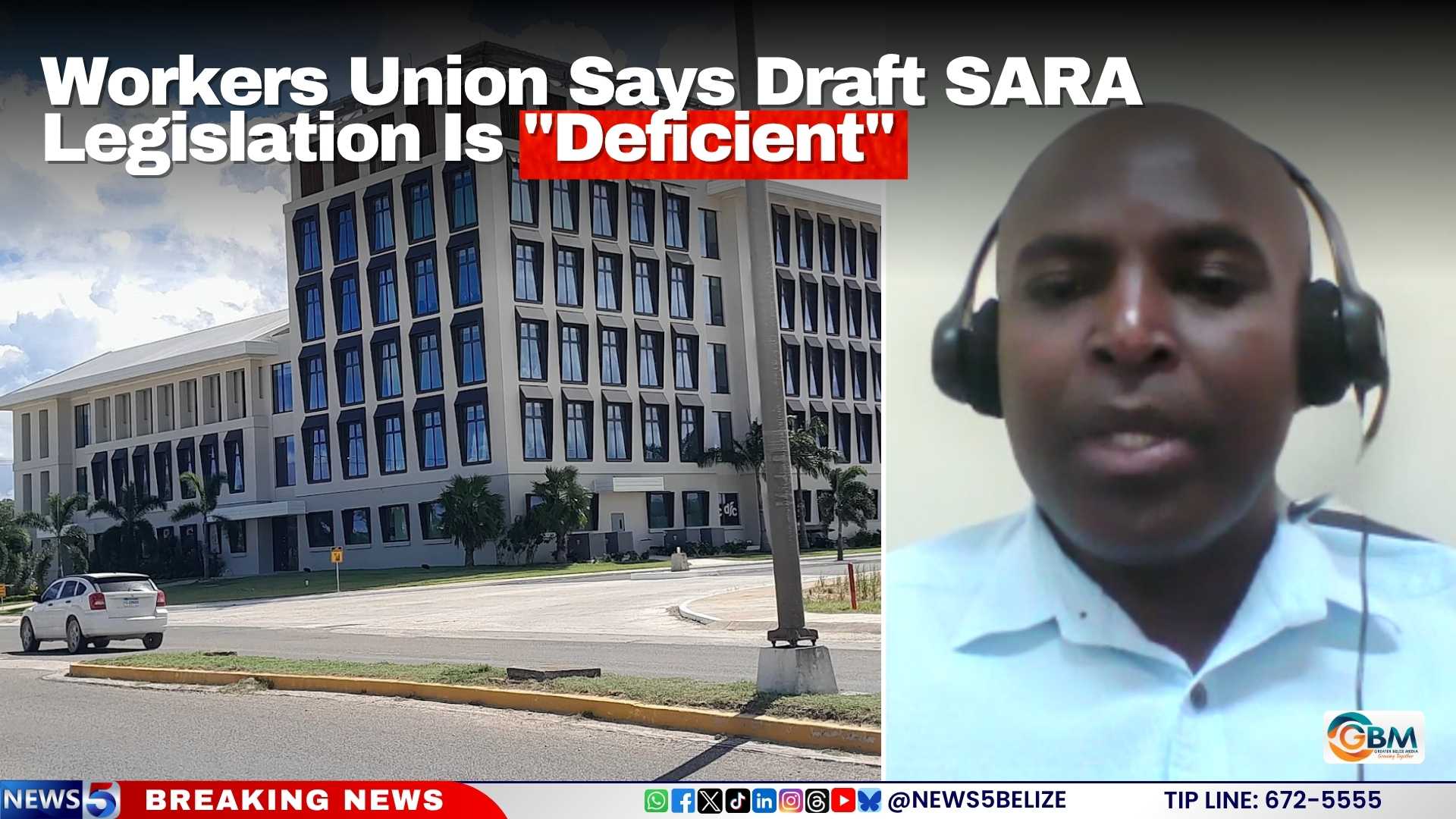
Belize’s national cabinet has given formal approval to a phased plan to restructure the country’s existing Tax Services Department into a new Semi-Autonomous Revenue Authority (SARA), a proposal framed by government officials as a critical step to modernize the nation’s revenue collection systems. The overhaul, which will be overseen by the Ministry of Finance, will touch every core part of the department’s operations, including its governance structure, staffing model, and daily service delivery. But what the government frames as a progressive upgrade has sparked sustained pushback from the Belize Public Service Union (PSU), the body representing public sector workers across the country.
PSU president Dean Flowers has sharply criticized the Ministry of Finance for what he calls a fundamentally flawed and non-transparent development process for the reform. Speaking after the steering committee overseeing the SARA project released the first full draft of the enabling legislation, Flowers argued that the government failed to meaningfully include the union and affected workers in early planning stages. He described the Ministry of Finance’s outreach as completely inadequate, saying, “The Ministry of Finance had done a horrible job in engaging and disclosing and being transparent with what they wanted to do with one of the largest revenue-generating departments of government.”
Flowers’ primary criticism centers on the draft legislation itself, which he labels “deficient” in its protections for public sector workers. The draft, he says, fails to adequately safeguard existing worker benefits and guarantee long-term job security for current employees of the Tax Services Department, raising alarm that the restructuring could erode core worker rights. While the government has allocated a 30-day public comment period for stakeholders to submit feedback on the draft, Flowers says the union has yet to receive the underlying data and analytical studies that the government cites to justify the shift to a semi-autonomous structure.
The government has pointed to recommendations from the Caribbean Regional Technical Assistance Centre (CARTAC), a regional body that supports public financial management reform across the Caribbean, as evidence that the transition will benefit Belize. But Flowers pushed back on that third-party endorsement, noting that external advisors do not face the same personal and professional risks that frontline public workers face if the reform goes wrong. “CARTAC is not feeling the pain and experiencing what Belizeans are feeling. CARTAC is providing recommendation from a third-party standpoint of view,” he said. The union has confirmed it will conduct a full line-by-line review of the draft legislation over the 30-day comment window, and will submit formal, detailed input to the steering committee outlining its demands for major revisions to protect worker interests.