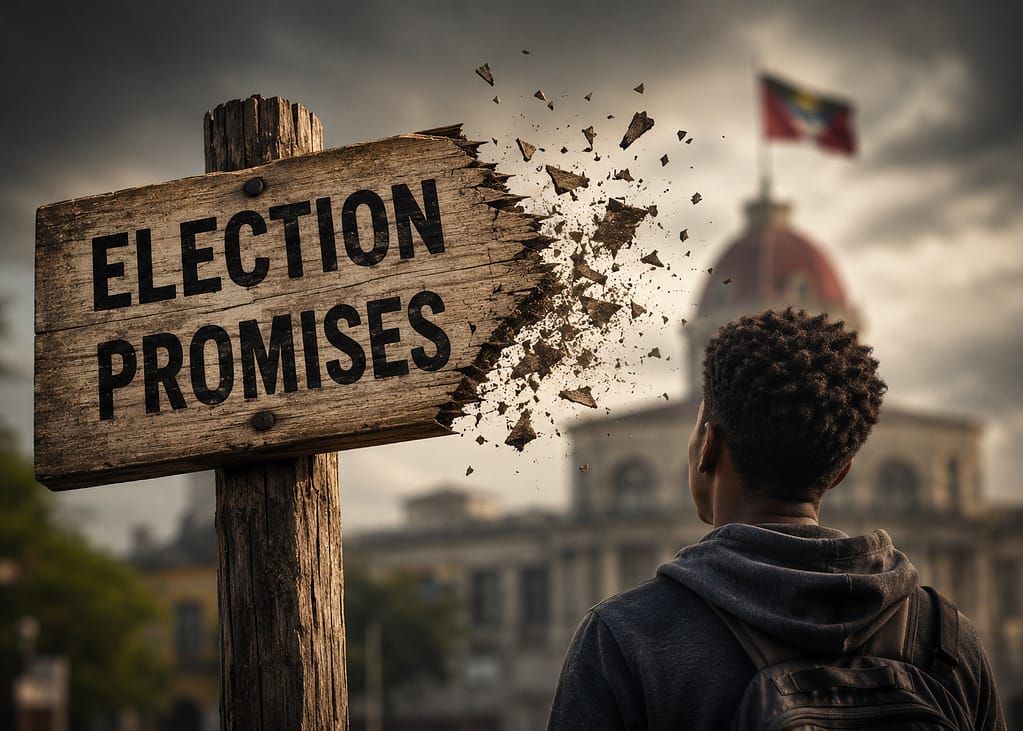
For countless residents of Antigua and Barbuda, the promise of responsive, equitable governance has curdled into deep frustration, as widespread accounts of official misconduct, systemic neglect, and lack of accountability have eroded public trust in elected leadership and state institutions. What should be a straightforward process for citizens seeking support from their elected representatives has turned into a demoralizing experience for many: constituents who reach out in moments of crisis report being met with inappropriate flirtatious advances instead of the genuine assistance they need, while others who follow guidance to submit job applications to government-linked organizations are left waiting indefinitely for replies – even as those same positions are filled by new hires connected to existing officials.
Beyond these individual disappointments, a broader crisis of accountability has taken root. After winning office on the backing of local voters, many elected officials have cut off consistent communication with the communities that put them in power, leaving constituents feeling disenfranchised. Widespread fear of victimization and retaliation for speaking out has silenced many residents, creating a culture of silence that allows unaddressed problems to fester.
The most damaging gaps are visible within the country’s own government entities, where long-standing mismanagement has left qualified young workers locked out of opportunity while unqualified incumbents cling to posts. Multiple reports confirm that existing public employees regularly leave their assigned shifts midday to run personal side businesses, despite a large population of capable, hardworking young Antiguans and Barbudans who remain unemployed and actively seeking stable public sector work. Insiders confirm that hiring and promotion in many government offices is driven not by merit, professionalism, or competence, but by favoritism, personal connections, and partisan loyalty. In the most extreme cases, individuals with only a primary school education – and in some cases, no functional literacy or writing skills – hold critical public positions that require far greater qualifications.
Basic public infrastructure also continues to fail residents, with road conditions emerging as a particularly persistent grievance. Across the country, road repair projects are often only partial, shoddily completed, and quick to deteriorate, leaving taxpayers frustrated by the lack of quality and long-term sustainability of public works projects that their tax dollars fund.
Crucially, the nation’s youth demographic – the future of Antigua and Barbuda’s political landscape – are not ignoring these failures. Young voters are carefully tracking every broken campaign promise, every unfair hiring decision, and every instance of official neglect, and their growing frustration is set to reshape the country’s next electoral cycle. Political analysts and local observers agree that the upcoming election will be a direct reflection of the widespread discontent that has built up among voters who have been failed by the current system of governance.