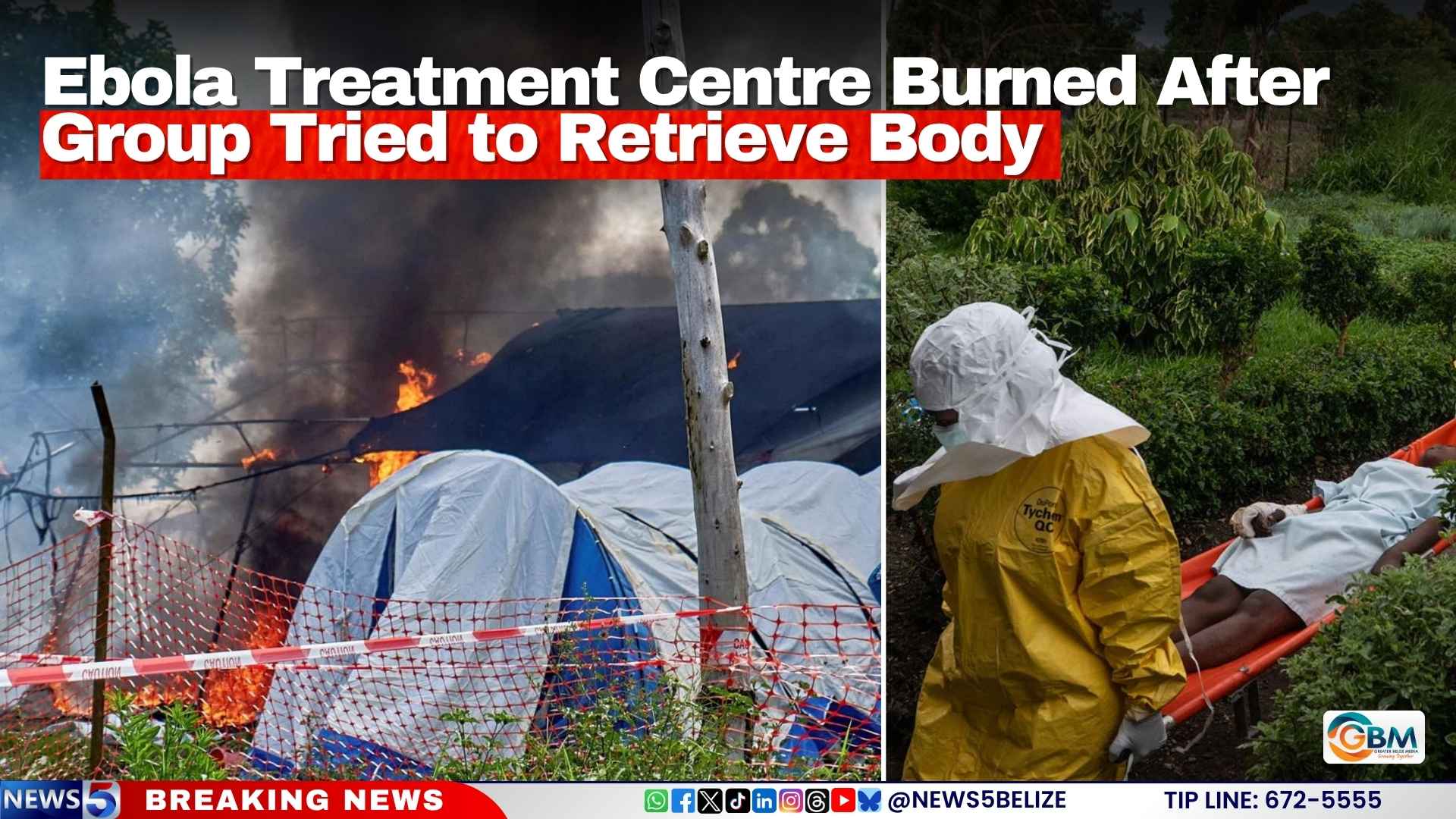
In a disruptive development that has deepened concerns over the worsening Ebola outbreak in central Africa, an Ebola treatment and body storage facility in the Democratic Republic of the Congo (DRC) was burned to the ground earlier this week. The arson attack followed an attempt by a local group to forcibly retrieve the body of an individual who had succumbed to the virus, according to initial on-ground reports.
The facility served a critical public health function: it held the bodies of Ebola victims before they could be carried out through safe, controlled burials, a process widely recognized as one of the most essential steps to stop the virus from spreading to new communities. Ebola, which transmits via direct contact with infected bodily fluids, is already capable of spreading rapidly from deceased individuals if proper burial protocols are not followed.
Even in the wake of the violence, local residents who showed suspected Ebola symptoms continued to arrive at remaining health facilities seeking care, demonstrating the ongoing unmet demand for treatment in the affected region. In response to the unrest, national security forces including soldiers and police have been deployed to the area to restore order and prevent additional attacks on health infrastructure.
While the immediate risk of Ebola reaching Belize and other Caribbean nations remains low, regional health bodies are not lowering their guard. The Caribbean Public Health Agency (CARPHA) has issued an official call for all member states to maintain high levels of preparedness and alertness, a move that comes after the World Health Organization (WHO) formally declared the ongoing DRC outbreak a Public Health Emergency of International Concern (PHEIC), the global body’s highest level of alert.
Official data from the WHO confirms that the outbreak has already claimed more than 170 lives, with close to 750 suspected cases recorded across affected areas of the DRC. International aid organizations have identified multiple interconnected factors that have allowed the outbreak to escalate at an alarming rate. These include chronically weak health infrastructure in rural parts of the DRC, ongoing ethnic conflict that blocks access for testing and treatment teams, and recent cuts to United States funding for global public health initiatives.
The funding cuts have triggered cascading challenges for response teams: thousands of local health workers have been laid off, critical medical supplies are in acute shortage, and overall operational support for both WHO and United States Agency for International Development (USAID) programs has been drastically reduced. Even though U.S. government officials have stated that core response systems remain operational and that emergency funding has been redirected to the outbreak, public health experts warn that years of sustained underinvestment in global health preparedness have left response teams playing catch-up. Today, responders are forced to airlift even basic protective equipment like medical gloves and surgical masks into remote clinic sites, a logistical hurdle that slows their ability to contain the spread of the virus.
With a high average fatality rate, Ebola outbreaks require rapid, well-resourced response to avoid large-scale community transmission, making the current gaps in funding and access a growing source of global concern.