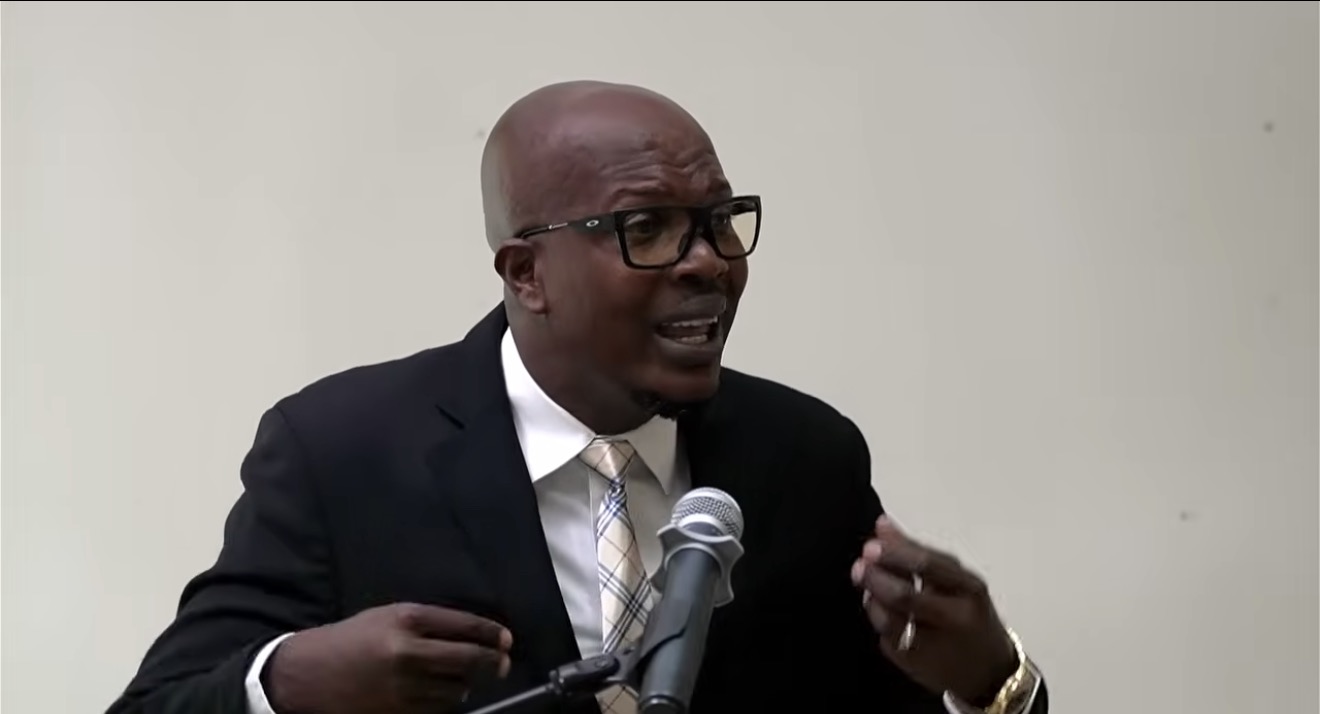
Opposition political group the United Workers Party (UWP) has launched a scathing rebuke of the Saint Lucia government’s management of public safety and national development, arguing that the island nation’s ongoing surge in violent crime is a direct product of long-running structural gaps and incompetent leadership.
Speaking at a formal press conference, former Member of Parliament for Vieux Fort North Calixte Xavier broke down the roots of the current crisis, emphasizing that the unchecked crime wave gripping the country did not materialize suddenly. “Crime at this level does not emerge overnight. It takes time,” he noted, attributing the escalation to expanding transnational criminal networks, unregulated flow of illegal firearms across borders, and a reactive governance style that lacks proactive long-term strategy.
Xavier cast doubt on the tangible impact of the government’s recent public safety interventions, pointing out that even after increasing police deployments, allocating new law enforcement equipment, reshuffling the security ministry, and imposing a 2.5% national levy for health and security initiatives, the island has yet to record a sustained drop in homicide rates.
He further criticized gaps in border security framework and weak support for frontline law enforcement, highlighting concerning missteps including the disbandment of the police canine unit, non-functional border scanning equipment, and plummeting morale among ranks of the Royal Saint Lucia Police Force. “Our security begins at our borders,” Xavier said, adding that the poor treatment of serving officers has directly eroded their ability to carry out their duties effectively.
Beyond systemic failures, Xavier drew attention to the devastating human and social toll of persistent violent crime, from the chronic trauma endured by victims, their families, and first responders to the unaddressed mental health burden placed on police officers who repeatedly respond to violent incidents. He revealed that the Royal Saint Lucia Police Force currently has no dedicated in-house counsellor to support officers dealing with occupational trauma, a gap he described as a “a bigger problem” that exacerbates existing morale issues.
Xavier also outlined the crippling financial strain that violent crime places on affected households, noting that the loss of a breadwinner and unexpected medical bills often push already vulnerable families into severe economic hardship. Echoing widespread public discontent, he stressed: “We are tired of speeches. We are tired of promises. We want safety, we want leadership.”
UWP Second Deputy Political Leader Dominic Fedee expanded on the party’s critique, framing rising crime as a visible symptom of far deeper failures in governance, economic planning and national priority-setting. He warned that Saint Lucia is effectively “drifting” at a moment when clear, decisive strategic direction is most needed.
Fedee pointed out that the government has controlled substantial financial resources from international loans and the island’s popular Citizenship by Investment Programme, yet the public still remains gripped by feelings of insecurity, uncertainty and distrust in the government’s national direction. “The issue confronting Saint Lucia was never simply a lack of money; the issue was a lack of priorities,” he explained.
He called for sweeping improvements to transparency and accountability, particularly for public funds generated through the citizenship by investment initiative, noting that “the people of Saint Lucia deserve transparency, they deserve accountability.”
Fedee argued that the absence of long-term strategic planning has directly fueled broader social ills including rising youth unemployment, weakened community cohesion, and growing social instability. “When governments fail to create opportunity, fail to plan strategically… criminal networks eventually begin filling the vacuum,” he said, underscoring the direct causal link between economic mismanagement and rising crime.
He also issued a stark warning that the ongoing surge in violence threatens to damage Saint Lucia’s $tourism sector$, the central pillar of the island’s national economy. Rising instability and negative international press could deter international visitors and drive away critical foreign investment, Fedee argued, noting: “A country cannot market paradise abroad while instability spreads at home.”
In addition to security failures, Fedee criticized the government’s ad-hoc, unplanned approach to national development projects, which he said has disproportionately harmed informal vendors and artisanal fisherfolk. He claimed there is no cohesive national policy to protect vulnerable groups when large-scale redevelopment projects move forward, leaving marginalized communities to bear the brunt of poorly planned growth.
Fedee concluded by emphasizing that Saint Lucia needs comprehensive, long-term solutions rather than short-term, reactive fixes. “Band-aids cannot replace nation building,” he said, renewing the UWP’s call for strategic forward planning, greater governmental accountability, and equitable sustainable development across the island.