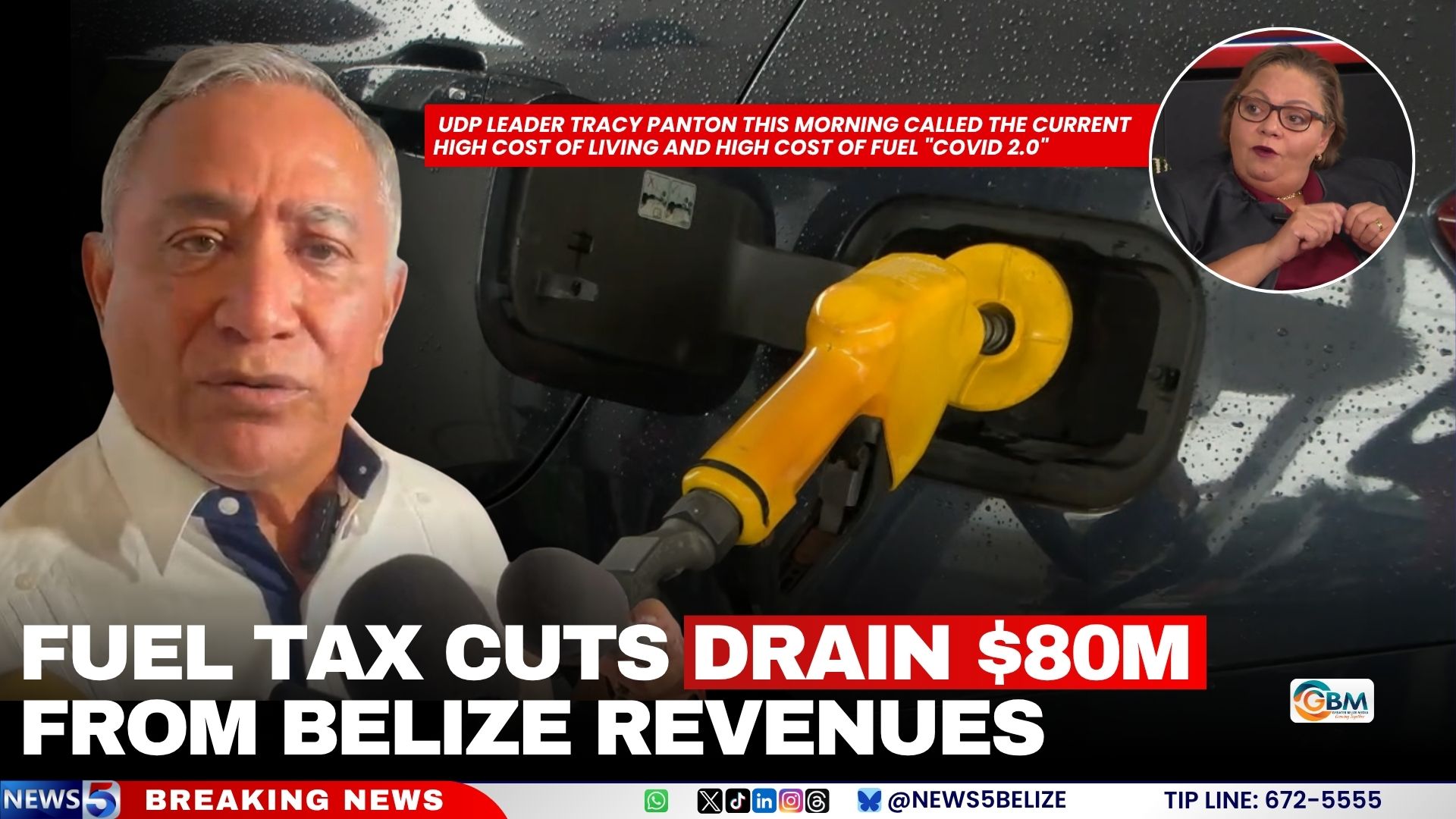
BELIZE CITY – May 20, 2026 – Sustained fuel tax cuts implemented by Belize’s ruling administration to buffer households from skyrocketing global fuel prices have already stripped $80 million from the national treasury, Prime Minister John Briceño has confirmed. Speaking to media this Wednesday morning, Briceño made clear that the government has no plans to reverse the policy, arguing that passing the full weight of global price volatility onto ordinary citizens is economically and politically untenable.
“We simply cannot transfer the entire cost burden to Belizean families. That is why this government made a deliberate choice to cut the fuel taxes we collect,” Briceño stated. The most recent round of cuts shaved approximately one dollar off the per-gallon cost of fuel, taking effect at midnight this Wednesday. Even with these reductions, official price adjustments released overnight show that overall fuel market trends remain upward: regular gasoline has jumped by more than one dollar per gallon, though the adjustment brought unexpected drops for premium gasoline and diesel, leaving premium fuel actually cheaper than regular at retail pumps. Kerosene prices also declined in the latest adjustment.
Current tax and government levies still account for roughly 25 percent of the average price motorists pay per gallon of fuel, even after the multiple rounds of cuts implemented by Briceño’s government. As the government continues absorbing massive revenue losses to keep fuel costs manageable, the parliamentary opposition has ramped up pressure on the administration over the growing cost of living crisis.
United Democratic Party (UDP) Leader Tracy Panton framed the current crisis of soaring fuel and living costs as “COVID 2.0” during an appearance on the popular *Open Your Eyes* morning talk show Wednesday. Panton echoed the prime minister’s own framing of imported inflation, noting that just like the COVID-19 pandemic originated outside Belize’s borders, the current fuel price surge is driven by the volatile ongoing conflict in the Middle East that pushes up global crude acquisition costs.
But Panton emphasized that regardless of the external root of the crisis, the Belizean government bears a clear responsibility to protect working people and vulnerable communities from the fallout. “Inflation may be imported, but we have a responsibility as a government to mitigate the impact on Belizeans, the working class, the vulnerable,” Panton said.
Briceño pushed back against criticism Wednesday, defending his administration’s actions by noting the government is already doing everything possible to cap fuel costs for consumers. To offset the $80 million in lost revenue and balance the national budget, Briceño confirmed the government is targeting cuts to non-essential spending on goods and services, but drew a line at slashing critical social support programs, which will remain fully protected from budget trimming.
“Even as fuel prices continue to climb, we are keeping taxes cut because we are committed to finding a sustainable balance between the global market cost of fuel and the tax burden our people face,” Briceño added. Full coverage of the ongoing fuel price crisis and government response will air this evening on News 5 Live at 6 p.m.