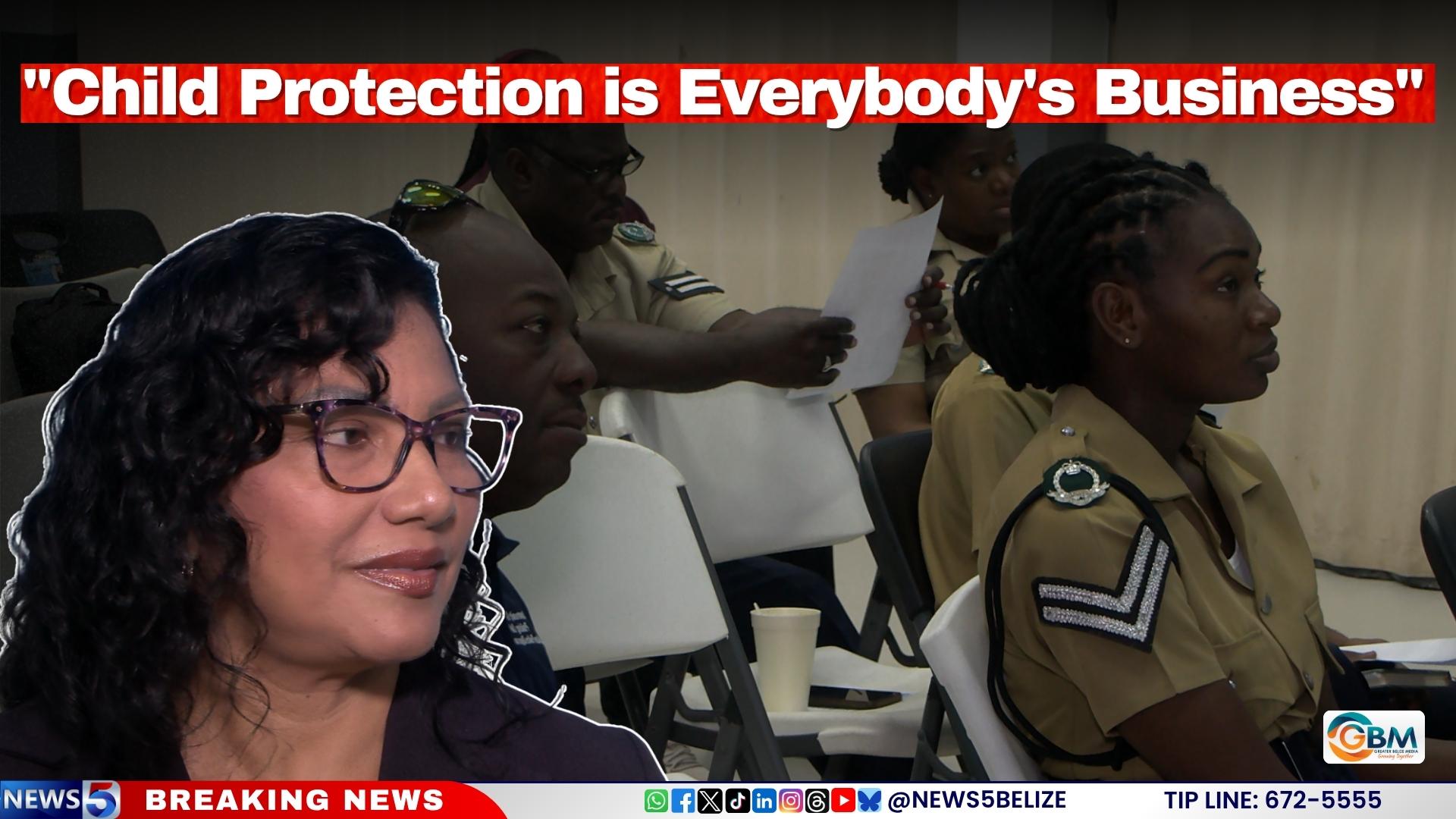
A recent surge of arrests connected to sexual violence against children has sent shockwaves through local communities across Belize, driving child protection advocates to push for collective action rather than just public outrage. The movement has taken tangible form this week with the launch of capacity-building training led by the UNICEF-backed Blue Teddy Bear Campaign, a national initiative designed to equip ordinary Belizeans with the skills to identify signs of child abuse and file official reports when concerns arise.
On the morning of May 19, 2026, staff members from the Yarborough Community Resource Center joined the first training session hosted at the Department of Youth Services. The campaign is a collaborative effort between UNICEF, Belize’s National Commission for Families and Children, and the Ministry of Human Development, aiming to break down systemic and cultural barriers that allow abuse to remain hidden.
Carla Alvarez, the lead consultant guiding the training, outlined a key, underrecognized barrier to child safety that the initiative seeks to address: it is not a lack of public care that enables abuse, but widespread fear of involvement among ordinary people. “Sometimes we see things, but we are afraid to report because there’s that fear that we’re gonna be exposed as the reporter,” Alvarez explained. She also noted that shifting social and technological landscapes have left modern children vulnerable to risks that previous generations never encountered at young ages, requiring a more proactive public response than ever before.
Alvarez pushed back firmly against the common misconception that child protection is the exclusive responsibility of official bodies like police forces or specialized nonprofits. “Child protection is everybody’s business. It’s not just the business of the police or community-based organizations or UNICEF. It’s everybody’s business,” she emphasized.
The training also challenged two widespread harmful assumptions about child abuse that contribute to underreporting. First, Alvarez reminded participants that abuse does not only occur in low-income or so-called “troubled” households—it impacts every socioeconomic segment of Belizean society, a cross-cutting reality that helps keep abuse unaddressed and unspoken. Second, the training expanded public understanding of what counts as child abuse, stressing that harm extends far beyond visible physical or sexual violence. Psychological mistreatment, emotional abuse, and neglect are equally damaging to children’s long-term well-being, yet these forms of abuse are far less likely to be recognized or reported by community members.
“There has to be that talk and that dialogue about what exactly is child abuse and violence,” Alvarez said. “One of the goals of this training is to ensure that everybody understands the ramifications of what encompasses abuse and violence.” The initiative comes as Belize grapples with growing public awareness of child safety gaps, with organizers hoping that widespread public education will turn passive concern into active protection for vulnerable children across the country.