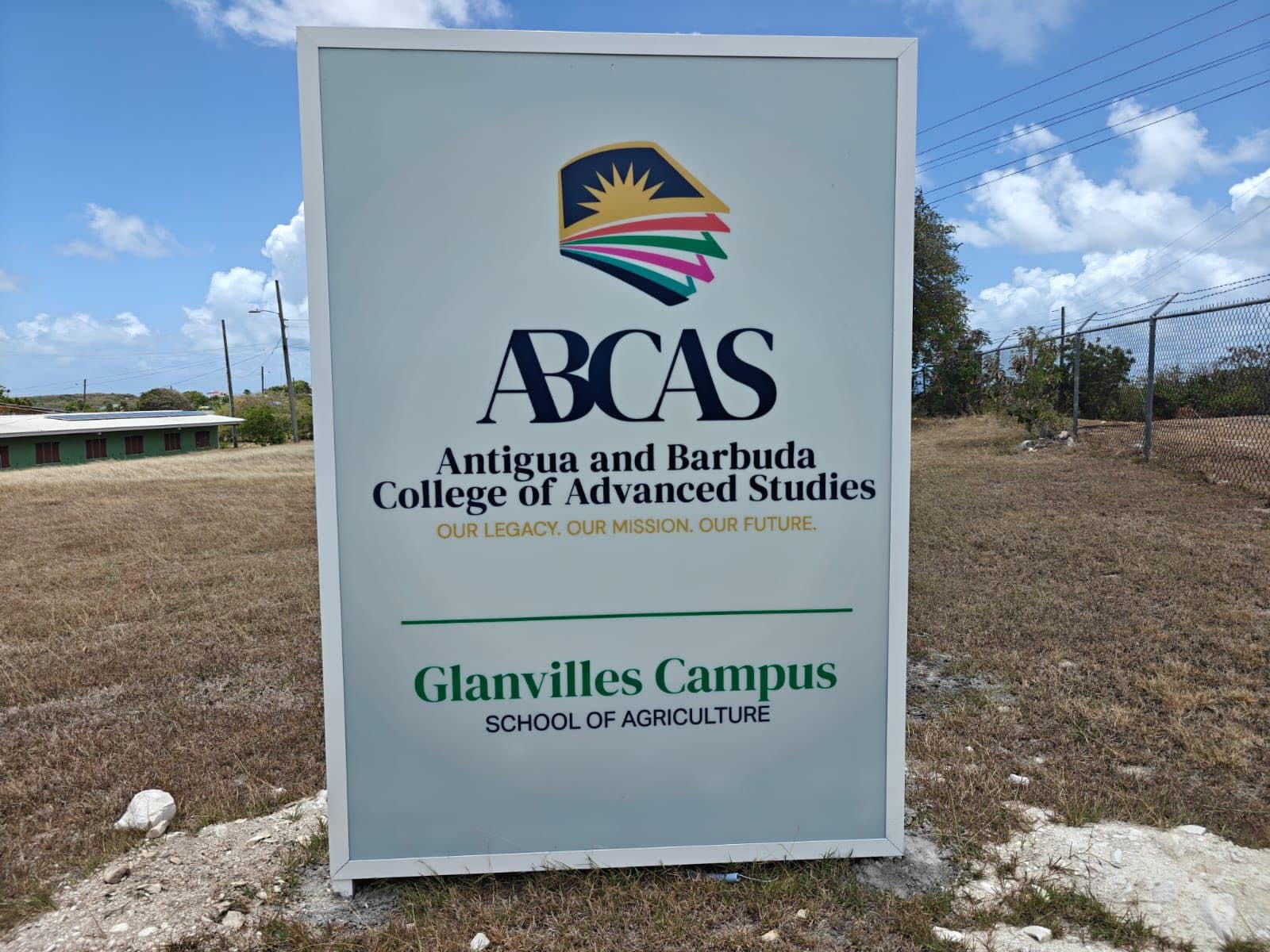
In a scheduled Cabinet meeting held Wednesday, senior leadership from the Antigua and Barbuda College of Advanced Studies (ABCAS) delivered a detailed progress update to government officials on the multi-phase refurbishment and institutional restructuring of the country’s new School of Agriculture, being developed at the site of the decommissioned Glanvilles Secondary School.
The initiative, which is on track to welcome its first cohort of students for the 2026 September academic term, aims to convert the underused former secondary campus into a fully modernized, industry-leading agricultural training hub that aligns with the nation’s long-term food security goals. ABCAS’s head outlined the full scope of infrastructure upgrades underway, covering core learning and operational spaces alongside specialized agricultural support facilities. Currently active construction and renovation work includes the refurbishment of six general classrooms and the campus auditorium, installation of impact-resistant security louvre windows, structural repairs to hurricane-rated shutters, application of durable epoxy flooring, and initial outfitting for a dedicated food science laboratory and on-site storage areas.
Additional planned and ongoing upgrades go beyond basic infrastructure to support advanced scientific training: the project includes a full refurbishment of an existing chemistry laboratory and the construction of a new state-of-the-art biology laboratory, both fitted with upgraded water, gas, and electrical systems to meet modern research and teaching standards. Broader campus improvements include a full electrical system overhaul, installation of energy-efficient LED lighting across all buildings, repairs and upgrades to aging roofing and drainage systems, full exterior and interior painting, and the addition of extra air conditioning units and specialized ventilation infrastructure for laboratory spaces to ensure safety and functionality.
Beyond classroom and lab upgrades, the project includes agricultural-specific external development: plans are in place to construct two purpose-built poultry demonstration pens to give students hands-on experience with commercial small livestock production. The master plan also calls for a full reconfiguration of several existing campus buildings to house dedicated student support services, additional research labs, modern conference facilities, improved staff amenities, a full student cafeteria, and expanded climate-controlled storage for agricultural supplies and research samples.
Following the presentation, Cabinet members issued public commendation for the work completed to date, praising ABCAS leadership, faculty, technical construction teams, and participating students for their commitment to advancing accessible, high-quality agricultural education and strengthening national food sovereignty. Officials emphasized that the ongoing development of the School of Agriculture is a core component of the national government’s broader strategy to expand technical and vocational education opportunities across the country, encourage greater youth engagement in the agricultural sector, and boost national economic and climate resilience by increasing the volume of locally produced food. Cabinet also confirmed it is fully satisfied with the current pace of work and reaffirmed its unwavering financial and policy support for the project to ensure it is fully completed in advance of the first academic term in 2026.