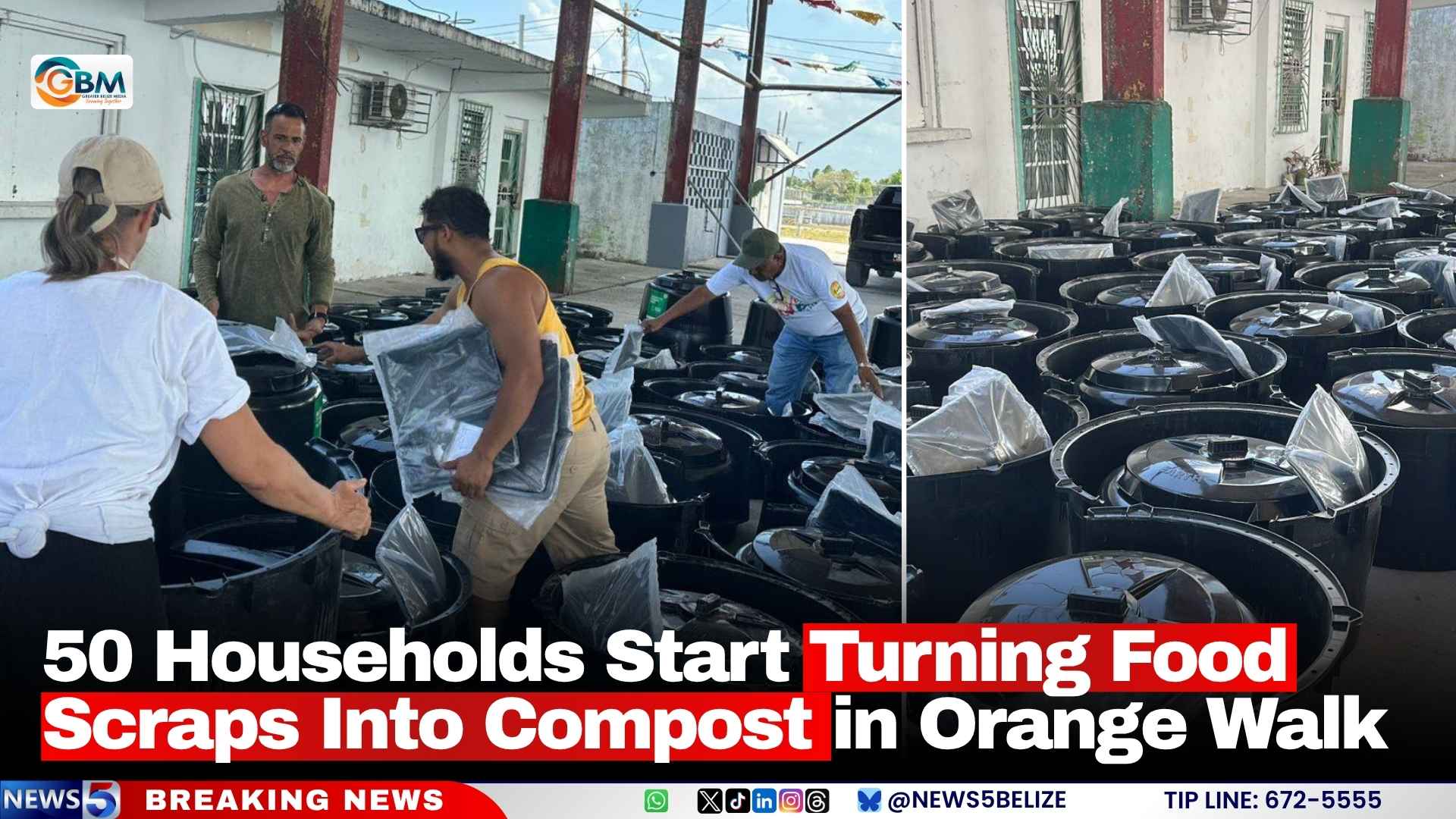
In a groundbreaking shift toward sustainable waste management, 50 households in Orange Walk Town have begun a trailblazing home composting initiative that turns everyday food scraps into nutrient-rich soil instead of contributing to overflowing local landfills. The project marks the municipality’s first official organic waste management program, designed to tackle one of the community’s longest-standing waste challenges at its source – residential kitchens.
The pilot initiative was formally launched over the weekend, coinciding with the handover of a new industrial wood chipper that will support program operations beyond individual household activities. To set participating families up for success, the municipal government has provided all required composting supplies, alongside tailored in-person training that teaches residents how to properly process organic kitchen waste at home. The core goal of the training and resource distribution is to cut the overall volume of residential waste being hauled to local dumps, easing pressure on overstretched landfill infrastructure.
Beyond reducing strain on waste management systems, municipal leaders emphasize the program’s critical climate benefits. When organic materials decompose in oxygen-poor landfill environments, they release large volumes of methane – a greenhouse gas over 25 times more potent than carbon dioxide at trapping heat in the atmosphere, making it a major driver of global climate change. By diverting food scraps to home composting systems, the town avoids these methane emissions while creating a useful end product that can improve soil health for home gardening and local green spaces.
The new program is the result of more than 12 months of collaborative work between local municipal officials and the regional Recycle Organics Program. Orange Walk Councillor Joesie Cantun and municipal officer Antonio Baeza led the project’s development from initial planning to full implementation, while trainer Tara Hoisington played a central role in developing hands-on curriculum and co-designing program elements with input from participating residents. The 50 households that joined the pilot cohort will now serve as the first testers of the scheme, with their feedback expected to shape future expansion of the program across the district.