Workers’ mental health has taken center stage in Antigua and Barbuda, as two major labor organizations have launched a targeted capacity-building initiative to equip workplace representatives with the tools to tackle rising stress and end stigma around mental health discussions.
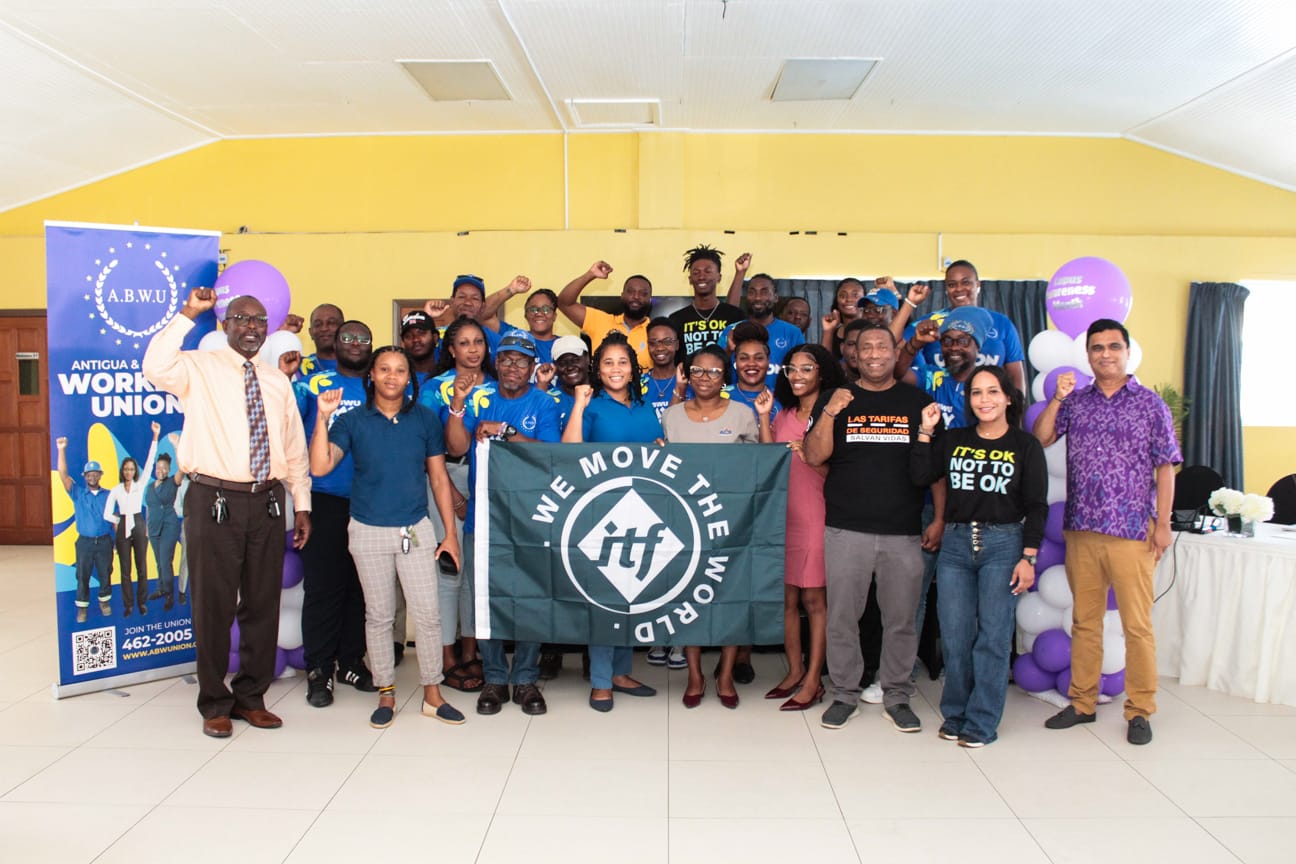
The Antigua and Barbuda Workers’ Union (ABWU), in partnership with the International Transport Workers’ Federation (ITF), recently convened a two-day immersive workshop focused on stress management and mental health advocacy. The program, structured as a “train-the-trainer” initiative, brought together frontline workers and union leaders to build a network of wellness champions that can spread awareness across local workplaces.
Leading the workshop sessions was Dr. Syed Asif Altaf, the ITF’s Global Well-being Programme Coordinator. Over the two days, participants explored a wide range of practical, actionable topics: from foundational understanding of how stress impacts physical and emotional health, to evidence-based coping strategies, to the specific roles and responsibilities of peer mental health first responders. The curriculum also centered underaddressed needs, with dedicated modules focused on stress vulnerability among young workers and women, two groups disproportionately impacted by unaddressed workplace mental health challenges.
The workshop is just one part of a long-term collaborative commitment between ABWU and ITF to prioritize worker well-being and build more inclusive, supportive workplace cultures across the region. In opening remarks to attendees, ABWU General Secretary David Massiah emphasized that workplace stress is a universal issue that touches every sector and every community, calling on workers to lead demands for systemic change.
“Stress does not discriminate – it affects every workplace and every family across our country,” Massiah said. “We cannot stop at individual coping strategies. We must keep pushing for policies and workplace cultures that put mental health at the top of the agenda, and ensure every worker has the support systems they need to not just work, but thrive.”
For Dr. Altaf, the core mission of the training extends far beyond teaching stress management techniques. A central goal of the initiative is to dismantle the deep-seated stigma and cultural silence that have long prevented workers from seeking support for mental health challenges.
“Across every region, there remains so much taboo and stigma around talking about mental health,” Dr. Altaf explained. “Most people struggle with stress or mental health challenges at some point, but too many suffer in silence because they fear judgment. We are here to change that narrative – break the stigma, break the silence, and build a community of open advocates for mental wellness.”
ITF Regional Secretary Edgar Diaz echoed that commitment, outlining the multiplying impact the organizations hope to achieve through the train-the-trainer model. Rather than limiting learning to the small group of in-person attendees, the program is designed to turn participants into trainers who can bring this knowledge back to their own workplaces and peer groups.
“Our goal over these two days was not just to share what the ITF has been doing to advance worker well-being globally, but to give shop stewards and local union representatives the expertise to lead this work themselves,” Diaz explained. “Participants leave here ready to train their coworkers, to pass on what they’ve learned, and expand this movement across every workplace in Antigua and Barbuda.”
Diaz added that organizers were encouraged by the high level of engagement and enthusiasm from attendees throughout the workshop, a sign of the unmet demand for open conversation about mental health in the region. One participant, who attended the sessions, shared that the workshop filled a critical gap in local worker support, noting that public awareness of mental health remains low across Antigua.
“This workshop is such an important step forward,” the attendee said. “People here just don’t have enough information about mental health, and workplaces have almost no support systems in place. It’s amazing that the union is taking this step to help us build that support for workers.”
At the close of the two-day program, participants completed reflective evaluations to share feedback on the sessions and help organizers refine future trainings. All attendees received certificates recognizing their completion of the program, formalizing their new role as community mental health advocates ready to bring their skills and knowledge back to their workplaces.